Industrial Pumps Guide: Types, Uses, Industrial Applications & What Affects Performance
Industrial pumps are mechanical devices used to move liquids, slurries, or gases from one point to another within a system. They form a basic part of manufacturing, water treatment, agriculture, energy production, and many other sectors. Understanding how industrial pumps work, what types exist, and what affects their performance helps readers make sense of equipment they may encounter in daily life or at work.
Industrial pumps are machines designed to transfer fluids by converting mechanical energy into hydraulic energy. This movement allows liquids to travel through pipes, tanks, processing systems, and other equipment where gravity alone cannot provide the required flow.
The concept of pumping fluids has existed for thousands of years. Early devices such as the Archimedes screw were used to lift water for irrigation. Over time, mechanical engineering, electrical systems, and material technology led to the development of centrifugal, positive displacement, and specialized industrial pumps for different applications.
Today, industrial pumps are used across water treatment, manufacturing, agriculture, energy, chemical processing, building systems, and many other sectors. Choosing an appropriate pump depends on factors such as fluid characteristics, flow requirements, pressure, temperature, installation conditions, and operating environment.
Understanding Industrial Pumps
What are industrial pumps?
An industrial pump is mechanical equipment used to move fluids from one location to another. Depending on the design, a pump can transfer water, oil, chemicals, wastewater, slurry, or other liquids through a controlled system.
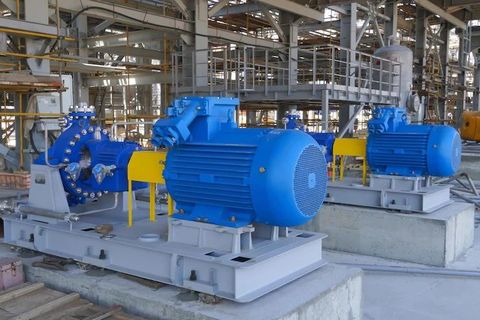
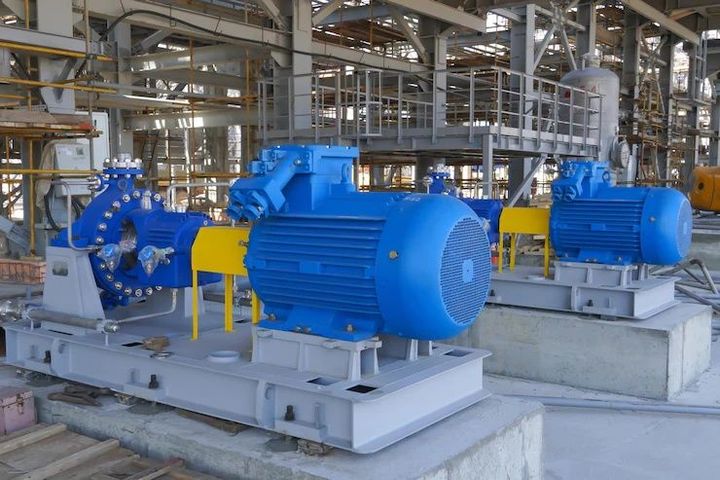
Most pumping systems include components such as a motor, pump housing, impeller or displacement mechanism, shaft, seals, bearings, inlet, and outlet connections. The exact configuration depends on the pump type and its intended application.
How industrial pumps work
Industrial pumps generally use mechanical energy to create pressure or movement within a fluid. A motor or other power source drives the internal pumping mechanism, which moves the fluid through an inlet and pushes it toward an outlet.
The operating principle differs according to pump design. Centrifugal pumps rely on rotational movement, while positive displacement pumps move defined volumes of fluid during each operating cycle.
Common types of industrial pumps
Industrial pumps generally fall into two broad categories: centrifugal pumps and positive displacement pumps.
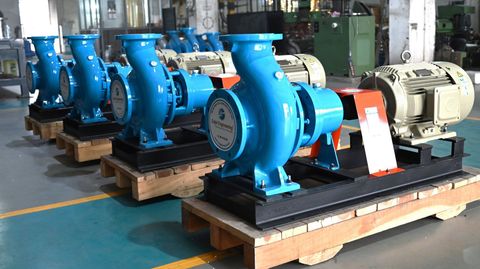
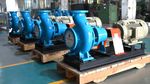
Centrifugal pumps use a rotating impeller to transfer fluid. They are commonly associated with applications requiring continuous flow and are frequently used with relatively low-viscosity liquids.
Positive displacement pumps move a defined quantity of fluid during each cycle. They can be suitable for thicker fluids and applications where controlled flow or higher pressure is required.
Common industrial pump types include:
- Centrifugal pumps, used in water treatment, HVAC systems, cooling systems, and general fluid transfer
- Gear pumps, commonly used for oils, lubricants, and hydraulic fluids
- Diaphragm pumps, used for chemicals, abrasive materials, and fluids requiring controlled movement
- Submersible pumps, designed to operate while submerged in liquid
- Peristaltic pumps, commonly used when fluid isolation and controlled dosing are important
- Screw pumps, used for viscous fluids and applications requiring steady fluid movement
- Piston pumps, used in systems requiring controlled flow and higher pressure
Each type has different operating characteristics. Pump selection depends on the fluid being handled, required flow rate, pressure conditions, temperature, pipe arrangement, and installation environment.
Importance of Industrial Pumps
Industrial pumps affect many areas of everyday life, even though they are often located behind the scenes. They help deliver drinking water, move wastewater, support agricultural irrigation, and maintain fluid movement within manufacturing processes.
Manufacturing facilities may use pumps to circulate cooling liquids, transfer raw materials, move chemicals, or maintain specific process conditions. Buildings can also depend on pumps for heating, cooling, water circulation, and fire protection systems.
Industries that use industrial pumps
Industrial pumps are used across a wide range of sectors, including:
- Water and wastewater treatment
- Manufacturing and processing
- Agriculture and irrigation
- Chemical processing
- Food and beverage production
- Oil and gas operations
- Power generation
- Mining and mineral processing
- Pharmaceutical manufacturing
- HVAC and building infrastructure
The requirements differ significantly between industries. A pump handling clean water may have very different specifications from one designed to transfer corrosive chemicals or abrasive slurry.
Who is affected by pump performance?
Pump performance can have a direct or indirect effect on several groups. Municipal water operators depend on pumping systems for water movement and treatment, while manufacturers rely on consistent fluid transfer throughout production processes.
Farmers may use pumps for irrigation and water distribution. Facility managers can also depend on pumping equipment for heating, cooling, drainage, and fire protection systems.
When a pump operates inefficiently or experiences mechanical problems, the effects can include reduced flow, increased energy consumption, process interruptions, or equipment damage.
Industrial Pump Applications
Water and wastewater treatment
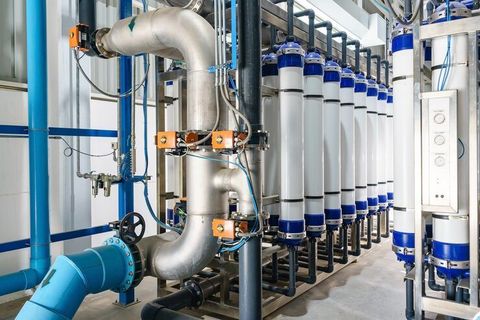
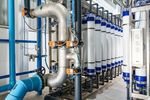
Pumps are essential throughout water and wastewater treatment systems. They can move water between treatment stages, transfer wastewater, circulate fluids, and maintain required flow through filtration and distribution systems.
Different stages may require different pump designs depending on factors such as fluid composition, pressure, solids content, and required flow rate.
Manufacturing processes
Manufacturing plants use industrial pumps to transfer liquids and maintain fluid circulation. Applications can include cooling systems, chemical transfer, lubrication, process water, cleaning systems, and material handling.
Pump selection in manufacturing often depends on chemical compatibility, operating temperature, pressure, viscosity, and required flow.
Agriculture and irrigation
Agricultural pumping systems move water from wells, reservoirs, storage tanks, or other sources to irrigation networks. Pump performance can influence water distribution across fields and other agricultural areas.
The required pump configuration depends on factors such as water source, elevation, pipe length, irrigation method, and required flow.
Energy and power generation
Pumps are used throughout power generation facilities for cooling, water circulation, boiler-related processes, fuel handling, and other fluid movement requirements.
In geothermal systems, pumps can also help circulate fluids between underground reservoirs and surface equipment.
Recent Developments in Industrial Pump Technology
Industrial pump technology has increasingly moved toward energy efficiency, digital monitoring, automation, and condition-based maintenance. Sensors and control systems can provide information about equipment operation without requiring continuous manual inspection.
Sensors and condition monitoring
Modern pumping systems can incorporate sensors that measure variables such as:
- Vibration
- Temperature
- Pressure
- Flow rate
- Motor condition
- Energy consumption
- Operating speed
Collected information can help maintenance teams identify unusual operating conditions and investigate potential mechanical problems.
Variable frequency drives
Variable frequency drives can adjust motor speed according to system demand. Instead of operating continuously at one speed, a pump can be controlled according to changing flow requirements.
This approach can help reduce unnecessary energy use in applications where fluid demand varies during operation. The actual result depends on system design, operating conditions, and control settings.
Predictive maintenance
Predictive maintenance uses equipment data to identify patterns that may indicate developing problems. Vibration measurements, temperature readings, pressure information, and other operating data can be analyzed to determine whether inspection may be appropriate.
This differs from traditional scheduled maintenance, which is performed according to predetermined time intervals. Both approaches can be used depending on the equipment and operating environment.
Advanced materials
Material technology has also influenced pump construction. Corrosion-resistant metals, engineered polymers, ceramic components, and specialized coatings can be selected for environments involving chemicals, abrasive particles, high temperatures, or other demanding conditions.
The appropriate material depends on the fluid's chemical characteristics, temperature, pressure, and the expected operating conditions.
Laws and Regulations for Industrial Pumps
Industrial pumps can be affected by regulations related to workplace safety, environmental protection, water management, energy efficiency, and equipment operation. Requirements vary according to the country, industry, application, and location.
In the United States, several federal agencies have responsibilities relevant to different aspects of industrial pumping systems.
Environmental requirements
The Environmental Protection Agency regulates various aspects of water quality and wastewater management. Facilities involved in wastewater treatment or discharge may need to comply with applicable environmental requirements.
The specific requirements depend on the facility, discharge characteristics, location, and applicable environmental framework.
Workplace safety
The Occupational Safety and Health Administration establishes workplace safety requirements that can apply to equipment operation, hazardous materials, electrical systems, and maintenance activities.
Facilities should consider applicable workplace safety requirements when operating and maintaining industrial pumping equipment.
Energy efficiency
The U.S. Department of Energy establishes energy efficiency requirements for certain equipment and systems. Applicable requirements can depend on the type of equipment, motor, application, and regulatory classification.
State and local authorities may also establish additional requirements related to water use, permits, construction, environmental protection, and infrastructure.
| Regulatory Area | Main Focus | Examples of Relevant Concerns |
|---|---|---|
| Environmental regulation | Water and wastewater | Discharge and treatment requirements |
| Workplace safety | Equipment and worker protection | Operation, maintenance, and hazardous materials |
| Energy regulation | Equipment efficiency | Motor and system efficiency requirements |
| State and local rules | Regional infrastructure | Water use, permits, and local requirements |
Regulatory requirements can change over time and differ between jurisdictions. Official government resources should therefore be consulted when specific compliance information is required.
Tools and Resources for Industrial Pump Systems
Several technical resources can help readers understand pump operation, sizing, efficiency, and maintenance.
Pump sizing calculators
Online pump sizing calculators can help estimate basic requirements using information such as flow rate, pressure, pipe dimensions, elevation, and fluid characteristics. These tools are useful for preliminary calculations, although complex systems may require detailed engineering analysis.
Pump performance curves
Pump performance curves show how a pump may perform under different operating conditions. They commonly present relationships between flow rate, head, efficiency, and power requirements.
Understanding these curves can help readers interpret how changes in system conditions may affect pump operation.
Technical standards
Industry organizations publish technical standards and educational resources covering pump design, testing, operation, and system assessment. These documents can provide useful background for engineers, maintenance teams, and technical readers.
Maintenance checklists
A pump maintenance checklist can include items such as:
- Checking for unusual vibration
- Inspecting seals for leakage
- Examining bearings
- Checking alignment
- Reviewing operating temperature
- Monitoring pressure and flow
- Inspecting electrical connections
- Checking lubrication requirements
- Reviewing unusual noise or changes in performance
The exact maintenance schedule depends on pump design, operating conditions, manufacturer instructions, and the surrounding system.
FAQs
What is an industrial pump?
An industrial pump is mechanical equipment used to move fluids through pipes, tanks, processing equipment, and other systems. Different pump designs are used according to fluid properties, flow requirements, pressure, and operating conditions.
What are the main types of industrial pumps?
The two broad categories are centrifugal pumps and positive displacement pumps. Common examples include centrifugal, gear, diaphragm, submersible, peristaltic, screw, and piston pumps.
How are industrial pumps used in water treatment?
Industrial pumps move water and wastewater through different treatment stages. They can support filtration, chemical dosing, circulation, transfer, and distribution depending on the design of the treatment system.
What factors affect industrial pump performance?
Pump performance can be affected by fluid viscosity, temperature, flow rate, pressure, pipe diameter, elevation, pump speed, system design, and the condition of components such as seals, bearings, and impellers.
Do industrial pumps require regular maintenance?
Most industrial pumps require periodic inspection and maintenance. Monitoring components such as seals, bearings, alignment, lubrication, temperature, vibration, pressure, and flow can help identify changes in operating condition.
Conclusion
Industrial pumps play an important role in water treatment, manufacturing, agriculture, energy production, building systems, and many other industries. Centrifugal and positive displacement pumps provide different operating principles for handling a wide range of fluids and system requirements. Recent developments have focused on digital monitoring, variable speed control, predictive maintenance, and advanced materials. Understanding pump types, applications, operating conditions, maintenance requirements, and applicable regulations provides a useful foundation for understanding modern industrial pumping systems.