Industrial Water Purifier Insights: Filtration, Treatment Stages, Components and Industrial Uses
Industrial water purifier systems are designed to treat water for manufacturing processes, equipment operation, production activities, and other industrial applications. Unlike a household water purifier, an industrial system may need to handle large water volumes and a wide range of contaminants, including suspended particles, dissolved minerals, organic matter, microorganisms, oils, and specific chemicals.
Context
The concept comes from the need to make water suitable for a particular industrial purpose. Raw water may contain substances that can interfere with production processes, cause deposits inside equipment, affect product quality, or create problems when water is discharged after use. Treatment systems therefore combine different physical, chemical, biological, and membrane-based processes according to the characteristics of the incoming water.
An industrial water treatment system may process groundwater, surface water, municipal water, process water, or previously used industrial water. The treatment objective depends on the intended application. Water used for cooling may require a different treatment approach from water used in boilers, electronics manufacturing, food processing, or laboratory operations.
How industrial water purification works
Industrial water purification generally follows several treatment stages. Each stage targets a particular group of contaminants or prepares the water for the next process.
A typical system may include:
Pre-treatment: Removes larger particles and protects downstream equipment.
Coagulation and clarification: Helps separate suspended particles from water.
Media filtration: Reduces suspended solids and other particles.
Activated carbon treatment: Can reduce certain organic compounds, odors, and chlorine-related substances.
Softening: Reduces hardness-forming calcium and magnesium ions.
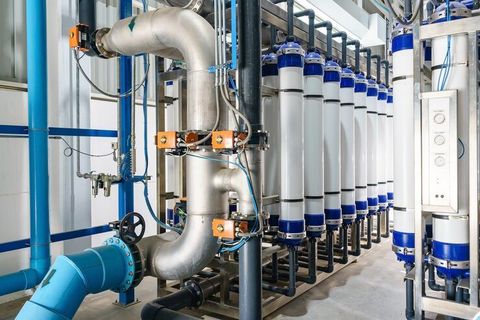
Membrane filtration: Uses membranes such as microfiltration, ultrafiltration, nanofiltration, or reverse osmosis for more selective separation.
Disinfection: Uses methods such as ultraviolet treatment, ozone, or controlled chemical treatment where appropriate.
Polishing: Provides additional treatment when the required water quality is more specific.
Not every industrial water purifier contains every stage. The configuration is normally determined by laboratory analysis, source-water characteristics, required water quality, flow rate, and the intended industrial use.
Common treatment stages
| Treatment stage | Main purpose | Typical technologies |
|---|---|---|
| Pre-treatment | Protect downstream equipment | Screens, strainers, sediment filters |
| Clarification | Separate suspended matter | Coagulation, flocculation, settling |
| Filtration | Reduce particles | Sand, multimedia, cartridge filters |
| Softening | Reduce hardness | Ion-exchange softeners |
| Membrane treatment | Reduce dissolved or fine contaminants | UF, NF, RO |
| Disinfection | Control microorganisms | UV, ozone, chemical methods |
| Polishing | Achieve specific water quality | Deionization, polishing filters |
Importance
Industrial water purification matters because water quality can directly affect industrial processes and equipment. Dissolved minerals can form scale, suspended particles can block filters or narrow passages, and some contaminants can interfere with chemical reactions or production processes.
Water quality also matters when industries reuse water. Instead of treating water only once and discarding it after use, some facilities use multiple treatment stages to recover water for another industrial purpose. The treatment level required depends on the intended reuse application.
The United States Environmental Protection Agency describes industrial water reuse as the treatment and reuse of water for industrial applications such as manufacturing, cooling, energy generation, food and beverage production, and mineral extraction.
Problems addressed by filtration and treatment
An industrial water purifier can be part of a broader water-management system that addresses several operational challenges:
Suspended solids: Particles can interfere with pumps, valves, membranes, and process equipment.
Hardness: Calcium and magnesium can contribute to scale formation in heat-transfer equipment.
Dissolved salts: High dissolved-solids levels can make water unsuitable for particular processes.
Organic matter: Organic compounds may affect water characteristics and downstream treatment.
Microorganisms: Biological growth can create operational concerns in systems such as cooling circuits.
Specific contaminants: Some industrial processes require targeted removal of metals, oils, nutrients, or other substances.
Treatment does not automatically make water suitable for every purpose. A purification system must be designed around the water source and the quality requirements of the application.
Industrial water purifier components
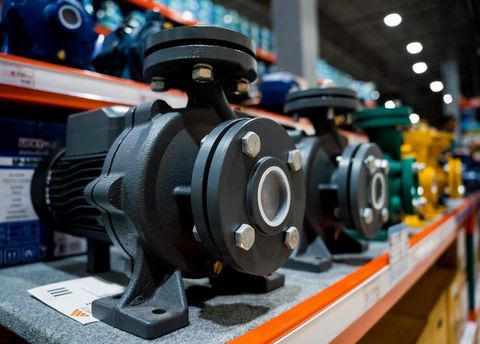
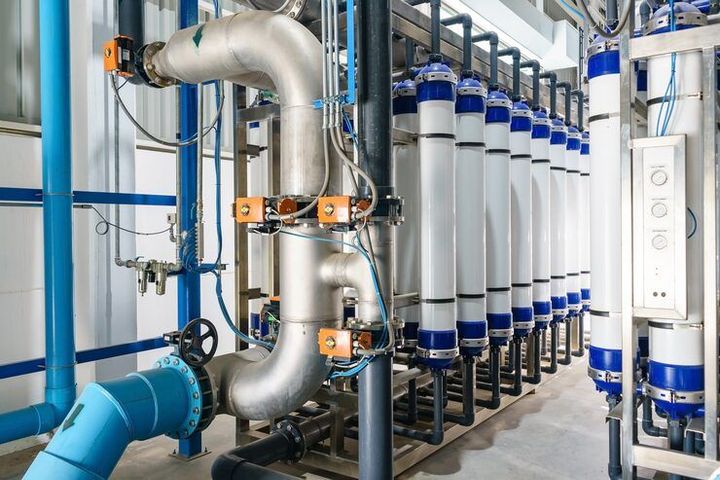
A complete industrial water treatment system may contain several interconnected components. Common components include feed pumps, storage tanks, pressure vessels, filtration units, membrane housings, dosing equipment, control panels, flow meters, pressure gauges, conductivity meters, and monitoring instruments.
Membrane systems can also require pre-filters and cleaning arrangements because particles and other substances can accumulate on membrane surfaces. Reverse osmosis systems, for example, commonly use pre-treatment to reduce fouling and protect the membrane stage.
Recent Updates
From 2024 through 2026, industrial water treatment has increasingly focused on water reuse, membrane technologies, digital monitoring, and treatment processes designed around particular industrial applications.
One notable development is the growing attention given to industrial water reuse. The EPA's 2026 Water Reuse Action Plan 2.0 places additional emphasis on reuse for industrial, technology, and energy applications.
Membrane treatment also remains an important part of modern industrial water purification. EPA's Industrial Wastewater Treatment Technology Database identifies microfiltration, ultrafiltration, nanofiltration, reverse osmosis, membrane bioreactors, and membrane distillation among technologies used or evaluated for industrial wastewater treatment.
Digital monitoring and process control
Modern treatment plants increasingly use sensors and automated controls to monitor variables such as pressure, flow, conductivity, pH, turbidity, temperature, and water quality indicators. These measurements can help operators identify changes in treatment performance and determine when process adjustments may be necessary.
Data logging can also make it easier to compare water-quality measurements over time. However, automated monitoring does not remove the need for appropriate sampling, instrument maintenance, calibration, and interpretation.
Water reuse and resource efficiency
Industrial facilities are also examining ways to recover treated water from process streams, cooling systems, and wastewater treatment stages. Reuse can involve additional filtration, membrane treatment, disinfection, or other processes depending on the intended application.
The treatment challenge is not simply to produce very pure water. The practical objective is to produce water that meets the requirements of its intended use while managing energy, chemicals, concentrate, sludge, and other treatment-related outputs.
Laws or Policies
Industrial water treatment is influenced by environmental, water-quality, wastewater-discharge, and industrial pollution rules. The exact requirements vary substantially between jurisdictions and industries, so regulatory obligations should always be checked against the rules applicable to the specific facility.
A common regulatory approach is to establish limits for wastewater discharged into rivers, lakes, sewers, land, or other receiving environments. Requirements may address parameters such as pH, suspended solids, chemical oxygen demand, biological oxygen demand, metals, oils, temperature, and industry-specific pollutants.
In India, for example, the Central Pollution Control Board explains that industrial pollution control operates under the Water (Prevention and Control of Pollution) Act, 1974 and the Environment (Protection) Act, 1986, with state pollution control authorities involved in the consent mechanism.
CPCB materials also identify the importance of adequate infrastructure for treating industrial effluent through captive treatment plants or common effluent treatment plants, depending on the circumstances.
Industry-specific discharge standards may apply in addition to general environmental requirements. For example, CPCB-published standards contain particular limits and requirements for industrial sectors such as thermal power generation.
These rules concern environmental compliance and wastewater management rather than determining a single purification design for every facility.
Tools and Resources
Several technical resources can help readers understand industrial water purification and treatment planning.
Water-quality analysis
Laboratory water analysis is an important starting point because treatment requirements depend on the actual water characteristics. Common parameters include pH, turbidity, total dissolved solids, hardness, alkalinity, conductivity, suspended solids, organic indicators, and selected metals or ions.
The required testing panel depends on the source and intended application.
Treatment technology databases
The EPA Industrial Wastewater Treatment Technology Database provides information about treatment technologies used for industrial wastewater and can help users understand relationships between contaminants and treatment processes.
Water-quality monitoring instruments
Industrial treatment plants may use:
pH meters
Conductivity meters
Turbidity meters
Flow meters
Pressure gauges
Total dissolved solids meters
Online water-quality sensors
Laboratory testing equipment
The appropriate instrument depends on the parameter being measured and the accuracy required for the application.
Process-flow diagrams and treatment records
A process-flow diagram can show how water moves from intake through pre-treatment, filtration, membrane treatment, storage, reuse, or discharge. Operating records can document flow rates, pressure readings, filter changes, membrane performance, chemical dosing, and water-quality measurements.
These records help create a clearer picture of how the industrial water purifier performs over time.
FAQs
What is an industrial water purifier?
An industrial water purifier is a treatment system designed to modify water quality for industrial applications. It may combine filtration, softening, membrane separation, disinfection, and other processes depending on the source water and intended use.
What are the main stages of industrial water treatment?
Common stages include pre-treatment, clarification, filtration, softening, membrane treatment, disinfection, and polishing. Not every facility requires all of these stages, and the sequence depends on the contaminants and required water quality.
How does an industrial water purifier use reverse osmosis?
Reverse osmosis uses pressure to push water through a semipermeable membrane. The membrane separates many dissolved substances from the treated water, producing a permeate stream and a more concentrated reject stream. Pre-treatment is generally important to protect the membrane from excessive fouling and scaling.
Where is industrial water filtration used?
Industrial water filtration is used in manufacturing, power generation, food and beverage production, chemical processing, pharmaceuticals, electronics production, mining, cooling systems, boiler-water preparation, and other applications. The required treatment level varies according to the process.
What factors determine an industrial water treatment system?
Important factors include source-water quality, flow rate, required treated-water quality, contaminants, temperature, operating conditions, intended reuse or discharge route, available space, energy requirements, and applicable environmental rules.