Industrial Automation Details: Control Systems, Robotics, Sensors, Machinery and Control Systems
Industrial automation refers to the use of control technologies, computers, sensors, robotics, software, and machinery to perform and coordinate industrial processes with limited direct manual intervention. It is used across manufacturing, processing, assembly, packaging, material handling, energy production, and many other industrial environments.
Context
The foundations of industrial automation developed from mechanical control systems, electrical controls, and early programmable machines. Over time, programmable logic controllers, industrial computers, digital communication networks, robotics, machine vision, and software-based monitoring expanded what automated systems could accomplish.
An industrial automation system normally combines several components rather than relying on one machine. Sensors collect information from equipment and processes, controllers interpret that information, and actuators or machines perform physical actions based on programmed instructions.
Main elements of an automation system
A typical system can include programmable logic controllers, industrial computers, sensors, actuators, motors, drives, robots, human-machine interfaces, communication networks, and supervisory software.
These components work together in a continuous cycle. A sensor detects a condition, the controller processes the information, and a control output instructs another component to respond.
Common automation categories
Industrial automation can be grouped according to how production activities are organized. Fixed automation is designed around repetitive operations, while programmable automation allows production sequences to be changed through software or control programs.
Flexible automation can accommodate variations in products or processes with relatively limited physical changes. Integrated automation connects several production functions so that information and control can move between different parts of an industrial operation.
| Automation type | General characteristic | Typical application |
|---|---|---|
| Fixed automation | Repetitive, dedicated operation | High-volume production |
| Programmable automation | Control programs can be changed | Batch production |
| Flexible automation | Handles product variations | Mixed-product manufacturing |
| Integrated automation | Multiple systems work together | Connected production lines |
Importance
Industrial automation matters because modern production environments often involve many machines operating in coordinated sequences. Manual control of every individual movement can become difficult when processes involve high operating speeds, repeated actions, precise positioning, or continuous monitoring.
Automation can also help maintain consistent process conditions. Sensors can monitor variables such as temperature, pressure, position, speed, flow, vibration, and proximity, allowing control systems to respond when conditions change.
The role of automation is not limited to factories. Automated equipment can be found in warehouses, processing plants, laboratories, utilities, agriculture, and other industrial environments.
How control systems work
A control system establishes a relationship between measurements, decisions, and physical actions. A basic closed-loop arrangement contains a sensor, controller, actuator, and process.
For example, a temperature sensor can measure the temperature of an industrial chamber. A controller compares the measured value with the programmed target and can adjust a heater or cooling mechanism according to the control logic.
Open-loop systems operate differently because they do not continuously use process feedback to adjust the output. Closed-loop systems use feedback, which allows the controller to respond to changes in operating conditions.
Role of sensors
Sensors provide information that automation systems need to understand what is happening in a process. Common industrial sensors include:
Proximity sensors for detecting objects or positions
Temperature sensors for monitoring thermal conditions
Pressure sensors for measuring pressure changes
Flow sensors for monitoring movement of liquids or gases
Level sensors for detecting material height
Photoelectric sensors for object detection
Vibration sensors for monitoring mechanical movement
Position sensors for determining location or movement
The selection of a sensor depends on the physical variable being measured, environmental conditions, required measurement range, response time, and compatibility with the control system.
Robotics and automated machinery
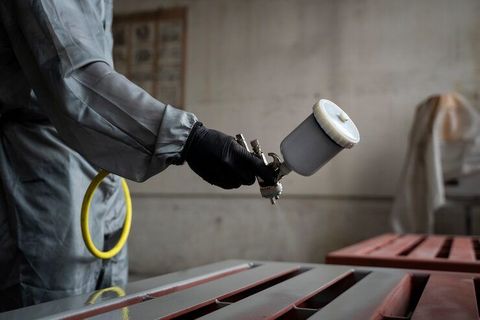
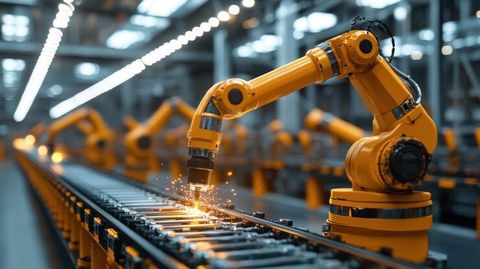
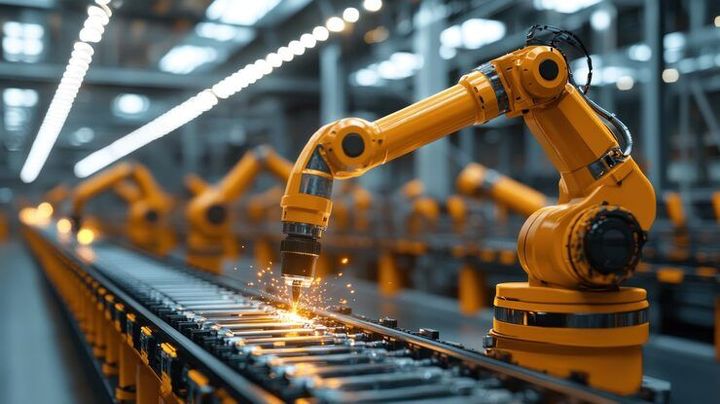
Industrial robots are programmable machines that can perform physical movements such as handling, welding, assembly, inspection, painting, and material transfer. Robotic systems commonly include mechanical structures, motors, controllers, position feedback, and specialized end-of-arm tools.
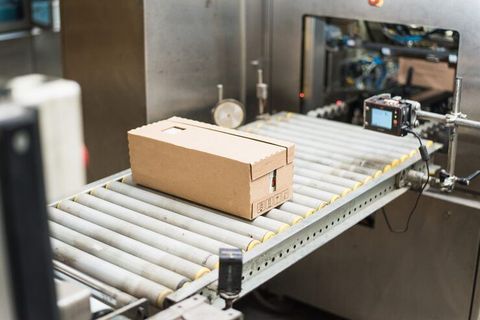
Automated machinery can perform many other operations without being classified as robots. CNC machines, automated packaging equipment, conveyor systems, filling machines, inspection systems, and automated material-handling equipment are examples.
The distinction depends largely on the machine's structure, movement, programming method, and intended application.
Recent Updates
Industrial automation continues to develop through the combination of robotics, artificial intelligence, industrial networking, edge computing, machine vision, and data analysis. Recent developments increasingly focus on connecting physical equipment with software systems that can interpret operating information.
Artificial intelligence is becoming more closely associated with robotics and industrial automation. Recent research and industry discussions describe physical AI as an emerging approach in which robots combine perception, computing, machine vision, and physical action.
Edge computing and industrial data
Traditional automation often depends heavily on local controllers. Newer architectures can combine local control with edge computing, allowing selected data processing to occur closer to machines and sensors.
This approach can reduce the need to send every piece of operational data to a remote computing environment. It can also support applications where rapid analysis is important, although the actual architecture depends on process requirements and network design.
Digital twins and virtual models
Digital twins are another developing area. A digital twin represents a physical machine, production line, or process using digital information and models.
These models can be used for simulation, monitoring, process analysis, and design evaluation. Their usefulness depends on the quality of the underlying data and how accurately the digital representation reflects the physical system.
Connected robotics
Robots are increasingly being integrated with cameras, force sensors, machine-learning systems, and industrial networks. This allows robotic equipment to respond to changes in objects, positions, or process conditions rather than following only fixed movement sequences.
These developments are also increasing the importance of human-machine interaction, system integration, data management, and workforce knowledge.
Laws or Policies
Industrial automation is affected by technical standards, workplace safety requirements, machinery rules, electrical requirements, environmental provisions, and cybersecurity frameworks. The exact legal requirements depend on the location, industry, equipment type, and intended application.
Because this article is not focused on a particular country, it is more appropriate to discuss internationally recognized frameworks rather than identify national legislation.
Industrial cybersecurity
Connected control systems introduce cybersecurity considerations because industrial equipment may communicate across networks and with information-technology systems. The IEC 62443 series provides internationally recognized guidance for cybersecurity in industrial automation and control systems.
IEC 62443-2-1:2024 addresses security program requirements for asset owners, while other parts of the series address system design, component security, and secure development practices.
Recent additions to the IEC 62443 family also address areas such as evaluation methods and industrial Internet of Things environments. These developments reflect the growing connection between automation equipment, industrial networks, and digital systems.
Machinery and workplace considerations
Automated equipment may involve moving parts, electrical systems, stored energy, heat, pressure, and other hazards. Appropriate risk assessment, protective measures, machine guarding, emergency controls, operating procedures, and maintenance practices are therefore important elements of an automation environment.
Specific compliance requirements should always be determined according to the applicable jurisdiction and the equipment involved.
Tools and Resources
Several technical resources can help people understand, design, analyze, or document industrial automation systems.
PLC programming tools
Programmable logic controller software is used to create and test control programs. Common programming approaches include ladder logic, function block diagrams, structured text, and sequential function charts.
The exact programming environment depends on the controller platform and the application.
Simulation and digital modeling
Industrial simulation tools can represent production lines, machine movements, material flows, and control sequences. Simulation can be used to examine how a proposed process behaves before physical equipment is changed.
Digital modeling can also support analysis of production layouts and machine interactions.
Sensor and automation documentation
Technical datasheets, wiring diagrams, installation manuals, electrical drawings, control-system documentation, and equipment specifications are important resources when working with industrial automation.
A basic automation documentation set may include:
System architecture diagrams
Input and output lists
Electrical schematics
Sensor and actuator specifications
PLC control logic
Network diagrams
Machine operating sequences
Maintenance records
Risk assessment documentation
Industrial communication technologies
Industrial automation systems use communication technologies to exchange information between controllers, sensors, drives, robots, computers, and other equipment. Examples include industrial Ethernet technologies, fieldbus systems, wireless industrial networks, and standardized communication protocols.
The appropriate communication method depends on factors such as data requirements, network architecture, environmental conditions, latency, interoperability, and cybersecurity needs.
FAQs
What is industrial automation?
Industrial automation is the use of control systems, sensors, computers, robotics, and machinery to monitor and control industrial processes with limited direct manual intervention.
What are the main components of an industrial automation system?
Common components include sensors, programmable logic controllers, industrial computers, actuators, motors, drives, robots, human-machine interfaces, communication networks, and supervisory software.
How do sensors work in industrial automation?
Sensors detect physical conditions such as temperature, pressure, position, speed, level, flow, or proximity. They send measurement information to a controller or another part of the automation system for processing.
What is the role of robotics in industrial automation?
Robotics provides programmable physical movement for activities such as material handling, assembly, welding, inspection, and machine tending. Robots can operate as individual machines or as components within a larger automated production system.
What are control systems in industrial automation?
Control systems coordinate measurements, programmed instructions, and physical actions. They can use feedback from sensors to adjust machinery or process conditions and maintain a specified operating sequence.
Conclusion
Industrial automation combines control systems, sensors, robotics, software, communication networks, and machinery to coordinate industrial processes. Its development has progressed from mechanical and electrical controls toward connected systems that increasingly incorporate data analysis, machine vision, artificial intelligence, and digital models. Cybersecurity, safety, system integration, and accurate process information have become important parts of modern automation architecture. The specific design of an industrial automation system depends on the process, equipment, operating environment, and applicable technical requirements.