Commercial Kitchen Equipment Guide: Cooking Appliances, Tools, Storage and Selection Factors
Commercial kitchen equipment refers to the appliances, preparation tools, storage units, work surfaces, and supporting systems used to prepare and handle food in professional kitchens. These kitchens can range from restaurants and cafés to hotels, institutional dining facilities, bakeries, catering operations, and large-scale food production areas.
Context
The development of commercial kitchen equipment has been closely connected with changes in food preparation. As kitchens became larger and food production volumes increased, manual cooking and preparation methods were supplemented by specialized ovens, ranges, mixers, refrigerators, freezers, slicers, dishwashing equipment, and storage systems.
A modern commercial kitchen is generally organized around several connected activities. Ingredients need to be received, stored, prepared, cooked, held, and moved through the kitchen while maintaining appropriate hygiene and workflow practices. Equipment selection therefore involves more than choosing individual appliances.
Main categories of commercial kitchen equipment
Commercial kitchen equipment can be grouped according to its primary function. Cooking appliances handle heat-based preparation, while food preparation equipment supports cutting, mixing, blending, grinding, and other processes.
Refrigeration and storage equipment helps maintain ingredients before preparation. Worktables, shelving, sinks, racks, containers, and waste-handling equipment support the physical organization of the kitchen.
| Equipment category | Common examples | Primary purpose |
|---|---|---|
| Cooking equipment | Ovens, ranges, fryers, griddles | Heating and cooking food |
| Preparation equipment | Mixers, slicers, processors | Preparing ingredients |
| Refrigeration | Reach-in units, freezers, cold rooms | Maintaining chilled or frozen storage |
| Storage | Shelving, racks, containers | Organizing ingredients and utensils |
| Washing equipment | Dishwashers, sinks | Cleaning kitchen items |
| Holding equipment | Heated cabinets, warming units | Maintaining prepared food conditions |
| Ventilation | Hoods and exhaust systems | Managing cooking vapors and heat |
Importance
Commercial kitchen equipment affects how food moves through a kitchen and how efficiently different preparation activities can be organized. Poorly planned equipment placement can create unnecessary movement, congested work areas, and difficulties during busy production periods.
Equipment also influences cleaning routines, ingredient storage, temperature management, energy consumption, and workplace safety. These factors matter for both small kitchens and larger operations because equipment is part of the physical environment in which food preparation takes place.
Cooking appliances
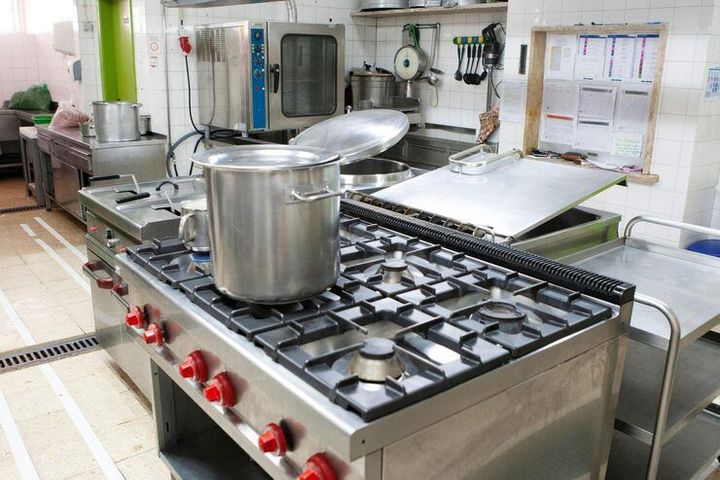
Cooking appliances form the central part of many commercial kitchens. The appropriate combination depends on the menu, cooking techniques, production volume, available space, and utilities.
Common equipment includes convection ovens, combination ovens, deck ovens, ranges, induction cooktops, griddles, broilers, steam cooking equipment, and fryers. Each appliance applies heat differently and may be suited to particular preparation methods.
For example, convection ovens circulate heated air, while combination ovens can combine different cooking modes. Induction equipment uses electromagnetic energy to heat compatible cookware, whereas conventional gas or electric appliances transfer heat through different mechanisms.
Food preparation tools
Preparation equipment can reduce repetitive manual work and provide more consistent processing. Common examples include planetary mixers, dough mixers, food processors, vegetable slicers, meat grinders, blenders, scales, and cutting equipment.
The appropriate tool depends on the ingredient and preparation process. A bakery may require different equipment from a café, while a large institutional kitchen may need equipment designed for significantly larger batches.
Storage and refrigeration
Storage systems help organize ingredients, utensils, cookware, and packaged materials. Stainless-steel shelving, ingredient bins, racks, cabinets, refrigerators, freezers, and refrigerated preparation counters are common examples.
Refrigeration selection involves factors such as internal capacity, temperature range, door configuration, airflow, placement, and the type of food being stored. Equipment should also provide sufficient access for routine cleaning and inspection.
Recent Updates
Commercial kitchen equipment has continued to develop around energy management, automation, connected controls, compact designs, and easier monitoring. These developments are not limited to one equipment category and can be seen across refrigeration, cooking, food preparation, and holding equipment.
Energy efficiency has received increasing attention. ENERGY STAR maintains criteria for several categories of commercial food equipment, including refrigerators, freezers, ice makers, dishwashers, ovens, griddles, fryers, steam cookers, holding cabinets, coffee brewers, and electric cooktops.
Automation and connected controls
Digital controls are increasingly common in commercial cooking equipment. Programmable cooking settings, electronic temperature controls, timers, display panels, and data recording functions can help operators manage repeatable processes.
Connected equipment can also transmit information to other systems. Depending on the equipment, this may include temperature readings, operating status, alerts, or maintenance information. Connectivity can add complexity, so compatibility with existing kitchen systems and staff workflows is an important consideration.
Compact and multifunctional equipment
Space utilization has also become an important design consideration. Multifunctional appliances can combine several cooking processes within one unit, while compact refrigeration and preparation equipment can be used where floor area is limited.
Recent standards activity also shows continued attention to hygienic design. NSF published updated 2026 revisions for standards covering food equipment and commercial cooking and powered food preparation equipment, including requirements concerning materials, design, construction, sanitation, and performance.
Laws or Policies
Commercial kitchen equipment can be affected by several types of regulations and technical requirements. Because these rules vary by jurisdiction, the applicable local authority and current requirements should always determine what applies to a particular kitchen.
Food-contact materials, equipment construction, sanitation, electrical systems, ventilation, fire protection, refrigeration, gas installations, wastewater management, and workplace safety may all be subject to separate requirements.
Food-contact and hygienic design
Internationally recognized standards provide reference points for the hygienic design of food equipment. For example, NSF/ANSI standards cover categories such as commercial cooking equipment, refrigerators and freezers, food preparation equipment, and food equipment materials. NSF states that its food equipment standards address areas including material safety, design, construction, and performance.
Equipment intended to contact food should therefore be evaluated according to the requirements applicable to its intended environment. Surfaces, joints, finishes, seals, and other components can influence how easily equipment can be cleaned.
Electrical, gas, and ventilation requirements
Cooking appliances may require specific electrical circuits, gas connections, ventilation arrangements, or other infrastructure. The applicable requirements depend on the equipment type and local building, electrical, fire, and occupational safety rules.
These requirements should be considered during kitchen planning rather than after equipment has been installed. Equipment documentation should identify relevant installation conditions, clearances, utility requirements, and operating limitations.
Tools and Resources
Several resources can help with commercial kitchen equipment planning and evaluation.
Equipment specifications
Manufacturer documentation can provide dimensions, power requirements, capacity information, temperature ranges, installation requirements, cleaning instructions, and operating limitations. Comparing these specifications can help determine whether an appliance fits the intended kitchen layout.
Energy assessment tools
Energy-related resources can help compare equipment categories and understand electricity or fuel consumption. ENERGY STAR provides commercial food equipment resources and an equipment calculator designed to support energy analysis.
Equipment standards databases
Standards organizations can provide information about sanitation and equipment requirements. NSF maintains a portfolio covering many categories of commercial food equipment, including cooking, refrigeration, warewashing, powered preparation equipment, and food-contact materials.
Kitchen planning checklist
A basic planning checklist can include:
- Available floor and wall space
- Required cooking capacity
- Electrical, gas, and water connections
- Ventilation requirements
- Refrigerated and dry-storage capacity
- Cleaning access
- Equipment dimensions and door clearances
- Food-contact materials
- Temperature-control requirements
- Expected workload and operating periods
- Manufacturer installation and maintenance instructions
Selection factors
Selecting commercial kitchen equipment involves balancing several practical factors rather than focusing on one specification.
Capacity should correspond with the quantity of food being prepared. Equipment that is too small can create bottlenecks, while equipment that is substantially larger than the workload can occupy unnecessary space and resources.
Workflow is another important consideration. Preparation, cooking, holding, washing, and storage areas should be arranged so that frequently performed activities do not interfere with one another.
Ease of cleaning also matters. Equipment with accessible surfaces, suitable materials, removable components where appropriate, and clear cleaning instructions can make routine kitchen maintenance more manageable.
Utility requirements should be checked before installation. An appliance may require particular electrical capacity, gas connections, water supply, drainage, ventilation, or clearance around the unit.
Durability and maintenance requirements should also be reviewed through technical documentation. Replacement components, inspection procedures, cleaning requirements, and manufacturer maintenance instructions can affect long-term equipment management.
FAQs
What is commercial kitchen equipment?
Commercial kitchen equipment includes appliances, preparation tools, refrigeration units, storage systems, washing equipment, work surfaces, and related items used in professional food preparation environments.
What types of commercial kitchen equipment are commonly used?
Common categories include cooking appliances, food preparation equipment, refrigeration, storage, dishwashing equipment, food-holding units, ventilation equipment, and worktables. The specific combination depends on the kitchen's menu and production requirements.
How do I choose commercial kitchen equipment?
Selection generally involves examining capacity, dimensions, workflow, utility requirements, cleaning access, food-contact materials, operating requirements, and maintenance information. The equipment should correspond with the kitchen's intended activities and available infrastructure.
What should be considered when selecting commercial cooking equipment?
Important factors include cooking method, batch size, available space, heat source, ventilation, control options, cleaning requirements, and utility connections. Equipment specifications should be reviewed before installation.
Why is storage important in a commercial kitchen?
Storage helps organize ingredients, cookware, utensils, and other materials. Refrigerated, frozen, and dry-storage areas also allow different categories of ingredients to be kept under appropriate conditions according to applicable food-handling practices.
Conclusion
Commercial kitchen equipment covers cooking appliances, preparation tools, refrigeration, storage, washing systems, holding equipment, and supporting infrastructure. Equipment selection depends on kitchen workflow, capacity, available space, utility requirements, hygiene considerations, and maintenance needs. Recent developments include greater use of digital controls, energy-efficiency criteria, multifunctional equipment, and updated hygienic-design standards. Local regulations and the applicable technical requirements should be considered alongside equipment specifications when planning a commercial kitchen.