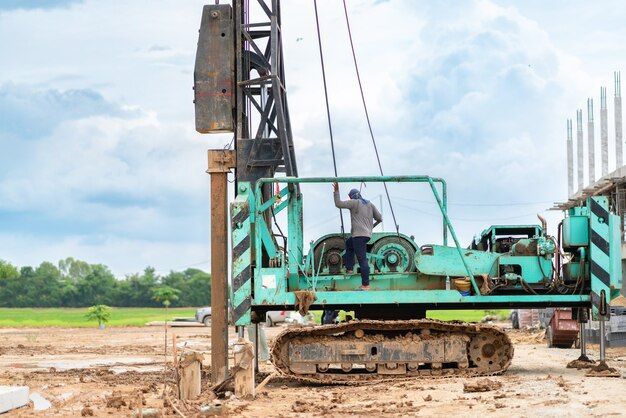
Boring Machines Overview: Types, Applications, Maintenance & Operating Methods
Boring machines are machine tools used to enlarge, finish, or accurately position existing holes in a workpiece. Unlike drilling, which generally creates a new hole, boring works on an existing opening and can improve its diameter, alignment, surface condition, and dimensional accuracy. Boring operations are used with metal components and can also be found in other manufacturing applications.
Context
The basic concept has existed for centuries, with early boring methods used to produce accurate cylindrical openings in large components. Modern boring machines have developed into mechanical, horizontal, vertical, jig, and computer numerical control systems designed for different workpiece sizes and production requirements.
A typical boring machine uses a cutting tool mounted on a boring bar or related tool holder. As the cutting tool moves relative to the workpiece, a controlled amount of material is removed from the inside surface of the existing hole.
How boring differs from drilling
Drilling and boring are related machining operations, but they serve different purposes. Drilling generally produces an initial hole, while boring enlarges or refines an existing hole.
Boring can be particularly useful when the relationship between multiple holes, their diameter, or their alignment is important. The appropriate machine and operating method depend on the material, component geometry, required dimensions, and production environment.
Importance
Boring machines are important in manufacturing because many mechanical components require accurately positioned cylindrical openings. These openings may accommodate shafts, bearings, bushings, pins, or other components.
Industries involving heavy equipment, transportation components, energy equipment, general engineering, and machinery manufacturing can use boring operations for components with demanding dimensional requirements.
Common applications of boring machines
Boring operations can be used for a range of components and manufacturing tasks, including:
- Enlarging an existing hole to a specified diameter
- Correcting or refining the alignment of an existing opening
- Producing bearing seats and similar cylindrical surfaces
- Machining large mechanical components
- Refining holes in engine and transmission components
- Preparing openings for shafts, pins, or bushings
- Machining large castings and fabricated components
The scale of the work can vary significantly. A small precision boring machine may handle relatively compact components, while a large horizontal boring machine can accommodate substantial industrial workpieces.
Main types of boring machines
Different boring machines are designed around the size, orientation, geometry, and production requirements of the workpiece.
| Boring machine type | General characteristic | Typical application |
|---|---|---|
| Horizontal boring machine | Workpiece and boring axis are generally horizontal | Large components and deep openings |
| Vertical boring machine | Workpiece is positioned around a vertical machining axis | Large, heavy, or circular components |
| Jig boring machine | Designed for precise hole positioning | Precision tooling and components |
| CNC boring machine | Uses computer-controlled movements | Repeatable and programmed machining |
| Line boring machine | Machines aligned holes along a common axis | Housings and large assemblies |
Horizontal boring machines are widely associated with large workpieces because the arrangement can accommodate substantial components. Vertical systems can be useful when the workpiece geometry or weight makes vertical positioning practical.
Jig boring machines are associated with precision hole positioning, while CNC systems use programmed movements to control machining operations. Line boring focuses on maintaining the relationship between multiple holes along a common axis.
Key machine components
Although designs differ, many boring machines include a machine bed or base, spindle, boring bar, tool holder, workholding arrangement, drive system, feed mechanism, and control system.
Modern CNC systems may add programmable axes, digital position displays, automatic tool functions, sensors, and monitoring features. The configuration depends on the machine's intended application.
Recent Updates
Recent developments in boring machines have followed wider changes in machine-tool technology. CNC control, automated tool management, digital measurement, condition monitoring, and integration with manufacturing systems are increasingly relevant to modern machining environments.
Machine-tool manufacturers and users are also paying greater attention to energy use, production monitoring, process consistency, and data collection. These developments do not change the fundamental boring process, but they can change how machines are programmed, monitored, and integrated into production systems.
CNC and digital control
CNC boring machines can execute programmed movements along multiple axes. This allows machining parameters and tool movements to be defined digitally rather than controlled entirely through manual adjustments.
Digital position feedback can also help operators monitor tool and table movement. In more connected production environments, machine data may be collected for analysis of operating conditions, tool usage, downtime, and production patterns.
Automation and process monitoring
Automation is becoming more relevant where repeated machining operations are performed. Automated tool changes, probing systems, workpiece measurement, and machine monitoring can reduce the amount of manual intervention required during particular production sequences.
However, automation does not remove the need for correct setup, tooling selection, inspection, and safe operating procedures. The quality of the final result still depends on machine condition, programming, tooling, workholding, material characteristics, and process control.
International machine-tool safety standards continue to evolve. ISO 16090-1:2022 covers safety requirements for machining centres, milling machines, and transfer machines, including machines capable of performing boring operations.
Laws or Policies
Boring machines are subject to workplace safety requirements in many jurisdictions because they contain rotating components, cutting tools, electrical systems, moving tables, and other potential hazards. The specific legal requirements depend on the country, industry, workplace, and machine configuration.
Common regulatory principles include machine guarding, emergency controls, electrical safety, operator training, maintenance procedures, personal protective equipment, and hazardous-energy control.
International standards can also provide technical guidance for machine design and risk reduction. ISO 16090-1:2022 specifies protective measures for relevant machine tools and includes requirements covering installation, maintenance, and other stages of machine use.
In workplaces governed by U.S. OSHA requirements, for example, machine guarding rules address hazards from rotating parts, point-of-operation areas, flying chips, and other moving components. OSHA also identifies lockout/tagout procedures for controlling hazardous energy during maintenance and repair activities.
The applicable national rules should always take precedence over general guidance. Machine operators and facility managers need to follow the requirements applicable to their workplace and equipment.
Basic safety considerations
Important safety practices around boring machines can include:
- Keeping guards in their intended positions
- Securing the workpiece before machining
- Checking the cutting tool and tool holder before operation
- Keeping loose clothing and objects away from rotating components
- Removing chips with appropriate tools rather than hands
- Stopping and isolating the machine before maintenance
- Following the machine manufacturer's operating instructions
- Using appropriate eye and face protection where required
OSHA guidance identifies guarding as a means of protecting operators from hazards created by point-of-operation activities, rotating parts, and flying chips.
Tools and Resources
Several technical resources can help users understand boring operations, plan machining work, and maintain equipment.
Machining calculators
Machining calculators can help estimate relationships between spindle speed, cutting speed, feed rate, tool diameter, and machining time. These calculations should be treated as planning references because actual parameters depend on the machine, tool, material, workholding, and machining conditions.
Measurement equipment
Inspection equipment is important for checking whether a bored hole meets the required dimensions. Common measurement tools include:
- Bore gauges
- Inside micrometers
- Vernier or digital calipers for suitable measurements
- Dial indicators
- Coordinate measuring systems
- Surface measurement equipment
A bore gauge can be particularly useful when checking the internal diameter of a machined hole. Dial indicators can help examine alignment and positioning during setup.
Maintenance records
A maintenance record can track inspection dates, lubrication activities, tool changes, unusual vibration, temperature observations, alignment checks, and other relevant machine conditions.
A simple maintenance checklist may include:
| Inspection area | What to check |
|---|---|
| Spindle | Noise, vibration, temperature, and smooth rotation |
| Boring bar | Wear, rigidity, and correct installation |
| Tool holder | Secure clamping and visible damage |
| Workholding | Firm positioning and alignment |
| Lubrication | Correct levels and leakage |
| Coolant system | Flow, concentration, and cleanliness where applicable |
| Machine ways | Cleanliness, lubrication, and visible wear |
| Electrical controls | Displays, switches, alarms, and emergency controls |
Maintenance intervals vary according to machine design, operating conditions, manufacturer instructions, and usage levels. A fixed schedule should not replace inspection of actual machine condition.
FAQs
What are boring machines used for?
Boring machines are used primarily to enlarge, refine, align, or finish existing holes. They are used for components that require controlled internal diameters or accurate relationships between multiple openings.
What are the main types of boring machines?
Common categories include horizontal boring machines, vertical boring machines, jig boring machines, CNC boring machines, and line boring machines. Their differences relate mainly to workpiece size, machine configuration, precision requirements, and machining method.
What is the difference between drilling and boring?
Drilling generally creates an initial hole, while boring modifies an existing hole. Boring can be used to improve the diameter, alignment, or dimensional condition of an existing opening.
How is boring machine maintenance performed?
Maintenance can include cleaning, lubrication, inspection of tooling and workholding components, checking spindle condition, examining machine ways, and reviewing electrical and control functions. The specific maintenance schedule should follow the equipment documentation and workplace procedures.
What safety precautions are important when operating boring machines?
Workpieces should be securely held, guards should remain correctly positioned, and operators should avoid contact with rotating components and cutting tools. The machine should be stopped and hazardous energy isolated before maintenance or repair activities.
Conclusion
Boring machines are used to enlarge and refine existing holes in components across a range of manufacturing applications. Horizontal, vertical, jig, CNC, and line boring machines provide different configurations for different workpiece and machining requirements. Recent developments have increased the use of digital controls, measurement systems, automation, and machine monitoring. Safe operation depends on suitable guarding, secure workholding, appropriate tooling, regular inspection, and compliance with applicable workplace requirements.