Agricultural Equipment Explored: Tractors, Harvesters, Irrigation Systems and Farm Machinery
Agricultural equipment includes the machines, tools, and systems used to prepare land, plant crops, manage fields, harvest produce, and handle materials after harvesting. Tractors, harvesters, irrigation systems, planting equipment, tillage machinery, sprayers, and material-handling machines are common examples. Together, these technologies support many stages of agricultural production.
Context
Agricultural equipment includes the machines, tools, and systems used to prepare land, plant crops, manage fields, harvest produce, and handle materials after harvesting. Tractors, harvesters, irrigation systems, planting equipment, tillage machinery, sprayers, and material-handling machines are common examples. Together, these technologies support many stages of agricultural production.
The development of agricultural machinery was driven by the need to perform repetitive physical tasks more efficiently and with greater consistency. Early farm operations relied heavily on hand tools and animal-powered equipment. Mechanical power later enabled larger areas of land to be prepared and cultivated with fewer manual operations.
Modern agricultural equipment combines mechanical systems with electronics, sensors, positioning technology, and data processing. Some machines can automatically maintain a travel path, adjust operating settings, record field information, or coordinate with other equipment.
Agricultural machinery varies considerably according to crop type, field conditions, farm size, terrain, and the task being performed. A tractor designed for soil preparation may have different characteristics from one used for planting, transport, or specialized crop operations.
Main categories of agricultural equipment
Agricultural equipment can be grouped according to its primary function:
- Tractors provide mobile power for pulling, carrying, and operating attached implements.
- Harvesters collect mature crops and may perform several harvesting operations within one machine.
- Irrigation systems distribute water to crops when natural rainfall does not provide sufficient moisture.
- Planting equipment places seeds or seedlings at selected depths and spacing.
- Tillage machinery prepares or manages soil before and during crop production.
- Crop-care equipment can be used for activities such as cultivation, spraying, and vegetation management.
- Material-handling equipment moves harvested crops, soil amendments, feed, and other agricultural materials.
These categories often overlap because many modern machines can perform multiple tasks through interchangeable implements or attachments.
Importance
Agricultural equipment matters because farming involves numerous time-sensitive operations. Soil preparation, planting, irrigation, crop management, and harvesting often need to take place within suitable environmental conditions. Machinery can help complete these operations across larger areas while reducing the amount of repetitive physical work.
Equipment also affects the consistency of agricultural operations. A planting machine, for example, can be configured to place seeds at a particular spacing and depth. An irrigation system can distribute water through selected application patterns rather than relying entirely on manual watering.
Tractors and field operations
Tractors are among the most versatile machines used in agriculture. Their engines and transmission systems provide power for pulling implements, operating hydraulic equipment, and performing transport-related tasks.
A tractor may be connected to equipment such as:
- Ploughs and cultivators for soil preparation
- Seed drills and planters for crop establishment
- Mowers for vegetation management
- Balers for collecting and forming crop material
- Trailers for moving agricultural materials
- Specialized implements for field maintenance
Important tractor characteristics include engine power, traction, transmission type, hydraulic capacity, dimensions, and compatibility with implements. Matching these characteristics to the intended operation is important because an unsuitable combination can reduce operational efficiency and increase mechanical strain.
Harvesters and crop collection
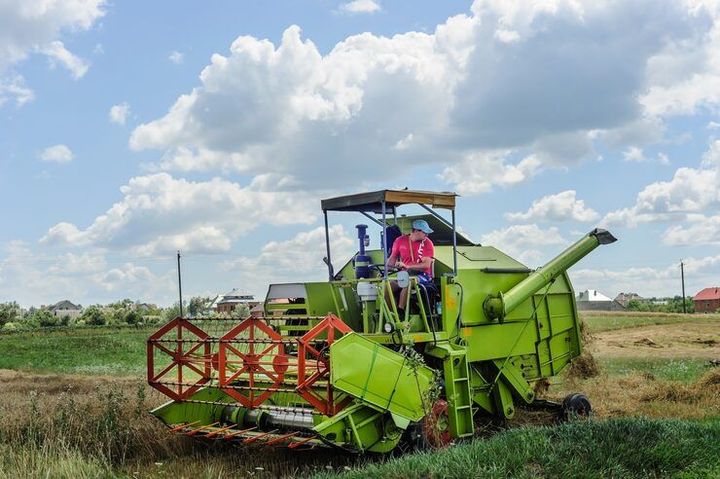
Harvesters are designed to gather mature crops and may combine several processes. Depending on the crop, a harvesting machine may cut plants, separate useful material from unwanted material, clean the harvested product, and transfer it for further handling.
A combine harvester, for example, integrates several functions associated with harvesting grain crops. Other harvesters are designed for crops with different physical characteristics and therefore use different cutting, gathering, separating, or collection mechanisms.
Harvesting equipment is also influenced by crop moisture, field conditions, plant height, row spacing, and the maturity of the crop. Machine settings may need to be adjusted as these conditions change.
Irrigation systems
Irrigation systems supply water to agricultural fields through controlled distribution methods. Common approaches include surface irrigation, sprinkler systems, drip irrigation, and other localized water-delivery arrangements.
The choice of irrigation method depends on soil characteristics, crop requirements, field layout, available water, terrain, and environmental conditions. Modern systems may incorporate pumps, valves, pressure regulators, flow meters, soil-moisture sensors, weather information, and automated controls.
The purpose of irrigation management is not simply to apply water but to coordinate water delivery with crop and soil conditions. Excessive or poorly timed irrigation can create runoff, waterlogging, or inefficient water use, while inadequate application can contribute to plant water stress.
Equipment comparison
| Equipment category | Primary function | Common operating factors |
|---|---|---|
| Tractor | Provides mobile power and traction | Engine power, traction, implement compatibility |
| Harvester | Collects and processes mature crops | Crop type, moisture, harvesting capacity |
| Planter | Places seeds or planting material | Spacing, depth, soil condition |
| Cultivator | Manages soil and field vegetation | Working depth, soil type, field condition |
| Sprayer | Applies liquid agricultural inputs | Flow rate, pressure, coverage pattern |
| Irrigation system | Delivers water to crops | Flow, pressure, soil moisture, crop needs |
| Baler | Collects and forms crop material | Material moisture, density, pickup capacity |
Recent Updates
From 2024 through 2026, agricultural equipment development has increasingly focused on automation, precision agriculture, sensing, and data-based decision support. Research and field projects have explored the integration of soil information, weather data, remote sensing, and machine learning into irrigation and crop-management decisions.
Precision guidance has also become an established area of agricultural technology. Research published in 2024 documented increasing use of guidance and steering technologies on tractors, harvesters, and other field equipment, while adoption varied considerably according to farm characteristics and technology type.
Automation and machine intelligence
Automation is developing across several agricultural operations. Current research includes machine vision, autonomous navigation, robotic equipment, remote sensing, and data-based control systems. These technologies can help machines identify field conditions, maintain planned paths, or adjust selected operations based on collected information.
However, agricultural automation is not limited to completely autonomous machines. Many systems use partial automation, where a person remains responsible for supervision while electronic systems assist with steering, monitoring, data collection, or machine adjustment.
Smarter irrigation
Irrigation technology is also moving toward more data-driven management. Research has examined combinations of soil-moisture sensors, weather information, remote sensing, crop models, and automated controls to improve irrigation scheduling.
These developments show a broader movement toward equipment that not only performs a physical task but also collects information about the operating environment. The practical usefulness of such systems still depends on data quality, calibration, field conditions, machine compatibility, and appropriate human oversight.
Laws or Policies
Agricultural equipment can be affected by rules covering machinery safety, environmental protection, emissions, electrical systems, workplace practices, chemical application, and equipment operation. The exact requirements vary by jurisdiction, so a general article should not treat one regulatory framework as universally applicable.
Manufacturers may need to demonstrate that particular equipment meets applicable technical and safety requirements before it can enter a regulated market. Documentation can include operating instructions, safety information, equipment specifications, testing records, and conformity information where applicable.
Rules may also apply to machinery used with agricultural chemicals. Equipment such as sprayers can be subject to requirements concerning application practices, operator protection, equipment calibration, and environmental safeguards.
For automated and connected agricultural equipment, additional considerations can include radio communication requirements, data handling, software updates, machine connectivity, and functional safety. These areas continue to develop as agricultural machinery becomes more electronically controlled.
Because regulations differ between jurisdictions and can change over time, the applicable authority and current rules should be checked whenever a legal or compliance decision is involved.
Tools and Resources
Agricultural equipment users can rely on several types of tools to understand machine operation and plan field activities.
Equipment manuals and specifications
Manufacturer manuals provide information about machine controls, operating procedures, maintenance intervals, compatible implements, safety precautions, and technical specifications. These documents are useful for understanding how a particular machine is designed to operate.
Field measurement tools
Common agricultural measurement tools include soil-moisture meters, flow meters, pressure gauges, weather instruments, measuring tapes, GPS-based systems, and crop-monitoring sensors. Their usefulness depends on proper placement, calibration, and interpretation.
Irrigation calculators
Irrigation planning can involve calculations related to application rate, flow, pressure, field area, soil moisture, and crop water requirements. Digital calculators and agricultural planning tools can help organize these variables, although the results depend on the accuracy of the information entered.
Equipment records
A structured equipment record can contain:
- Machine identification and specifications
- Operating hours
- Maintenance history
- Implement compatibility
- Fuel or energy consumption records
- Inspection observations
- Calibration information
- Field-operation notes
Keeping these details organized can make it easier to understand equipment use and identify changes in machine performance.
FAQs
What are the main types of agricultural equipment?
Major categories include tractors, harvesters, planters, cultivators, sprayers, irrigation systems, balers, trailers, and specialized crop machinery. Each category is designed for particular agricultural operations.
How are tractors used in agricultural machinery?
Tractors provide mechanical power and traction for many field and transport operations. They can pull or operate implements used for soil preparation, planting, mowing, material handling, and other tasks.
What types of irrigation systems are used in agriculture?
Common irrigation approaches include surface irrigation, sprinkler irrigation, and drip irrigation. Each method distributes water differently and has different requirements related to soil, crop type, field layout, pressure, and water availability.
What are modern agricultural harvesters designed to do?
Modern harvesters can combine several operations, such as cutting, gathering, separating, cleaning, and transferring harvested material. Their design varies according to the crop and the conditions under which harvesting takes place.
How is technology changing agricultural equipment?
Agricultural equipment is increasingly incorporating sensors, positioning systems, automation, remote monitoring, machine vision, and data analysis. These technologies are being developed for applications ranging from tractor guidance and harvesting to irrigation management and crop monitoring.
Conclusion
Agricultural equipment covers a broad range of machines and systems used throughout crop production, from tractors and planters to harvesters and irrigation systems. Modern equipment increasingly combines mechanical functions with sensors, automation, positioning technology, and data analysis. Equipment selection and operation depend on factors such as crop type, field conditions, machine capabilities, and operating requirements. Regulatory considerations also vary according to the jurisdiction and type of machinery involved.