Water Pressure Pump A Complete Guide to Types, Working, Uses and Maintenance
A water pressure pump is a mechanical device used to increase or maintain water pressure within a plumbing or water distribution system. It is commonly used when water reaches taps, showers, appliances, irrigation points, or other outlets with insufficient pressure. Depending on the system, a pressure pump may work with a storage tank, a municipal supply, a well, or another water source.
Context
The basic purpose of a water pressure pump is to move water while providing the pressure required by the connected system. Pumps are generally designed around factors such as flow rate, pressure, pipe resistance, elevation, and the characteristics of the water being moved. International pump standards cover areas such as dimensions, technical specifications, testing methods, and installation practices.
A typical water pressure system contains several components that work together. These can include the pump, electric motor, pressure sensor or switch, control unit, pipes, valves, and sometimes a pressure tank. The exact arrangement depends on the application and the type of pump.
How a water pressure pump works
A pump receives water at its inlet and transfers energy to that water through a mechanical pumping mechanism. In a centrifugal pump, an impeller rotates and increases the water's velocity before the pump casing converts part of that velocity into pressure.
When a pressure pump operates automatically, a sensor or pressure switch can detect changes in system pressure. When pressure falls because water is being used, the control system can start the pump. When demand decreases and the required pressure is restored, the pump can reduce its speed or stop, depending on its control arrangement.
Pressure and flow are related but are not the same measurement. A pump that produces high pressure does not necessarily provide a high flow rate under every operating condition. Pump selection therefore requires consideration of both requirements.
Importance
Water pressure affects how effectively water moves through a building or distribution network. Low pressure can result in weak showers, slow filling of storage tanks, reduced irrigation performance, or difficulty operating certain water-using equipment.
A water pressure pump can address pressure limitations when the existing supply does not provide sufficient pressure for the intended application. It can also help maintain more consistent pressure when demand changes during the day.
The topic is relevant to residential buildings, commercial properties, agricultural systems, industrial facilities, irrigation networks, and other applications where water needs to move through pipes at a defined pressure.
Common applications
Water pressure pumps are used in many situations, including:
- Residential water distribution
- Multi-level buildings
- Irrigation systems
- Rainwater collection systems
- Water transfer between tanks
- Industrial water circulation
- Fire protection systems where specifically designed equipment is required
- Agricultural water distribution
The required pump characteristics differ between these applications. A small domestic system may require relatively modest flow and pressure, while a large building or industrial installation may require multiple pumps operating together.
Main factors affecting pressure
Water pressure at an outlet can be influenced by several factors. These include the height between the water source and outlet, pipe diameter, pipe length, fittings, valves, filters, elevation changes, and simultaneous water demand.
A simple system assessment should therefore look beyond the pump itself. A partially blocked pipe, leaking connection, undersized pipe, or faulty valve can also create pressure problems.
Common pump types
Different pump designs are suited to different operating conditions.
| Pump type | General operating principle | Common applications |
|---|---|---|
| Centrifugal pump | Rotating impeller transfers energy to water | Building supply, irrigation, circulation |
| Booster pump | Raises pressure within an existing water system | Buildings and distribution networks |
| Multistage pump | Uses multiple impellers in sequence | Higher-pressure applications |
| Jet pump | Uses an ejector arrangement to assist water movement | Certain shallow-well systems |
| Submersible pump | Pump and motor operate below the water surface | Wells, tanks, drainage |
| Diaphragm pump | Flexible diaphragm moves water through the chamber | Specialized water transfer and pressure systems |
The choice depends on required pressure, flow, water source, installation conditions, and manufacturer specifications.
Recent Updates
Water pumping technology has increasingly focused on energy efficiency, variable-speed operation, electronic controls, and system-level monitoring. Instead of operating at one fixed speed, variable-speed systems can adjust pump output according to changing demand.
Pressure sensors can be used to control pump speed or start and stop pumps according to system requirements. ASHRAE guidance for service-water pressure-booster systems describes the use of pressure sensors and controls that adjust pump operation according to demand.
Another development is greater attention to electric-motor efficiency. The 2025 edition of IEC 60034-30-1 introduced revised efficiency classes for applicable single-speed AC motors and added an IE5 efficiency class. The standard covers motors within defined power, voltage, frequency, and pole ranges.
These developments are relevant to pump systems because the motor is a major part of the equipment's energy use. However, motor efficiency alone does not describe the performance of an entire pumping system.
Variable-speed pumping
Variable-speed drives can adjust motor speed according to changing water demand. During periods of lower demand, the system may operate at a reduced speed rather than continuously running at full speed.
The effectiveness of this approach depends on system design. Pump selection, pipe characteristics, control settings, and operating conditions all influence overall performance. The U.S. Department of Energy provides technical resources covering variable-speed pumping, pump selection, system assessment, and related subjects.
Monitoring and system efficiency
Modern pump systems may use electronic sensors and controllers to monitor pressure, flow, operating conditions, and faults. These controls can help a system respond to changing demand and identify abnormal operating conditions.
International guidance also increasingly considers the complete pumping system rather than only the pump. ISO/ASME 14414 describes an approach for assessing energy use across a pumping system and documenting assessment results.
Laws or Policies
Water pressure pumps can be affected by building codes, plumbing regulations, electrical requirements, water-quality rules, energy-efficiency standards, and safety requirements. The exact rules depend on the location, building type, water source, and intended use.
For drinking-water systems, materials that contact potable water may be subject to specific requirements concerning safety and contamination. Backflow prevention can also be required where contaminated water could potentially enter a clean-water supply.
Electrical installation is another important consideration. Pumps use electric motors and control equipment that must be installed according to applicable electrical and building requirements. Wet environments also require appropriate protection against electrical hazards.
Energy-efficiency requirements can apply to certain pump and motor categories. For example, the U.S. Department of Energy maintains federal energy-conservation standards and testing requirements for covered pump categories.
International standards also provide technical frameworks for pumps. ISO's pump committee covers technical specifications, dimensions, testing, installation, and special applications for different pump types.
Because requirements differ between jurisdictions and applications, a pump installation should be assessed against the applicable local plumbing, electrical, building, water-quality, and energy rules.
Tools and Resources
Several tools can help explain, evaluate, or maintain a water pressure pump system. Pump selection calculators can estimate pressure and flow requirements using information such as pipe length, elevation, pipe diameter, fittings, and required water demand.
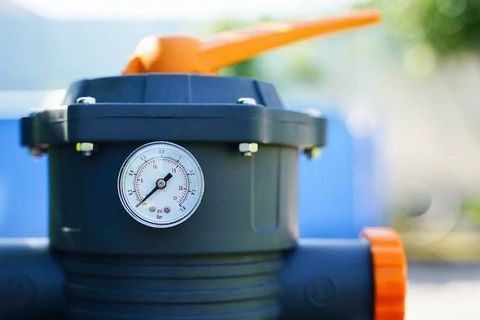
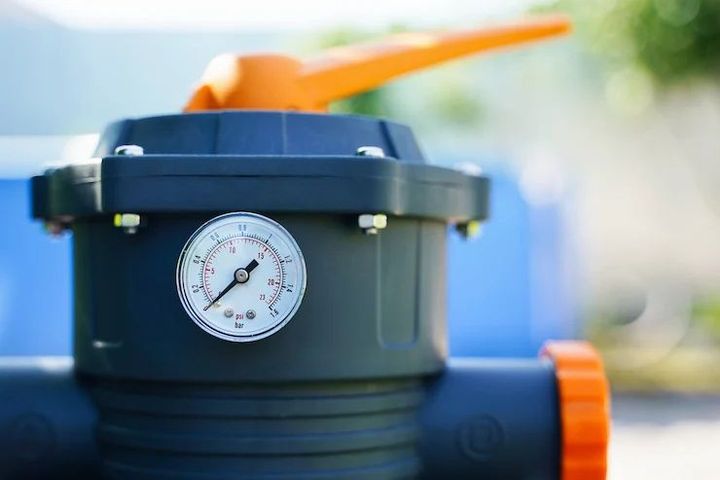
Pressure gauges are useful for observing system pressure at selected points. A flow meter can help determine how much water is moving through a system. Electrical monitoring equipment can also be used to examine motor operation and energy consumption in suitable installations.
Pump manufacturers commonly provide performance curves showing the relationship between flow rate and pressure or head. Reading these curves helps explain how a particular pump behaves under different operating conditions.
The U.S. Department of Energy provides pumping-system resources that include assessment software, technical publications, and guidance on pump selection, variable-speed operation, and system efficiency.
Maintenance guidance should also be based on the equipment manufacturer's documentation. General pump-maintenance guidance emphasizes checking equipment condition, investigating unusual vibration, noise, or temperature, and carrying out maintenance according to manufacturer specifications.
Basic maintenance practices
Routine inspection can help identify problems before they become more serious. Useful checks include:
- Inspecting pipes and connections for visible leaks
- Checking unusual noise or vibration
- Monitoring changes in pressure
- Checking valves and filters
- Inspecting electrical connections where appropriate
- Checking the pump for overheating
- Following the manufacturer's lubrication and inspection instructions
- Investigating repeated starting and stopping
Frequent cycling, cavitation, leakage, or operation outside the intended conditions can increase mechanical stress. Pump-system guidance identifies these conditions as factors that can increase maintenance requirements.
Common signs of a problem
A pressure pump may require investigation when the system shows unusual behavior. Common warning signs include fluctuating pressure, reduced water flow, unusual noise, excessive vibration, overheating, repeated starting and stopping, or visible leakage.
These symptoms do not always mean that the pump itself has failed. Blocked filters, air in the system, pipe restrictions, incorrect pressure settings, leaks, and inadequate water supply can create similar symptoms.
FAQs
What is a water pressure pump?
A water pressure pump is equipment designed to increase or maintain water pressure within a plumbing or water distribution system. It transfers mechanical energy to water so that it can move through the system under the required conditions.
How does a water pressure pump work?
A water pressure pump draws water into its inlet and transfers energy to the water through an impeller, diaphragm, piston, or another pumping mechanism. A pressure control system can regulate operation according to changes in demand.
What are the main types of water pressure pumps?
Common types include centrifugal pumps, booster pumps, multistage pumps, jet pumps, submersible pumps, and diaphragm pumps. Their suitability depends on pressure requirements, flow rate, water source, and installation conditions.
How can a water pressure pump be maintained?
Maintenance generally includes checking for leaks, unusual noise, vibration, overheating, pressure changes, blocked filters, and damaged connections. Manufacturer instructions should determine inspection intervals and specific maintenance procedures.
Can a water pressure pump improve low water pressure?
A pressure pump can increase pressure when the existing water supply and plumbing arrangement are suitable for pumping. However, low pressure can also result from blocked pipes, leaks, restricted valves, inadequate supply, or other system problems, so the underlying cause should be identified first.
Conclusion
A water pressure pump helps move water through a system while providing the pressure required for different applications. Centrifugal, booster, multistage, jet, submersible, and diaphragm pumps use different mechanisms and are suited to different operating conditions. Recent developments have placed greater attention on variable-speed controls, motor efficiency, electronic monitoring, and whole-system performance. Proper maintenance and compliance with applicable plumbing, electrical, water-quality, and safety requirements are important parts of pump operation.