Commercial Air Purifiers Insights: HEPA Filters, Air Cleaning Technologies and Maintenance
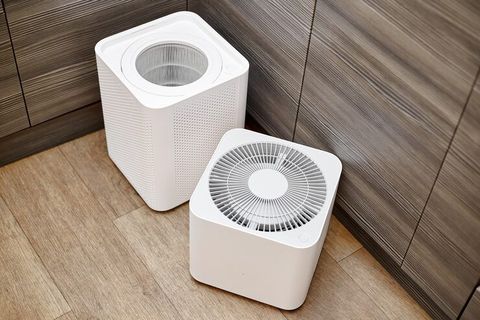
Commercial air purifiers are air-cleaning devices designed for spaces where indoor air quality needs to be managed across larger or more frequently occupied areas. They are used in settings such as offices, classrooms, retail spaces, hospitality environments, healthcare facilities, workshops, and other indoor locations.
Context
The basic purpose of an air purifier is to remove or reduce certain airborne particles or contaminants from the air passing through the device. Different technologies work in different ways. Mechanical filtration captures particles, activated carbon can adsorb certain gases and odors, and other technologies use physical or chemical processes to interact with airborne contaminants.
HEPA, or high-efficiency particulate air filtration, is one of the most widely recognized filtration technologies. A HEPA filter is a mechanical filter made from a dense network of fibers that captures very small airborne particles as air passes through it. Its performance depends on the filter design, airflow, installation, and operating conditions.
Commercial air purification is not a replacement for ventilation, source control, or routine cleaning. Instead, it can form part of a broader indoor air-quality approach. Understanding filtration technology, airflow, maintenance, and operating conditions helps explain how these systems function.
Main components of a commercial air purifier
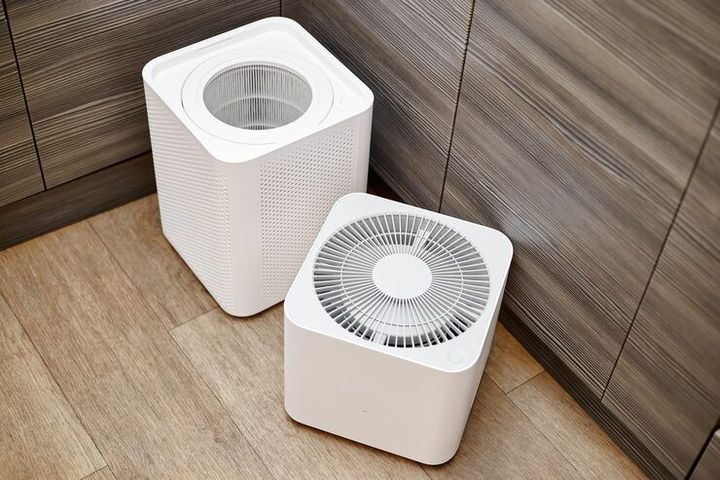
A commercial air purifier may contain several components depending on its design and intended application. Common elements include:
- Pre-filter: Captures larger particles before air reaches finer filtration stages.
- HEPA filter: Provides mechanical particle filtration.
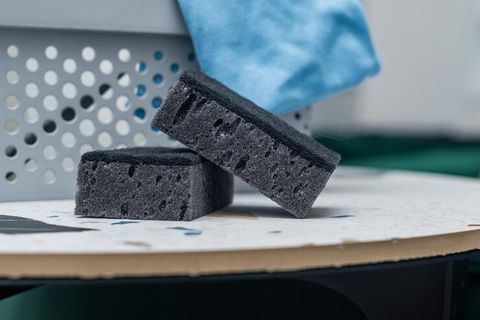
- Activated carbon filter: Uses adsorption to reduce certain gases and odors.
- Fan or blower: Moves air through the filtration system.
- Housing: Directs airflow through the intended filtration stages.
- Controls and sensors: May monitor operating conditions or selected air-quality indicators.
Not every commercial air purifier contains all of these components. The combination depends on the technology and intended application.
Importance
Indoor air can contain particles originating from outdoor pollution, human activity, dust, combustion, building materials, cleaning activities, and other sources. The concentration and type of contaminants can vary significantly between buildings and even between rooms within the same building.
Commercial air purifiers are therefore relevant to building operators and occupants who need to manage particulate matter or particular airborne contaminants. Their usefulness depends on selecting a system that corresponds to the room size, airflow requirements, contaminant type, and operating conditions.
Understanding clean air delivery
Air purification depends partly on how much cleaned air a system can introduce into a room over a given period. This concept is often expressed through clean air delivery rate, commonly abbreviated as CADR.
A higher airflow rate does not automatically mean that a system performs better in every situation. Filtration efficiency, airflow, room volume, filter loading, placement, and operating speed all affect actual air cleaning.
For commercial spaces, these factors are often considered together rather than looking at filter efficiency alone.
HEPA filtration and particle removal
HEPA filtration is designed for particle removal rather than general removal of every airborne substance. Particles can be captured through several mechanisms, including interception, diffusion, and inertial effects.
A HEPA filter's performance should be considered alongside the airflow passing through it. A highly efficient filter with insufficient airflow may process less room air than a system using a different configuration with greater airflow.
The following table illustrates common components and their general functions:
| Component or technology | Primary function | Main consideration |
|---|---|---|
| Pre-filter | Captures larger particles | Requires periodic cleaning or replacement |
| HEPA filter | Captures fine airborne particles | Filter loading can affect airflow |
| Activated carbon | Adsorbs selected gases and odors | Performance depends on carbon quantity and contaminant |
| Fan or blower | Moves air through the system | Airflow and operating noise matter |
| Air-quality sensor | Detects selected conditions | Sensor readings depend on sensor type and placement |
| UV-based technology | Uses ultraviolet radiation | Design and exposure conditions affect performance |
Recent Updates
Recent developments in commercial air purification have focused on energy efficiency, sensor integration, filtration monitoring, and more detailed evaluation of air-cleaning performance. Building operators are increasingly interested in systems that can operate alongside existing ventilation rather than functioning as completely separate solutions.
Another trend is the increased use of sensors. Some commercial air purifiers monitor particulate concentrations, filter condition, temperature, humidity, or other environmental variables. Connected systems may display this information through a control panel or digital platform.
However, a sensor reading should not automatically be interpreted as a complete measurement of indoor air quality. Different sensors detect different pollutants, and a particle sensor cannot by itself determine the concentration of every possible airborne contaminant.
Developments in filtration
Modern commercial systems may combine several filtration stages. A pre-filter can reduce the particle load reaching a finer filter, while activated carbon can address certain gaseous substances.
Some systems also incorporate technologies such as ultraviolet germicidal irradiation, electrostatic precipitation, ionization, or photocatalytic processes. Their operating principles and performance characteristics differ, so they should not be treated as interchangeable with mechanical filtration.
Energy and airflow considerations
Energy use has become an important consideration in commercial air-cleaning system design. Fans require energy to move air through filters, and pressure resistance can increase as filters become loaded with particles.
This means maintenance and airflow monitoring can affect both air-cleaning performance and equipment operation. A system operating continuously with a heavily loaded filter may behave differently from the same system operating with a clean filter.
Laws or Policies
Commercial air purification can be affected by several types of rules, depending on the building, equipment, application, and jurisdiction. These may include indoor air-quality requirements, workplace provisions, electrical safety requirements, building regulations, equipment certification requirements, and environmental rules.
The specific requirements vary considerably between jurisdictions and applications. For this reason, a general description of commercial air purifiers should not be treated as a statement that a particular system satisfies a specific regulatory requirement.
Technical standards can also be used to evaluate air-cleaning equipment. Standards and testing methods may address areas such as filtration efficiency, airflow, energy use, electrical safety, emissions, acoustic performance, or equipment testing.
Manufacturers may publish technical documentation describing the operating conditions and testing methods associated with their equipment. When comparing systems, it is important to distinguish independently verified performance information from general product descriptions.
Building ventilation considerations
Air purification and ventilation address related but different aspects of indoor air management. Ventilation introduces outdoor air and removes indoor air, while an air purifier generally processes air already present within a space.
A commercial air purifier therefore should not automatically be considered a substitute for required ventilation or other building controls. The appropriate combination depends on the building and its operating requirements.
Tools and Resources
Several resources can help people understand commercial air purification without relying solely on product descriptions.
Air-quality monitoring tools
Portable particle monitors and fixed indoor-air sensors can provide information about selected environmental conditions. Common measurements may include particulate matter, carbon dioxide, temperature, and relative humidity.
These measurements have different meanings. For example, carbon dioxide is commonly used as an indicator related to ventilation conditions, but it does not represent every type of indoor pollutant.
Filter maintenance records
A maintenance log can help organize information about filtration equipment. Useful entries may include:
- Installation or replacement date
- Filter type and specification
- Equipment operating hours
- Observed pressure changes
- Cleaning activities
- Inspection findings
- Sensor or alarm observations
The appropriate inspection and replacement interval depends on the equipment, environment, operating hours, and manufacturer's instructions.
Technical documentation
Equipment manuals, filter specifications, engineering documents, and recognized testing standards can help explain how a particular system is intended to operate.
When reviewing technical information, useful details include airflow ratings, filter classifications, applicable room conditions, pressure drop, electrical requirements, noise measurements, and maintenance instructions.
Room and airflow calculations
Basic room-volume calculations can help estimate how much air is being processed relative to the size of a space. A simple room volume calculation is:
Room volume = Length × Width × Height
Air changes per hour can then be considered using the airflow rate and room volume. In practice, actual performance can vary because of room layout, air mixing, doors, occupants, furniture, and other airflow conditions.
FAQs
What is a commercial air purifier?
A commercial air purifier is an air-cleaning device intended for use in larger or more frequently occupied indoor spaces. Depending on its design, it may use HEPA filtration, activated carbon, or other air-cleaning technologies.
How does a HEPA filter work in a commercial air purifier?
A HEPA filter uses a dense fiber structure to capture fine airborne particles as air passes through it. Its practical performance depends on the filter design, airflow, installation, and condition of the filter.
Are HEPA filters the only air cleaning technology?
No. Commercial air purifiers may use several technologies, including mechanical filtration, activated carbon, electrostatic methods, ultraviolet-based systems, and other processes. Each technology addresses different types of contaminants and has different operating characteristics.
How often should commercial air purifier filters be replaced?
There is no single replacement interval that applies to every system. Filter condition depends on factors such as operating hours, particle levels, airflow, filter design, and the surrounding environment. Manufacturer instructions and relevant maintenance measurements provide the applicable guidance for a particular system.
Does an air purifier replace ventilation?
Generally, air purification and ventilation perform different functions. An air purifier processes air through its filtration or treatment system, while ventilation exchanges indoor and outdoor air. A building's requirements determine how these approaches are used together.
Conclusion
Commercial air purifiers use filtration and other air-cleaning technologies to process indoor air in larger or frequently occupied spaces. HEPA filters are designed primarily for particle filtration, while technologies such as activated carbon address certain gaseous substances and odors. Effective operation depends on appropriate airflow, system design, filter condition, placement, and maintenance. Commercial air purification is one component of indoor air management and does not represent the same function as ventilation or source control.