House Cleaning Services Overview: Cleaning Methods, Home Areas, Service Types and Preparation Tips
House cleaning refers to the routine and specialized work involved in removing dust, dirt, stains, odors, food residue, and other unwanted materials from living spaces. It can range from simple daily tasks such as sweeping and wiping surfaces to more detailed cleaning of kitchens, bathrooms, floors, windows, upholstery, and other areas.
Context
The practice exists because household surfaces naturally accumulate particles and residues through everyday activities. Cooking, eating, walking indoors, opening windows, keeping pets, and regular use of furniture can all contribute to household dirt. Regular cleaning helps maintain an orderly living environment and can reduce the buildup of materials that are difficult to remove later.
House cleaning can be performed by household members or by professional cleaning providers. The appropriate approach depends on the size of the home, the materials being cleaned, the condition of the space, available equipment, and the amount of work required.
Common cleaning methods
Different surfaces require different techniques. Dry methods such as dusting, sweeping, and vacuuming are generally used to remove loose particles, while wet methods use water and suitable cleaning products to remove residues from washable surfaces.
Other methods include mopping, scrubbing, spot cleaning, steam cleaning, glass cleaning, and upholstery cleaning. A cleaning method should be selected according to the surface material and the instructions provided for the relevant product or equipment.
Cleaning, sanitizing and disinfecting
These terms describe different processes and should not be treated as interchangeable. Cleaning generally removes dirt and organic matter, while sanitizing and disinfecting involve reducing or destroying certain microorganisms under specified conditions.
The U.S. Environmental Protection Agency explains that cleaning removes dirt and organic matter, while sanitizing and disinfecting involve antimicrobial actions. Product labels provide important information about appropriate surfaces, application methods, and contact times.
Importance
House cleaning matters because homes contain many surfaces that are touched, used, or exposed to food, moisture, dust, and outdoor particles. Kitchens can accumulate grease and food residues, bathrooms experience regular moisture exposure, and floors collect particles carried indoors from outside.
Cleaning also helps preserve household materials. Dust and abrasive particles can gradually affect some surfaces, while moisture and residue can contribute to staining or deterioration when they remain untreated.
Who may use different cleaning approaches
Households have different cleaning requirements. A small apartment may need a different routine from a large house, while homes with children, pets, frequent cooking, or high foot traffic may require attention to particular areas more often.
Cleaning requirements can also change according to household circumstances. Moving into or out of a property, preparing for guests, recovering from renovation work, or dealing with accumulated clutter may require a more detailed cleaning process than a normal weekly routine.
Common home areas
Different rooms present different cleaning challenges:
Kitchen areas can require attention to countertops, sinks, appliances, cabinets, floors, and food-preparation surfaces.
Bathrooms commonly require cleaning of toilets, sinks, showers, bathtubs, mirrors, floors, and other moisture-exposed surfaces.
Bedrooms generally involve dusting, vacuuming, floor care, furniture cleaning, and attention to bedding.
Living rooms may require cleaning of floors, furniture, shelves, windows, electronics, and frequently touched surfaces.
Entryways can collect outdoor dirt, dust, moisture, and particles carried on footwear.
Utility and storage areas may require periodic dust removal and floor cleaning.
Routine cleaning and deep cleaning
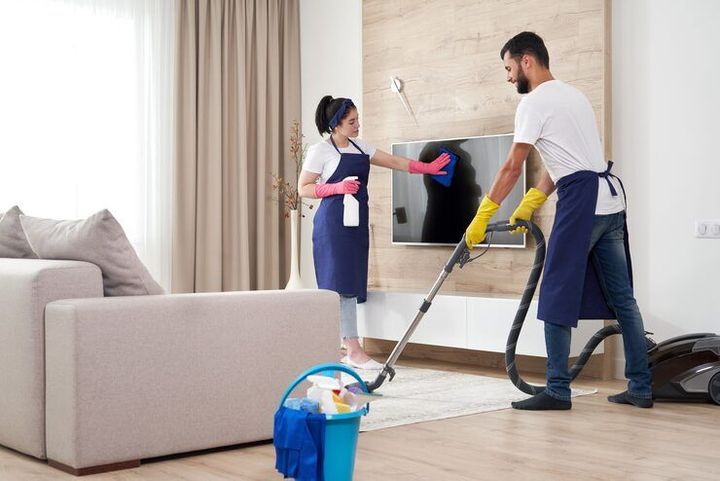
Routine cleaning focuses on tasks that are repeated regularly. Examples include vacuuming, sweeping, wiping surfaces, cleaning sinks, and removing household waste.
Deep cleaning generally involves less frequent tasks that require more detailed attention. These may include cleaning behind appliances, washing difficult-to-reach areas, detailed bathroom cleaning, interior cabinet cleaning, or removing accumulated dust from fixtures.
| Cleaning approach | Typical focus | Usual frequency |
|---|---|---|
| Routine cleaning | Dust, floors, surfaces and everyday residues | Regularly |
| Deep cleaning | Detailed and less-accessible areas | Periodically |
| Kitchen cleaning | Food residue, grease and preparation areas | Regularly |
| Bathroom cleaning | Moisture-prone surfaces and fixtures | Regularly |
| Window cleaning | Glass, frames and tracks | Periodically |
| Upholstery cleaning | Fabric surfaces and embedded particles | As needed |
| Move-related cleaning | Broad cleaning throughout a property | Before or after a move |
Recent Updates
House cleaning has increasingly incorporated technology, automation, and greater attention to product ingredients. Recent developments include robotic vacuum and mop systems, automated scheduling, mapping technology, app-based controls, and sensors that help cleaning equipment navigate indoor spaces.
Research published in 2025 reviewed developments in cleaning robots and described advances involving sensors, navigation, control systems, and applications beyond conventional floor cleaning. The research also identified expanding applications involving surfaces such as windows and other difficult-to-reach areas.
Growth of automated cleaning tools
Robotic cleaning equipment has become more capable of mapping rooms, identifying obstacles, adjusting cleaning patterns, and operating according to scheduled routines. Industry data reported by IDC indicates that global cleaning robot shipments increased during 2025, with smart vacuum systems remaining a major category and growth also occurring in window and outdoor cleaning robots.
These systems do not eliminate the need for manual cleaning. Areas such as stairs, corners, cluttered spaces, furniture surfaces, and certain bathrooms may still require direct attention.
Greater attention to cleaning ingredients
Another trend involves increased awareness of cleaning product ingredients and packaging. In 2024, the U.S. EPA updated its Safer Choice and Design for the Environment standards, including changes related to chemical criteria, packaging, wipes, and resource efficiency.
This reflects a broader interest in understanding what cleaning products contain, how they are used, and how their packaging and ingredients affect indoor and environmental considerations.
Smart cleaning routines
Digital calendars, reminder applications, robotic cleaning schedules, and household-management applications can help organize recurring tasks. These tools are particularly useful when several rooms require different cleaning intervals.
However, automation is mainly a convenience and organizational tool. It does not replace the need to select an appropriate cleaning method for each material.
Tools and Resources
House cleaning can involve relatively simple equipment as well as specialized machines. The appropriate selection depends on the surface, type of dirt, available space, and cleaning method.
Basic cleaning equipment
Common household tools include:
Microfiber cloths for dusting and wiping
Brooms and dustpans for loose debris
Vacuum cleaners for floors, carpets, and other suitable surfaces
Mops for washable flooring
Brushes for detailed scrubbing
Buckets for suitable wet-cleaning tasks
Squeegees for glass and smooth surfaces
Protective gloves when appropriate for the cleaning product being used
Equipment should be maintained and cleaned according to its instructions. Reusing dirty cloths or poorly maintained equipment can transfer debris between areas.
Cleaning products
Different products are formulated for different purposes and surfaces. A kitchen cleaner, glass cleaner, floor product, and bathroom product may have different instructions and compatibility requirements.
Labels should be read before use. The U.S. EPA advises users not to mix cleaning products because certain combinations can create hazardous vapors. It also recommends following label directions and providing adequate ventilation when using relevant products.
Checklists and schedules
A household cleaning checklist can divide tasks by frequency. For example:
Daily: remove visible waste, clean food-preparation areas, and address spills.
Weekly: vacuum or sweep floors, clean bathrooms, dust furniture, and wipe frequently touched surfaces.
Periodically: clean windows, cabinet interiors, appliances, upholstery, and less-accessible areas.
The exact schedule depends on household use and the condition of each area.
Digital planning tools
Calendar applications, task-management platforms, spreadsheets, and printable checklists can be used to organize cleaning routines. A useful schedule can include the room, task, cleaning method, equipment required, and preferred frequency.
Preparation Tips
Preparation can make house cleaning more organized and can reduce unnecessary movement between rooms. Before starting, it is useful to identify which areas require attention and which materials need special handling.
Before cleaning begins
A basic preparation process can include:
Remove unnecessary objects from the surfaces being cleaned.
Separate items that require special handling.
Identify the materials of floors, counters, furniture, and fixtures.
Read product labels and surface-care instructions.
Gather the required equipment before starting.
Improve ventilation when appropriate.
Keep cleaning products away from children and pets where applicable.
Spills should generally be addressed according to the material involved. Some substances can stain porous surfaces or react with particular finishes if they remain in place for an extended period.
Cleaning from high areas to low areas
A practical method is to work from higher surfaces toward lower ones. Dust that falls from shelves or upper surfaces can then be removed when the lower areas and floors are cleaned.
Moving through one room or zone at a time can also help prevent unfinished areas from being overlooked. For larger homes, dividing the work into sections may make the routine easier to organize.
Preparing for professional cleaning
When an outside cleaning provider is involved, preparation may include clearing personal belongings from floors and surfaces, identifying delicate materials, securing valuables, and communicating any areas that require special attention.
It is also useful to identify surfaces that should not be treated with particular chemicals or equipment. Written instructions for unusual materials can reduce the possibility of unsuitable cleaning methods being used.
FAQs
What are the main types of house cleaning services?
Common categories include routine cleaning, deep cleaning, kitchen cleaning, bathroom cleaning, window cleaning, upholstery cleaning, move-related cleaning, and specialized cleaning for particular surfaces. The exact tasks included can vary between providers.
How often should house cleaning be done?
There is no single schedule suitable for every household. Frequently used areas may need attention more often, while windows, cabinet interiors, and other less-used areas may be cleaned periodically.
What should I do before a house cleaning service?
Personal belongings can be organized or moved away from the surfaces that need cleaning. It is also useful to identify delicate materials, areas requiring special attention, and surfaces that have specific care instructions.
What is the difference between routine cleaning and deep cleaning?
Routine cleaning focuses on recurring household tasks such as dusting, vacuuming, mopping, and cleaning commonly used surfaces. Deep cleaning involves more detailed work on areas that may not be addressed during every regular cleaning session.
Can cleaning products be mixed together?
Cleaning products should not be mixed unless the product instructions specifically state that they can be combined. Certain combinations can create hazardous gases or other harmful reactions. The EPA specifically advises against mixing household cleaning products.