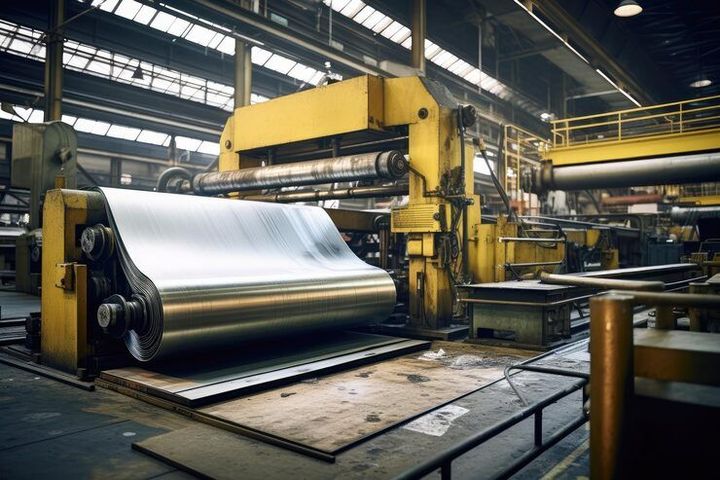
Stretch Film Machine Guide: Types, Components and Packaging Applications
A stretch film machine is industrial equipment used to produce plastic stretch film for wrapping and stabilizing products, cartons, pallets, and grouped materials. The film is generally made from polyethylene-based materials and is produced by melting plastic resin, forming it into a thin layer, cooling it, and winding it into rolls.
Context
Stretch film is designed to stretch when tension is applied. After wrapping, the film creates a holding layer around a load, helping keep individual items together during handling, storage, and transportation. The material can be produced in different thicknesses, widths, and stretching characteristics depending on the intended packaging application.
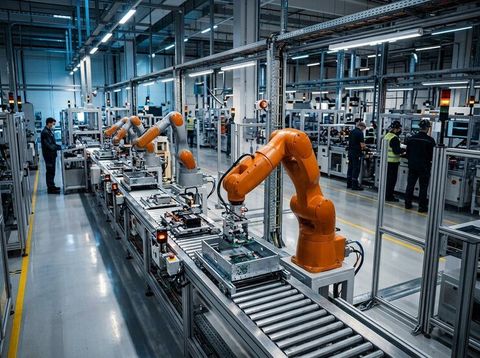
The production process requires controlled heating, extrusion, cooling, film handling, and winding. A stretch film machine brings these stages together into an integrated production line. Depending on the design, a machine may produce single-layer film or multilayer film with different material properties across its layers.
How stretch film is produced
The process normally begins with plastic resin being introduced into an extruder. Inside the extruder, heat and mechanical pressure soften the material before it is pushed through a die to form a continuous sheet or film.
The film then passes through a cooling system. After cooling, rollers control its movement and tension before the material reaches the winding section.
A simplified production sequence is:
Material feeding: Plastic resin is supplied to the extrusion system.
Melting and mixing: Heated screws soften and transport the material.
Film formation: A die shapes the molten material into a thin film.
Cooling: The newly formed film is cooled and stabilized.
Stretch control: Rollers regulate film movement and stretching.
Winding: The finished film is collected into rolls.
Roll handling: Rolls may be cut, transferred, inspected, and packaged.
Importance
Stretch film is used across many packaging environments because it can hold products together without requiring individual containers around every item. It is particularly useful for palletized loads, grouped cartons, industrial materials, and products that need protection from dust or surface contact during movement.
The performance of the final film depends on several production factors. Thickness uniformity, tensile strength, elongation, puncture resistance, cling characteristics, and winding quality can influence how the film behaves during packaging.
A stretch film machine therefore has an important role beyond simply producing a thin plastic sheet. The equipment must maintain stable processing conditions so that the resulting film has relatively consistent physical characteristics throughout a roll.
Packaging applications
Stretch film can be used in several packaging situations, including:
Pallet wrapping for keeping cartons or containers together.
Unitizing products into a single handling load.
Bundling elongated or irregular items.
Protecting packaged goods from dust and surface contamination.
Stabilizing loads during internal movement.
Wrapping materials prepared for storage or transportation.
The appropriate film characteristics vary according to the load. A light carton load may require different film properties from a dense industrial load with sharp edges or uneven surfaces.
Production characteristics
Several characteristics are commonly considered when evaluating stretch film production. Film thickness is important because it affects material usage and mechanical behavior. Elongation indicates how much the film can extend before breaking, while tensile strength describes its resistance to pulling forces.
| Film characteristic | General purpose |
|---|---|
| Thickness | Determines film gauge and influences strength |
| Elongation | Indicates how far film can stretch under tension |
| Tensile strength | Indicates resistance to pulling forces |
| Puncture resistance | Relates to resistance against penetration |
| Cling | Helps adjacent film layers remain in contact |
| Width | Determines the coverage area during wrapping |
| Roll length | Determines the amount of film wound onto a roll |
Recent Updates
From 2024 through 2026, stretch film production has continued to move toward improved process control, multilayer structures, material efficiency, and greater automation. These developments are associated with efforts to produce films with controlled thickness and mechanical properties while managing material consumption.
Multilayer film production
Multilayer extrusion has become an important approach for producing stretch films with different properties across multiple layers. Instead of relying on one material structure, several layers can be combined within the same film.
Different layers may be designed to contribute characteristics such as strength, stretch behavior, cling, or surface performance. The exact layer arrangement depends on the machine configuration and film formulation.
Automation and process monitoring
Modern stretch film machines can incorporate automated controls for temperature, extrusion speed, roller speed, tension, thickness, and winding. Sensors can monitor operating conditions and provide information to the control system.
Automation can also help coordinate different machine sections. For example, the extrusion and winding systems need to operate at compatible speeds so that film tension remains within the intended operating range.
Material efficiency
Another ongoing trend is the development of thinner films with controlled mechanical properties. Reducing thickness can reduce the amount of polymer used for a particular packaging task, although the required film performance still depends on the load and wrapping conditions.
Recycled polymer content and material recovery are also areas of continuing development. The suitability of recycled material depends on its quality, formulation, processing requirements, and the intended characteristics of the finished film.
Laws or Policies
Stretch film machines and the materials they process can be affected by several types of regulations. The applicable requirements depend on the location where the machinery is manufactured, installed, operated, or placed on the market.
Machinery rules may address areas such as electrical safety, guarding of moving parts, emergency stopping systems, operating instructions, and workplace risk control. Requirements can vary between jurisdictions, so manufacturers and operators generally need to identify the rules applicable to their specific location and machine configuration.
Plastic packaging can also be subject to environmental and waste-management requirements. Some jurisdictions have introduced measures related to packaging waste, recycling, recycled content, producer responsibility, or restrictions on particular packaging materials.
These requirements can affect film composition, labeling, waste handling, and reporting obligations. They can also change over time as environmental policies develop.
Workplace considerations
A stretch film production line contains heated surfaces, rotating components, moving rollers, electrical equipment, and material-handling systems. Appropriate machine guarding and operating procedures are therefore important elements of industrial equipment management.
Training documentation, maintenance instructions, emergency procedures, and equipment-specific safety information should be considered as part of normal machine operation. Specific requirements should be determined from the applicable occupational and machinery-safety framework.
Tools and Resources
Several technical resources can help people understand stretch film production and evaluate machine operation.
Machine manuals and technical specifications
A machine manual normally provides information about operating procedures, temperature ranges, electrical requirements, compatible materials, maintenance intervals, and component settings. Technical specifications can also describe maximum film width, extrusion capacity, winding arrangements, and layer configuration.
Film testing equipment
Laboratories and production facilities may use testing instruments to evaluate properties such as thickness, tensile strength, elongation, puncture resistance, and other characteristics. Testing procedures should correspond to the material and application being evaluated.
Thickness measurement
Film thickness can be monitored using mechanical or electronic measurement methods. Continuous measurement systems can identify variations during production and provide information for process adjustment.
Production monitoring systems
Industrial control systems can collect information about temperatures, motor speeds, pressure, tension, and other operating parameters. Historical records can help identify changes in production conditions and support process analysis.
Packaging calculations
Packaging planners may also use simple calculations to estimate film usage based on pallet dimensions, wrapping patterns, film width, number of rotations, and stretch percentage. Such calculations provide an estimate rather than a universal production value because actual film consumption depends on the equipment and wrapping process.
FAQs
What is a stretch film machine?
A stretch film machine is equipment used to manufacture plastic film that can be stretched around packaged loads. It generally includes material feeding, extrusion, film formation, cooling, tension control, and winding sections.
What are the main types of stretch film machines?
Common configurations include single-layer extrusion machines and multilayer extrusion machines. Multilayer systems can combine different material layers within one film structure. Machines can also differ in die design, cooling method, winding arrangement, automation level, and production capacity.
How does a stretch film machine work?
Plastic resin is fed into an extruder, heated, mixed, and pushed through a die. The resulting film is cooled, passed through controlled rollers, and wound into rolls. Machine settings determine factors such as film thickness, width, tension, and winding characteristics.
What components are used in a stretch film machine?
Major components can include material hoppers, extruders, screws, barrels, melt pumps, filters, dies, cooling rollers, guide rollers, tension-control systems, edge-trimming equipment, winding units, motors, sensors, and control systems. The exact arrangement varies by machine design.
Where is stretch film used in packaging?
Stretch film is commonly used for pallet stabilization, product bundling, carton grouping, load protection, and storage or transportation preparation. Its characteristics can be selected according to the dimensions, weight, shape, and handling conditions of the packaged load.