New to Industrial Automation? Here’s How Robotic Assembly Lines Work
Industrial Automation is the method of operating some or many stages of a manufacturing process with the help of machines, sensors, control systems, and software. Robotic Assembly Lines are an important part of it, in which robotic arms and other automated tools work to join, assemble, inspect, or move various components from one process to another.
In traditional assembly processes, workers manually arranged and joined various components. As production volume increased in industry, the need for automation grew for more consistent processes, controlled speeds, and repetitive operations. From this development, the use of modern robotic assembly lines expanded.
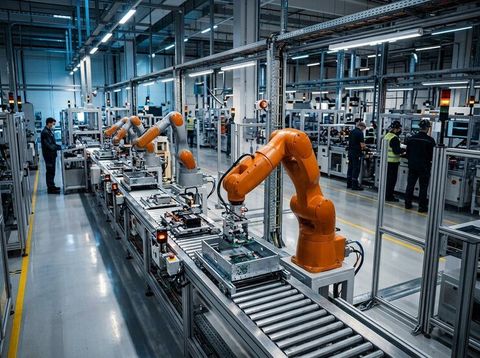
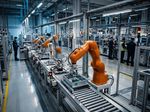
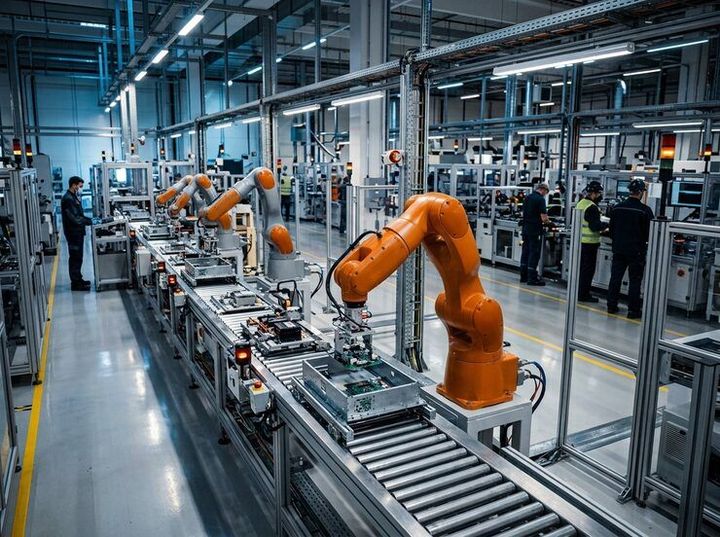
Robotic Assembly Lines are not made of robots alone. A complete system may include robotic arms, grippers, conveyors, sensors, vision systems, programmable logic controllers, safety equipment, and other machines. Every part has its own function, and all parts work in a controlled sequence.
Basic Concept of Robotic Assembly Lines
In a robotic assembly line, products or their components move along a predetermined path. Specific processes can be performed at each station, such as picking up a part, placing it in position, inserting a screw, welding, inspecting, or passing the completed component forward.
The general process can be explained as follows:
Components enter the line.
Sensors or vision systems recognize the presence or position of a component.
The robot grabs the required component with a gripper or other tool.
Moves the component to the designated location at a controlled speed.
The assembly process is performed.
Sensors or inspection systems can check the result.
The completed part, or the part needed for further processing, moves toward the next station.
This entire sequence occurs according to programmed controls.
Main Parts Used in Robotic Assembly
| Component | Main Function |
| Robotic Arm | Moving and processing components |
| Gripper | Grabbing and transferring parts |
| Sensor | Identifying position, presence, or other parameters |
| Vision System | Component identification and inspection using cameras |
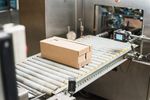
| Conveyor | Delivering components to various stations |
| PLC | For controlling machine processes |
| HMI | For helping operators understand system status and controls |
| Safety System | Controlling access to hazardous areas or undesired conditions |
Importance
The importance of Industrial Automation and Robotic Assembly Lines is not linked solely to production speed. Such systems are used to run repetitive processes in a controlled manner, coordinate between various machines, and reduce the level of human intervention in the manufacturing process.
This type of automation system is found in automotive, electronics, metal production, appliances, packaging, and other industrial sectors. In each sector, the robot's task may vary depending on the product type and process requirements.
What Problems Do Robotic Assembly Address?
In many industrial processes, the same operation must be performed repeatedly. For example, the same type of component must be placed at a specific location repeatedly, or multiple parts must be joined in a predetermined sequence.
In such operations, robotic systems can be used to repeat processes according to a programmed sequence. However, this does not mean every assembly process can be fully automated. Factors such as product complexity, component variety, system design, and inspection needs remain important.
Human Role in Robotic Assembly
Despite automation, the human role is not completely eliminated. Human expertise remains necessary for tasks such as system design, programming, supervision, maintenance, quality checking, and process improvement.
In some lines, humans and robots work at separate stages, while in some systems, specially designed collaborative robots are used. Which type of arrangement is suitable depends on the nature of the work and safety requirements.
How Do Robotic Assembly Lines Work?
It is easy to understand a robotic assembly line as a continuous process. Initially, raw or semi-finished components enter the system. Thereafter, conveyors, feeders, or other mechanisms deliver them to the appropriate stations.
Sensors provide information about the presence and position of parts. If a vision system is attached, cameras can check the part's location, shape, orientation, or other visual characteristics.
Then, the control system instructs the appropriate robot to perform the required action. The robotic arm grabs the component using its attached gripper or tool and moves it along a predetermined path.
After assembly is complete, another system can inspect the process. If it is in the proper condition, the part moves forward; if it does not match the specified criteria, it can be sent for separate processing.
Recent Developments
Between 2024 and 2026, more data-driven control, machine vision, artificial intelligence, and coordination between robotic systems have been important topics of discussion in Industrial Automation. In modern factories, rather than viewing robots as isolated machines, development is moving toward integrating them with the entire production system.
Integration of Machine Vision and AI
Machine Vision can help robots identify objects or understand their positions based on information received via cameras. This can be especially useful in tasks where components are not always in the exact same position.
AI-based methods are also being used in some industrial inspection and identification processes. However, AI is not required for every assembly line. Process complexity and available data affect its use.
Development Toward Predictive Maintenance
Many automation systems can now collect machine-status-related information via sensors. Analyzing data related to the operation of motors, gears, bearings, or other components can be useful in maintenance planning.
The purpose of this approach is to obtain information about machine conditions in advance. However, it is not correct to assume that any data system can make a definite prediction of when a machine will experience a problem.
More Flexible Manufacturing
Traditional automation is often designed for a single type of product. In modern robotic systems, the capability to handle various types of components is being developed through programming, changing tools, and quick setups.
This flexibility can be especially useful in production environments where product models or components change frequently.
Tools and Resources
Various technical tools and educational resources can be useful for understanding Robotic Assembly Lines. Initially, instead of viewing the entire system as a complex machine, understanding its separate components makes the subject easier.
Simulation Software: Robot simulation tools can help understand robot motion, workspace, and process sequence in a virtual environment. Such tools can be used to evaluate things like robot reach, paths, and potential collisions.
PLC and HMI Training:
PLC stands for Programmable Logic Controller. It can play an important role in the control sequence between sensors, motors, robots, and other devices.
HMI stands for Human-Machine Interface. It can display information to the operator regarding machine status, alarms, and certain controls.
Robot Programming Resources: Robotic system manufacturers and industrial training institutes generally provide documentation related to programming, system setup, and simulation. Programming methods may vary for different robot platforms.
Process Data and Monitoring: Digital monitoring platforms can collect data from the production process, including cycle times, machine status, alarms, and other process-related information. This information can be used to understand process status and for maintenance or process analysis.
Frequently Asked Questions
What is a Robotic Assembly Line?
A Robotic Assembly Line is an industrial manufacturing system where robots, conveyors, sensors, control systems, and other tools work together to assemble or process components. Each station can be programmed for a specific task.
How Does a Robotic Assembly Line Work?
Components typically reach various stations via feeders or conveyors. Sensors identify positions, the control system instructs the robot, and the robot grabs the necessary component to perform the specified process. Then the part moves to the next stage.
Why Are Robots Used in Industrial Automation?
Robots can be used for operations requiring repetitive, precisely sequenced, or controlled speeds. They can help run uniform processes in a programmed sequence.
What Main Tools Are Required for Robotic Assembly?
In addition to robotic arms, grippers, sensors, conveyors, PLCs, HMI, vision systems, and safety equipment may be used. Specific tools vary according to production and process needs.
Is AI Necessary in Industrial Automation?
AI is not required for every automation system. Simple repetitive tasks can be handled by traditional PLCs, sensors, and robotic controls, while complex identification or inspection processes can utilize AI-based methods.