Plastic Extruders Guide: Machine Types, Extrusion Processes, Key Components and Manufacturing
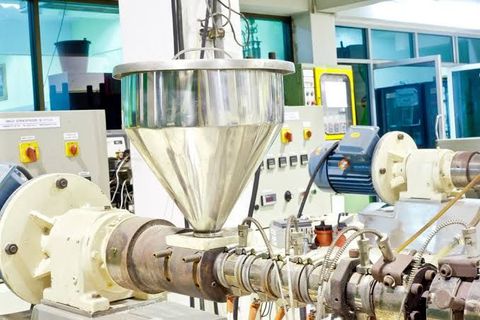
Plastic extruders are machines used to transform plastic materials into continuous products such as pipes, films, sheets, profiles, tubes, insulation layers, and filaments. A plastic extruder works by feeding plastic material into a heated barrel, moving it with a rotating screw, melting or softening it, and pushing it through a shaped opening called a die.
Plastic extrusion developed alongside the growth of thermoplastic materials and industrial plastics processing. Unlike processes that produce one individual part at a time, extrusion is designed for continuous production. This makes the process suitable for products that have a consistent cross-sectional shape along their length.
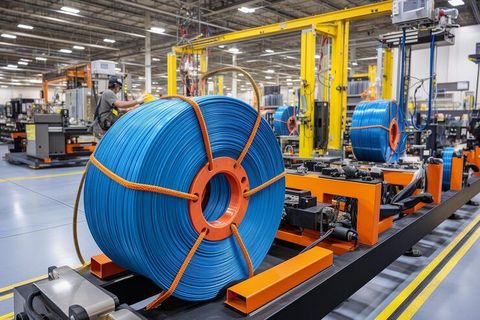
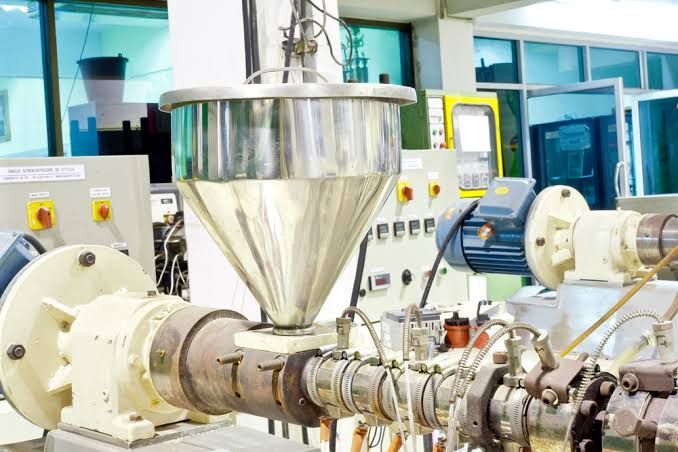
A typical plastic extrusion line contains much more than the main extruder. Depending on the application, it can include a material hopper, screw and barrel, heaters, temperature controls, die, cooling equipment, sizing equipment, haul-off unit, cutting system, winder, or pelletizing equipment.
How plastic extrusion works
The process begins when plastic pellets, granules, powder, or prepared recycled material enter the feed section. The rotating screw then carries the material through the barrel while heat and mechanical energy help soften or melt the polymer.
The molten material passes through a die that determines its initial shape. Downstream equipment then cools, sizes, pulls, cuts, winds, or otherwise handles the extruded material.
The basic sequence can be summarized as:
- Material feeding: Plastic enters through the hopper.
- Conveying: The screw moves the material through the barrel.
- Melting and mixing: Heat and mechanical action create a more uniform melt.
- Pressure building: The screw develops pressure needed to push material toward the die.
- Die forming: The melt exits through an opening with the required profile.
- Cooling and sizing: The emerging product is cooled and brought to its required dimensions.
- Finishing: The product may be cut, wound, rolled, pelletized, or otherwise prepared for its next manufacturing stage.
Importance
Plastic extruders are important because extrusion is used to manufacture many continuous plastic products found in construction, packaging, electrical applications, agriculture, transportation, consumer products, and industrial equipment.
The process can work with a wide range of thermoplastics, including polyethylene, polypropylene, polystyrene, polyvinyl chloride, polyethylene terephthalate, and engineering polymers. The appropriate material and processing conditions depend on the required properties of the final product.
Extrusion also plays a role in plastics recycling. Reprocessed plastic can be prepared as pellets or another suitable feedstock and then processed through an extruder, although material cleanliness, moisture, polymer compatibility, and thermal history can affect processing behavior.
Common products made through extrusion
Plastic extrusion machinery can produce many different product forms.
| Extrusion type | Typical products | Main forming feature |
|---|---|---|
| Pipe extrusion | Pipes, conduits, tubes | Circular die and sizing system |
| Film extrusion | Flexible films | Film die and cooling arrangement |
| Sheet extrusion | Plastic sheets and boards | Flat die and roller system |
| Profile extrusion | Window profiles, channels, trims | Custom-shaped die |
| Wire coating | Cable insulation and jackets | Crosshead die |
| Filament extrusion | Filaments and narrow strands | Small die opening |
| Compounding extrusion | Modified plastic compounds | Mixing and pelletizing system |
The final product depends on the polymer, die design, screw configuration, temperature profile, pressure, cooling conditions, and downstream equipment.
Why process control matters
Plastic extrusion involves several variables that interact with each other. Barrel temperature, screw speed, feed rate, pressure, cooling rate, and haul-off speed can influence the dimensions and appearance of the finished product.
If these variables change significantly, manufacturers may see variations such as uneven thickness, surface defects, dimensional changes, poor mixing, or unstable output. Modern extrusion lines therefore use sensors and control systems to monitor important process conditions.
Recent Updates
From 2024 through 2026, plastic extrusion has continued moving toward greater process monitoring, improved energy management, increased use of recycled polymers, and more automated control. These developments reflect wider changes in plastics manufacturing, particularly the need to handle recycled feedstocks and meet increasingly detailed material and product requirements.
One notable development is the continued work on machinery safety standards specifically addressing extruders and related equipment. ISO/TC 270, which covers plastics and rubber machinery, currently has ISO/CD 22506 under development for safety requirements covering extruders and ancillary equipment. The project was initiated in 2024 and progressed through committee-draft stages during 2025 and 2026.
Recycling and material flexibility
Extrusion systems are increasingly being designed with material variability in mind. Recycled polymers can differ from virgin material in moisture content, contamination, melt behavior, color, and previous thermal exposure.
Twin-screw extruders are particularly relevant to compounding applications because their screw elements can provide mixing, conveying, and controlled processing in a single system. Single-screw machines remain widely used for applications where straightforward melting and conveying are appropriate.
Regulatory developments are also influencing extrusion for plastic packaging. The European Union's Packaging and Packaging Waste Regulation includes requirements concerning recyclability and minimum recycled content for specified plastic packaging, creating additional considerations for manufacturers processing recycled polymers.
Digital monitoring and automation
Modern extrusion lines may use distributed sensors, programmable controllers, data logging, automatic temperature regulation, pressure monitoring, and process alarms. Some systems can also connect production data with broader manufacturing software.
Automation does not remove the need for material knowledge and process control. Instead, it provides additional measurements that can help operators identify changes in pressure, temperature, throughput, or other process conditions.
Energy management is another continuing area of development. Heating zones, motors, cooling equipment, and downstream systems all contribute to the energy requirements of an extrusion line. Machine design and process optimization therefore increasingly consider energy consumption alongside throughput and product quality.
Laws or Policies
Plastic extrusion machinery is subject to different rules depending on where it is manufactured, installed, or placed on the market. Requirements can cover machinery safety, electrical systems, workplace protection, emissions, waste handling, and product-specific regulations.
In the European Union, Regulation (EU) 2023/1230 establishes health and safety requirements for machinery and related products. The regulation replaces the earlier Machinery Directive and is scheduled to apply from 20 January 2027, while certain provisions apply earlier. It requires applicable machinery to meet essential health and safety requirements and includes requirements concerning technical documentation and conformity assessment.
For plastic extrusion equipment, safety considerations can include moving screws, heated surfaces, pressure within processing equipment, electrical hazards, rotating downstream machinery, and access to potentially hazardous areas. Appropriate guarding, emergency controls, risk assessment, instructions, and other protective measures depend on the equipment design and applicable rules.
Environmental policies can also influence extrusion operations. Packaging regulations, recycled-content requirements, waste-management rules, and restrictions on particular materials can affect the selection and processing of polymers. The European Union's Packaging and Packaging Waste Regulation, for example, establishes recycled-content requirements for specified plastic packaging from 2030, subject to its detailed provisions and exceptions.
Because regulatory systems differ between countries, manufacturers and operators need to identify the rules that apply to their specific machinery, material, product, and market.
Tools and Resources
Several technical resources can help readers understand plastic extrusion and evaluate an extrusion process.
Extrusion process calculators
Engineering calculators can estimate relationships involving screw speed, throughput, residence time, die dimensions, pressure, and material flow. These calculations are useful for understanding process relationships, although actual production results depend on material and machine characteristics.
Polymer datasheets
Material datasheets provide information such as recommended processing temperatures, density, melt-flow characteristics, mechanical properties, and other relevant parameters. These documents can help explain why different polymers require different extrusion conditions.
Machine monitoring systems
Temperature controllers, melt-pressure sensors, torque monitoring, gravimetric feeders, thickness gauges, and dimensional measurement systems can provide information about the extrusion process.
Standards and technical references
ISO and national standards organizations publish documents covering plastics machinery, safety, testing, and material characteristics. ISO/TC 270 specifically covers machinery used for the preparation, processing, and recovery of plastics and rubber, including safety considerations for relevant machinery.
Production records
A structured extrusion log can record material type, batch information, barrel temperatures, screw speed, die temperature, melt pressure, throughput, cooling conditions, product dimensions, and observed defects. Consistent records can help identify relationships between process settings and product changes.
FAQs
What is a plastic extruder?
A plastic extruder is a machine that melts or softens thermoplastic material and pushes it through a die to create a continuous product. The die determines the general cross-sectional shape of the material.
What are the main types of plastic extruders?
The two broad categories are single-screw and twin-screw extruders. Single-screw machines are commonly used for conveying and melting, while twin-screw machines provide additional mixing and compounding capabilities. Specialized extrusion machines are also designed for applications such as film, pipe, sheet, profile, and wire coating.
How does a plastic extrusion machine work?
A plastic extrusion machine feeds polymer into a heated barrel, where a rotating screw conveys and processes the material. The resulting melt is pushed through a die and then cooled, sized, pulled, cut, wound, or otherwise processed depending on the product.
What are the key components of a plastic extruder?
Important components include the hopper, feed system, screw, barrel, heaters, temperature sensors, drive system, die, pressure controls, and downstream equipment. The exact configuration varies according to the extrusion process and product.
Can plastic extruders process recycled plastic?
Many extrusion systems can process suitable recycled polymers, but the material must meet the requirements of the particular process. Moisture, contamination, polymer compatibility, particle size, additives, and previous thermal exposure can affect processing behavior.
Conclusion
Plastic extruders transform thermoplastic materials into continuous products by conveying, heating, mixing, pressurizing, and forming polymers through a die. Single-screw, twin-screw, film, pipe, sheet, profile, and specialized extrusion systems are used for different manufacturing applications. Recent developments have placed greater attention on process monitoring, recycled materials, energy management, automation, and machinery safety. Regulations and technical standards also continue to shape how extrusion equipment is designed, operated, and evaluated.