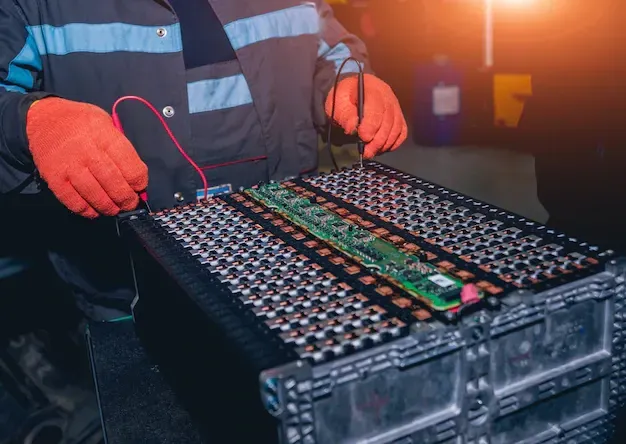
EV Battery Manufacturing Insights: Battery Cells, Production Equipment and Assembly Processes
EV battery manufacturing is the industrial process used to produce the battery cells, modules, and packs that store electrical energy for electric vehicles. The process combines electrochemistry, materials processing, precision manufacturing, electronics, thermal management, and automated assembly.
Context
Most modern EV batteries use rechargeable lithium-ion technology, although several chemistries and cell designs are being developed for different performance requirements. Common cell chemistries include lithium iron phosphate (LFP) and nickel-based formulations such as nickel-manganese-cobalt (NMC). The choice of chemistry affects characteristics such as energy density, thermal behavior, power capability, and material requirements.
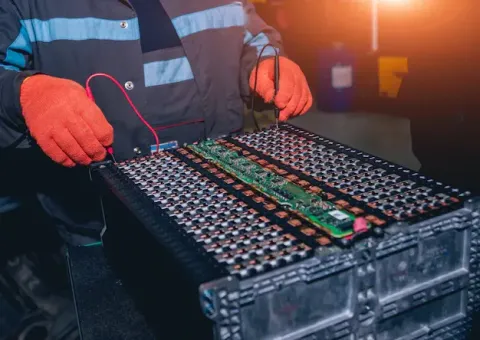
A battery pack is built through several levels. Individual electrochemical cells are produced first, then connected into modules or pack structures depending on the architecture. Battery management electronics, cooling components, electrical connections, protective structures, sensors, and other components are integrated during pack assembly.
The manufacturing sequence requires controlled conditions because small variations in moisture, material composition, coating thickness, alignment, or contamination can affect cell performance. Modern factories therefore combine automated machinery with measurement, inspection, process control, and data collection.
Main battery manufacturing stages
EV battery manufacturing can be broadly divided into three major areas:
- Electrode production, where active materials are mixed and applied to metal current collectors.
- Cell assembly, where electrodes and separators are combined into a particular cell format.
- Cell finishing and pack assembly, where cells are conditioned, tested, connected, monitored, and integrated into a battery system.
The exact sequence varies according to chemistry, cell format, equipment design, and factory layout.
Importance
EV batteries are a central component of electric transportation because they determine how electrical energy is stored and delivered to the vehicle's powertrain. Battery manufacturing therefore involves more than producing individual cells; it requires coordination between materials, production equipment, electronics, software, quality control, and vehicle integration.
Global battery demand has expanded rapidly. The International Energy Agency reported that battery demand for the energy sector reached about 1 TWh in 2024, with EV batteries accounting for more than 950 GWh. Global lithium-ion battery manufacturing capacity exceeded 3 TWh in 2024 and increased further during 2025.
Why production consistency matters
Battery cells are manufactured in very large quantities, so even a small process variation can affect many units. Manufacturers therefore monitor parameters such as coating thickness, electrode alignment, moisture levels, electrical resistance, temperature, and cell capacity.
Common manufacturing challenges include:
- Maintaining consistent material properties between production batches.
- Controlling humidity during moisture-sensitive processes.
- Keeping electrode coatings uniform.
- Detecting microscopic defects before cells progress through later stages.
- Maintaining accurate welding and electrical connections.
- Managing heat during formation, testing, and pack operation.
- Tracking individual cells and production records through multiple stages.
Automation can help maintain repeatable processes, while machine vision and data analysis can identify patterns that may not be immediately visible during manual inspection.
Battery cell formats
Three major physical formats are used in lithium-ion battery manufacturing: cylindrical, pouch, and prismatic cells.
| Cell format | General construction | Common manufacturing characteristic |
|---|---|---|
| Cylindrical | Rolled electrode assembly inside a rigid cylindrical casing | Highly repeatable dimensions and automated handling |
| Pouch | Layered or stacked electrodes inside a flexible sealed enclosure | Flexible shape and efficient packaging |
| Prismatic | Electrode assembly inside a rigid rectangular enclosure | Compact form and relatively simple pack integration |
The choice of format affects equipment design, thermal management, packaging efficiency, mechanical structure, and assembly methods. The IEA notes that all three formats remain important in the global battery industry.
Recent Updates
Battery manufacturing between 2024 and 2026 has been characterized by increasing production capacity, broader chemistry development, greater automation, and efforts to improve manufacturing efficiency.
Global lithium-ion battery manufacturing capacity reached more than 4 TWh by the end of 2025, according to the IEA. Capacity continued to expand outside established production centers, although global manufacturing remained geographically concentrated.
Expansion of battery production equipment
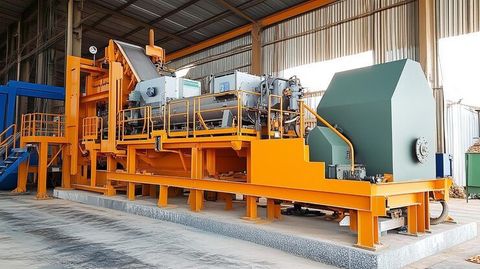
Battery factories increasingly use specialized equipment throughout electrode preparation, cell assembly, formation, inspection, and pack integration. Production lines are becoming more automated, with sensors and machine-vision systems integrated into individual machines and larger manufacturing execution systems.
Artificial intelligence is also being applied to manufacturing data and image analysis. The IEA reports that AI-based image analysis can help identify battery defects and investigate possible causes during production.
This development is important because battery production involves numerous inspection points. Automated analysis can process large amounts of visual and electrical information while production is taking place.
Chemistry diversification
LFP batteries have expanded their presence in the EV market. The IEA reported that LFP represented nearly half of the global EV battery market in 2024, reflecting increased use of this chemistry in several markets.
Other technologies are also being developed. Sodium-ion batteries are being investigated for applications where their material characteristics may provide advantages under particular operating conditions. Solid-state battery technology has also progressed through larger prototypes and manufacturing investments, although large-scale commercial production remains a significant technical challenge.
Manufacturing efficiency and quality control
Another important trend is the use of process data to improve production consistency. Modern factories can connect equipment, sensors, inspection systems, and production records so that manufacturing conditions can be reviewed across multiple stages.
The challenge is not simply increasing the number of cells produced. Manufacturers must also achieve consistent cell quality while managing material variation, equipment reliability, production yield, energy use, and increasingly complex battery designs.
Laws or Policies
EV battery manufacturing is affected by different regulatory requirements depending on where batteries are produced, transported, placed on the market, or installed in vehicles. Because these requirements vary between jurisdictions, there is no single worldwide battery law that covers every manufacturing activity.
Rules commonly address several areas:
- Electrical and functional safety.
- Vehicle crash and battery protection.
- Manufacturing quality and traceability.
- Transportation of batteries and hazardous materials.
- Environmental management and recycling.
- Chemical and material restrictions.
- Battery labeling and documentation.
- Product information and lifecycle reporting.
International technical standards also provide structured testing methods. For example, IEC 62660-1 specifies performance testing for rechargeable lithium-ion cells used in electric road vehicles, including measurements related to capacity, power, energy density, storage life, and cycle life. IEC 62660-3 addresses safety testing and acceptance criteria for cells and cell blocks used in EV applications.
Vehicle-level requirements can also address rechargeable energy storage systems, electrical safety, thermal events, vibration, and other conditions. UN Regulation No. 100 is one international regulatory framework used by jurisdictions that adopt it, while UN Global Technical Regulation No. 20 addresses electric vehicle safety.
Environmental rules are also becoming more detailed. Some regulatory frameworks are introducing digital battery information systems containing information about battery characteristics, durability, repair, reuse, recycling, and sustainability. Requirements of this type demonstrate the broader movement toward greater battery lifecycle traceability.
These standards and regulations should not be treated as interchangeable. A technical standard may provide a testing methodology, while a regulation may establish legally applicable requirements within a particular jurisdiction.
Tools and Resources
Several technical resources can help readers understand EV battery manufacturing, cell design, and production equipment.
Battery manufacturing references
The International Energy Agency publishes research covering battery demand, manufacturing capacity, cell chemistry, supply chains, and production trends. Its Global EV Outlook is useful for understanding changes in the wider EV battery industry.
International standards databases
The International Electrotechnical Commission provides information about battery testing standards such as IEC 62660. These documents are useful for understanding how cell performance, reliability, and safety can be evaluated under defined test procedures.
The International Organization for Standardization also publishes standards and technical documents concerning vehicle functional safety and rechargeable energy storage systems. ISO/TR 9968, for example, discusses the application of ISO 26262 methodology to rechargeable energy storage systems used in road vehicles.
Manufacturing and engineering tools
Battery development and production commonly use several categories of engineering tools:
- Battery cell simulation software for electrical, thermal, and electrochemical modeling.
- Manufacturing execution systems for tracking production stages and records.
- Machine-vision systems for dimensional and surface inspection.
- Data-acquisition systems for electrical and thermal measurements.
- Battery cyclers for controlled charge and discharge testing.
- Environmental chambers for temperature and humidity testing.
- Welding and joining equipment for electrical connections.
- Automated inspection equipment for detecting production defects.
Together, these tools connect laboratory development with industrial-scale production and quality assessment.
FAQs
What is involved in EV battery manufacturing?
EV battery manufacturing generally includes electrode preparation, coating, drying, calendaring, electrode cutting, cell assembly, electrolyte filling, sealing, formation, aging, testing, and pack assembly. The exact sequence depends on the cell chemistry and format.
What equipment is used in EV battery manufacturing?
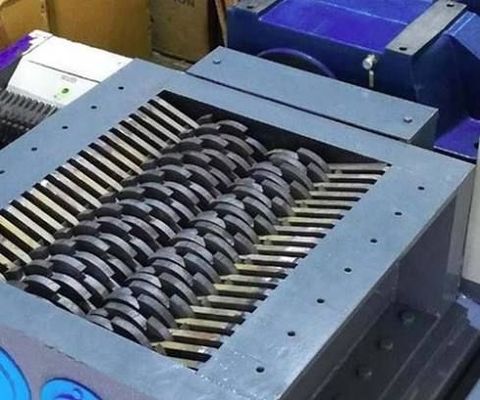
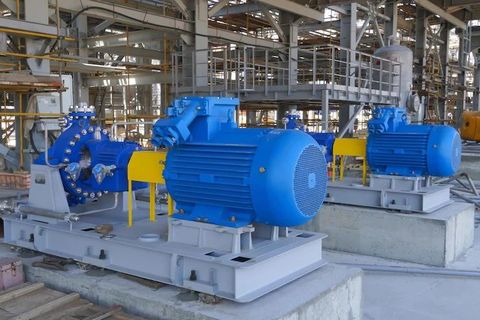
Common EV battery manufacturing equipment includes mixing systems, coating machines, drying ovens, calendaring equipment, slitting or cutting machines, stacking or winding equipment, electrolyte filling systems, sealing machines, formation equipment, testing systems, welding equipment, and automated inspection systems.
What are the main EV battery cell types?
The three widely used physical formats are cylindrical, pouch, and prismatic cells. Their construction differs, so each format requires different handling, assembly, thermal management, and pack-integration approaches.
How are EV battery cells assembled?
Cell assembly generally involves combining prepared positive and negative electrodes with a separator, introducing electrolyte, and sealing the cell. The finished cells then undergo formation, aging, inspection, and electrical testing before they are integrated into modules or battery packs.
What are the current trends in EV battery manufacturing?
Current trends include expanded lithium-ion production capacity, greater use of LFP chemistry, development of sodium-ion and solid-state technologies, increased automation, machine-vision inspection, production data analysis, and greater attention to battery traceability and recycling. These developments are occurring at different speeds across battery manufacturers and production regions.
Conclusion
EV battery manufacturing combines cell chemistry, specialized production equipment, automated assembly, testing, electronics, and quality control into a connected industrial process. Battery cells can use different chemistries and physical formats, with each choice influencing manufacturing and pack design. From 2024 through 2026, the industry has continued expanding production capacity while developing new chemistries, automation methods, and data-driven inspection systems. Technical standards and regulatory frameworks also play an important role in battery safety, testing, traceability, and lifecycle management.