Textile Machinery Explained: Types, Processing, Equipment and Industry Applications
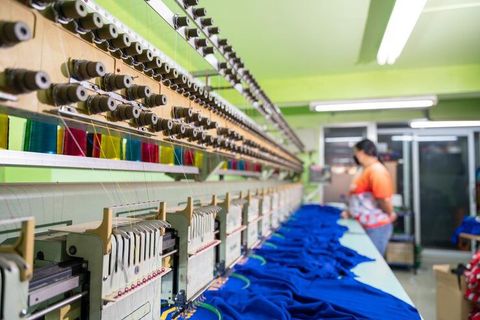
Textile machinery refers to the equipment used to convert natural or manufactured fibres into yarn, fabric, finished textile materials, and related products. The machinery used in a textile production line depends on the material being processed, the type of fabric required, and the production stage.
Context
The development of textile machinery is closely connected with the industrial development of fabric production. Earlier textile production relied heavily on manual spinning and hand-operated looms. Mechanical equipment gradually introduced controlled movement, repeatable processes, and higher production capacity.
Modern textile machinery combines mechanical systems with electronic controls, sensors, software, and automated monitoring. This allows different stages of production to be connected into organized processing lines while providing information about machine operation and fabric characteristics.
Main stages of textile processing
Textile production can involve several stages, although not every textile product passes through every stage. A simplified production sequence includes:
- Fibre preparation, where fibres are opened, cleaned, blended, and prepared.
- Spinning, where fibres are converted into yarn.
- Yarn preparation, which can include winding, twisting, sizing, or other treatments.
- Weaving or knitting, where yarn is formed into fabric.
- Dyeing and printing, where colour and patterns are applied.
- Finishing, where fabric properties such as appearance, handle, or dimensional stability are modified.
- Inspection and conversion, where fabric is checked and prepared for later applications.
Importance
Textile machinery affects how efficiently fibres and yarns can be transformed into fabrics with consistent physical characteristics. It is relevant to textile mills, fabric producers, garment manufacturers, technical textile producers, and industries that use textile materials in products such as furnishings, filtration materials, protective fabrics, and automotive components.
Different machines are designed around different materials and production requirements. Cotton, wool, synthetic fibres, blends, technical fibres, and delicate materials can behave differently during processing. Machinery must therefore be selected and configured according to factors such as fibre properties, yarn characteristics, fabric construction, width, density, and intended application.
Types of textile machinery
Textile machinery can be grouped according to the production stage.
| Machinery category | Main purpose | Typical processing stage |
|---|---|---|
| Fibre preparation machines | Open, clean, blend, and prepare fibres | Fibre preparation |
| Spinning machines | Convert fibres into yarn | Spinning |
| Yarn processing machines | Wind, twist, size, or texture yarn | Yarn preparation |
| Weaving looms | Interlace warp and weft yarns | Fabric formation |
| Knitting machines | Form fabric through interlocking loops | Fabric formation |
| Dyeing machines | Apply colour to textile materials | Wet processing |
| Printing machines | Apply designs or patterns | Textile printing |
| Finishing machines | Modify fabric characteristics | Finishing |
| Inspection machines | Detect visible and dimensional defects | Quality inspection |
Weaving looms and fabric formation
Looms are a major category of textile machinery used to produce woven fabric. A conventional weaving process interlaces two primary yarn systems: warp yarns running along the length of the fabric and weft yarns inserted across the width.
Weaving looms control several coordinated movements, including the opening of the warp, insertion of the weft, and beating the newly inserted yarn into the fabric structure. Modern looms can perform these movements electronically and mechanically at high operating speeds.
Several loom designs are used for different fabric structures and yarn characteristics. Air Jet Looms use compressed air to carry the weft yarn through the shed. Waterjet looms use a controlled water stream for weft insertion and are generally associated with suitable hydrophobic synthetic yarns.
Rapier Looms use a rigid or flexible rapier mechanism to carry the weft across the shed. They can accommodate a broad range of yarns and fabric constructions. Jacquard Looms use a specialized shedding mechanism that allows individual warp yarns or groups of yarns to be controlled, making them suitable for detailed woven patterns.
Comparing major loom types
| Loom type | Weft insertion method | Common characteristic |
|---|---|---|
| Air Jet Loom | Air stream | High-speed weft insertion for suitable yarns |
| Waterjet Loom | Water stream | Commonly associated with synthetic filament fabrics |
| Rapier Loom | Rapier mechanism | Flexible handling of various yarns and structures |
| Jacquard Loom | Jacquard-controlled warp selection | Detailed and complex woven patterns |
| Conventional Shuttle Loom | Shuttle | Traditional insertion method with mechanical shuttle |
The choice between weaving looms depends on yarn type, fabric design, width, production requirements, and environmental considerations. Waterjet systems, for example, involve water during weft insertion, whereas air jet systems rely on compressed air.
Other important textile equipment
Textile production extends beyond looms. Carding machines help separate and align fibres, while drawing and combing equipment can further prepare fibre assemblies before spinning. Spinning machinery then converts prepared fibres into yarn.
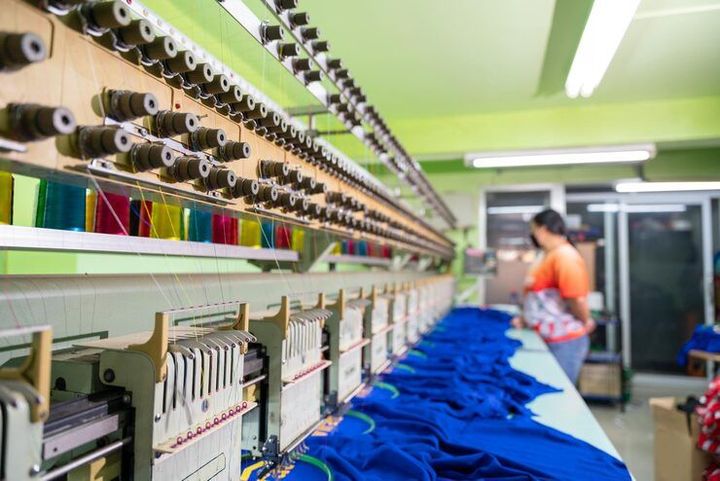
Knitting machinery creates fabric by forming interconnected loops rather than interlacing warp and weft systems. Dyeing machinery controls the application of colour, while finishing equipment can influence characteristics such as surface appearance, softness, dimensional stability, and functional performance.
Cutting and inspection equipment can also be used during later stages. Automated inspection systems may use cameras, lighting, sensors, or image-processing software to identify visible fabric irregularities.
Recent Updates
From 2024 through 2026, textile machinery development has increasingly focused on automation, digital monitoring, resource efficiency, and more controlled production processes. Machine manufacturers and textile producers have continued to integrate sensors, electronic controls, data collection, and software into production equipment.
Digital monitoring can provide information about machine status, operating conditions, production parameters, and detected irregularities. This can help production teams understand changes in machine performance without relying entirely on manual observation.
Recent industry data also shows that machinery investment can vary substantially between textile-machine categories and regions. According to International Textile Machinery Federation data reported in 2026, global shipments of shuttleless weaving looms declined in 2025, while different loom categories experienced different shipment patterns.
Automation and resource management
Modern textile machinery is also increasingly designed around resource management. Depending on the process, manufacturers may focus on reducing electricity consumption, compressed-air demand, water use, material waste, or unnecessary machine movement.
Data connectivity is another continuing trend. Production equipment can increasingly communicate with monitoring systems, allowing operating information to be collected and reviewed across multiple machines or processing stages.
Digitalization does not eliminate the need for mechanical adjustment or skilled operation. Textile materials can behave differently according to humidity, fibre composition, yarn characteristics, tension, and processing conditions.
Laws or Policies
Textile machinery is subject to machinery-safety requirements, workplace rules, environmental requirements, and product-specific regulations that vary by jurisdiction. These rules can address areas such as machine guarding, electrical safety, noise, emergency stopping, emissions, chemical handling, and worker protection.
International standards provide technical frameworks that can support machinery safety. ISO 11111-1:2016 covers common safety requirements for textile machinery and is part of a wider series addressing different textile-machine categories. ISO states that this standard remains current following its most recent review.
The ISO framework covers machinery used in processes including fibre preparation, spinning, yarn processing, weaving, knitting, dyeing, printing, finishing, and related textile operations. Separate parts address specific machinery groups, including preparatory machinery, fabric manufacturing machinery, and dyeing and finishing machinery.
Environmental policies are also becoming more relevant to textile production. In the European Union, the Ecodesign for Sustainable Products Regulation establishes a framework for sustainability requirements and digital product information. Textile and apparel products have been identified as a priority group for future requirements under the 2025–2030 working plan.
These policies primarily concern textile products and their value chains rather than establishing one universal specification for every textile machine. Applicable requirements depend on the jurisdiction, machine type, product category, and intended use.
Tools and Resources
Several resources can help readers understand textile machinery and its operating environment.
Machinery standards
International standards databases can provide information about safety requirements, terminology, measurement methods, and technical classifications. ISO's textile machinery catalogue is particularly relevant for machinery categories such as looms, fabric manufacturing equipment, and preparatory equipment.
Production monitoring systems
Digital production monitoring platforms can collect information such as machine operating time, production quantities, stoppages, operating parameters, and detected faults. These systems are increasingly used alongside automated textile machinery.
Fabric and yarn testing equipment
Laboratory and production-floor testing equipment can measure characteristics such as yarn strength, fabric thickness, dimensional changes, tensile properties, colour characteristics, and other physical properties. The appropriate test depends on the material and the intended application.
Machine documentation
Technical manuals, machine specifications, process diagrams, maintenance records, and equipment-layout drawings are useful resources when studying a textile production line. They can explain machine functions, operating parameters, safety precautions, and relationships between connected machines.
FAQs
What are the main types of textile machinery?
The main categories include fibre preparation machines, spinning machinery, yarn processing equipment, weaving looms, knitting machines, dyeing equipment, printing machinery, finishing equipment, and fabric inspection systems. The exact equipment sequence depends on the textile product.
What is the difference between Air Jet Looms and Rapier Looms?
Air Jet Looms use a controlled stream of compressed air to insert the weft yarn. Rapier Looms use a rapier mechanism to carry the weft across the shed. Their operating principles make them suitable for different combinations of yarns, fabric structures, and production requirements.
How do Waterjet Looms work?
Waterjet looms use a fine, controlled water stream to carry the weft yarn through the warp shed. They are commonly associated with suitable synthetic filament yarns because the material must tolerate the presence of water during weaving.
What are Jacquard Looms used for?
Jacquard Looms provide individual or grouped control of warp yarns, allowing complex patterns to be woven into fabric. They are used where detailed motifs, decorative structures, or intricate woven designs are required.
What factors affect textile machinery selection?
Important factors include fibre composition, yarn type, fabric construction, fabric width, production requirements, pattern complexity, energy and water considerations, automation requirements, and applicable safety rules. The machinery configuration normally needs to correspond to the complete production process rather than one isolated machine.
Conclusion
Textile machinery covers a broad range of equipment used from fibre preparation through spinning, weaving, knitting, dyeing, finishing, and inspection. Weaving looms include Air Jet Looms, Waterjet Looms, Rapier Looms, and Jacquard Looms, each using a different approach to fabric formation or pattern control. Developments from 2024 through 2026 have continued to emphasize automation, digital monitoring, resource management, and traceability. Safety standards and changing sustainability policies also influence how textile machinery and textile production systems are designed and operated.