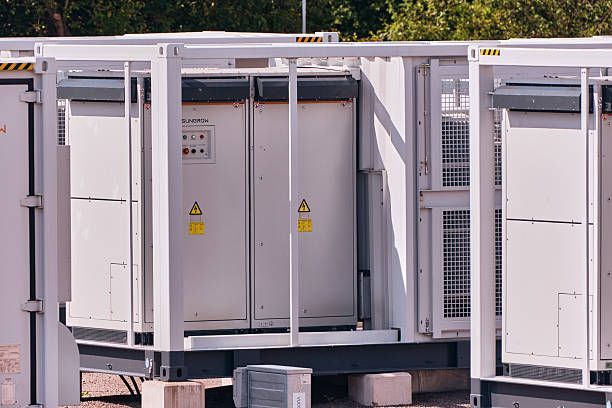
Industrial Microgrid Systems Overview: Architecture, Components, Energy Management and Applications
Industrial microgrid systems are localized electrical networks that combine power generation, energy storage, electrical loads, monitoring equipment, and control systems within a defined area. Unlike a conventional facility that depends entirely on the wider electricity grid, an industrial microgrid can coordinate several energy resources and, when designed for it, disconnect from the main grid and continue operating independently.
Industrial microgrids have developed alongside distributed energy resources such as solar generation, batteries, combined heat and power systems, generators, and controllable loads. Their architecture allows these resources to work together rather than operating as separate electrical assets.
Context
What is an industrial microgrid?
An industrial microgrid is a localized power network designed around the electrical requirements of an industrial facility, campus, plant, warehouse complex, mine, port, or similar operation. It can contain generation equipment, battery energy storage, transformers, switchgear, protection systems, meters, communication networks, and control software.
The defining characteristic is coordinated operation. Instead of treating each generator, battery, and electrical load independently, a microgrid controller monitors the system and determines how available resources should interact.
A microgrid can normally operate in two basic modes:
- Grid-connected mode: The facility remains connected to the utility network while local resources supplement or manage electricity use.
- Islanded mode: The microgrid separates from the wider grid and supplies selected or all connected loads using its local resources.
The transition between these modes requires appropriate protection, switching, controls, and operating procedures.
Industrial microgrid architecture
The architecture depends on the facility's electrical requirements and the resources available at the site. A simplified arrangement may look like this:
Utility grid → Point of common coupling → Switchgear → Industrial loads
At the same time, local resources connect to the microgrid:
Solar generation + Battery storage + Generator or CHP + Controllable loads → Microgrid controller → Industrial loads
The point of common coupling is the electrical connection between the microgrid and the larger grid. Switchgear and protection equipment manage the connection, isolation, fault response, and distribution of electricity.
Key components
| Component | Main function |
|---|---|
| Solar photovoltaic system | Converts sunlight into electrical power |
| Battery energy storage | Stores electrical energy for later use |
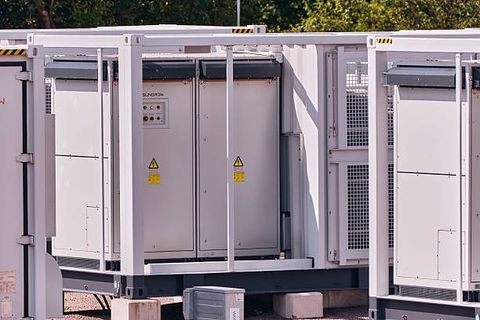
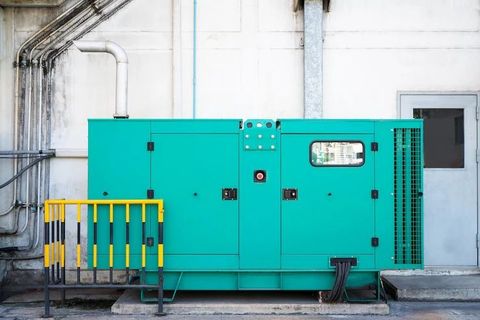
| Generator | Provides dispatchable electrical generation |
| CHP system | Produces electricity along with useful heat |
| Inverter | Converts and manages electrical power between forms |
| Switchgear | Controls and isolates electrical circuits |
| Protection equipment | Detects abnormal electrical conditions |
| Microgrid controller | Coordinates generation, storage, and loads |
| Smart meters | Measure electrical conditions and energy flows |
| Communication network | Transfers information between system components |
| Industrial loads | Consume electricity for facility operations |
Not every industrial microgrid contains all these components. Some systems may use solar and batteries, while others may rely on generators, CHP, or combinations of several resources.
Importance
Industrial facilities can have electrical loads that operate continuously or require stable power for automated processes, refrigeration, pumps, motors, furnaces, data systems, or other equipment. A disruption to electricity can interrupt production processes and affect equipment operation.
An industrial microgrid provides a framework for coordinating local resources during normal grid operation and, where the design permits, maintaining selected loads during a grid interruption. This resilience function is one reason microgrids are being examined for industrial and other critical facilities.
Managing changing energy demand
Industrial electricity demand can change significantly during a working cycle. Large motors may start simultaneously, production lines may change their load profile, and electric heating or cooling equipment can create periods of high demand.
An energy management system can monitor these changes and coordinate available resources. For example, stored electricity may be used during a period of high demand, while solar generation can supply part of the facility's daytime load.
Supporting renewable energy integration
Solar and wind generation are variable resources because their output depends on environmental conditions. Energy storage and controllable loads can help coordinate variable generation with facility demand.
A microgrid does not eliminate the variability of renewable generation. Instead, its control architecture provides a way to coordinate generation, storage, and demand within defined electrical boundaries.
Improving operational resilience
A microgrid can provide an alternative operating arrangement when the wider electricity network experiences a disturbance. During islanded operation, the local system must balance generation and demand while maintaining appropriate voltage and frequency.
This makes protection, control, and system coordination important parts of industrial microgrid design. The Department of Energy identifies advanced control, monitoring, communication, and protection as important areas of microgrid development.
Recent Updates
Microgrid development from 2024 through 2026 has increasingly focused on flexible control, renewable integration, battery storage, cybersecurity, modular architectures, and the needs of large electrical loads.
Advanced energy management
Modern microgrid research is placing greater emphasis on software that can coordinate distributed energy resources in changing grid conditions. Controllers increasingly combine measurements from generators, storage systems, electrical loads, and grid connections to support automated decision-making.
The U.S. Department of Energy's current microgrid research program identifies system planning, secure operation, architecture, and technology adoption as major areas of development.
Modular microgrid architecture
Another emerging direction is the use of modular building blocks. In this approach, power conversion, communications, controls, and loads can be organized into standardized modules that can be combined into larger systems.
In 2026, the U.S. Department of Energy highlighted a microgrid building-block approach intended to allow individual modules and microgrids to be coordinated into larger electrical systems.
Large industrial and digital loads
Rapid growth in electricity demand from data centers and advanced industrial facilities has increased attention toward localized power systems. Recent DOE material identifies microgrids, including DC microgrids and coordinated controls, as technologies being examined for large and dynamic electrical loads.
Cybersecurity and digital controls
Greater connectivity also creates additional cybersecurity considerations. Industrial microgrids use operational technology, communication networks, sensors, and controllers, so protection planning increasingly considers both physical electrical risks and digital threats.
Laws or Policies
Industrial microgrids are affected by several layers of electrical regulation. Requirements vary by country, region, utility territory, voltage level, and whether the microgrid can operate in parallel with the public electricity network.
Grid interconnection requirements
A microgrid that connects to the public grid generally has to meet technical requirements for voltage, frequency, protection, synchronization, power quality, and disconnection. Distributed generation resources can therefore be subject to specific interconnection standards.
For example, India's Central Electricity Authority maintains technical standards concerning connectivity of distributed generation resources.
Electrical safety requirements
Industrial microgrids also have to comply with applicable electrical installation, equipment, protection, and worker-safety requirements. These rules can cover switchgear, transformers, generators, battery systems, grounding, emergency isolation, and electrical protection.
Energy and environmental regulations
Where a microgrid contains generators, CHP equipment, fuel systems, or renewable generation, additional energy and environmental requirements may apply. Permits and operating conditions depend on the technology and jurisdiction.
Because regulations differ substantially between locations, a project must be evaluated against the rules applicable to its specific grid connection and facility.
Tools and Resources
Several technical resources can help readers understand or plan industrial microgrid systems.
Microgrid design software
Engineering teams can use power-system simulation and microgrid planning software to model electrical loads, generation, storage, voltage, frequency, protection, and operating conditions. These tools can compare different system configurations before physical equipment is installed.
Energy management platforms
An energy management system can collect information from meters, generators, batteries, inverters, and loads. Depending on its design, it may monitor real-time conditions, schedule resources, manage storage, and coordinate grid-connected or islanded operation.
Microgrid planning resources
The U.S. Department of Energy provides technical information on microgrid systems, distributed energy resources, controls, resilience, and system planning. These resources can help readers understand common architectures and operating concepts.
Load-profile data
Historical electricity consumption data is another important planning resource. Load profiles can show when a facility consumes the most electricity and how demand changes between production periods, shifts, seasons, and operating conditions.
Monitoring and measurement equipment
Smart meters, power-quality meters, sensors, and supervisory control systems provide information about voltage, current, frequency, power, energy consumption, and equipment status. This information supports ongoing system analysis and control.
FAQs
What is an industrial microgrid system?
An industrial microgrid system is a defined electrical network that combines local generation, energy storage, electrical loads, controls, and protection equipment. It can operate while connected to the wider grid and may also operate independently when designed for islanded operation.
What are the key components of an industrial microgrid?
Common components include distributed generation, battery energy storage, inverters, switchgear, protection equipment, meters, communication networks, microgrid controllers, and industrial electrical loads. The exact configuration depends on the facility.
How does an industrial microgrid energy management system work?
An energy management system collects information about electricity generation, storage, grid conditions, and facility demand. The control system uses this information to coordinate available resources according to programmed operating requirements.
Can an industrial microgrid operate without the main grid?
A microgrid designed for islanded operation can disconnect from the main electricity network and continue supplying selected or all connected loads. This requires suitable generation, controls, protection, switching, and sufficient energy resources.
What are industrial microgrid applications?
Industrial microgrids can be applied at manufacturing facilities, ports, mines, processing plants, warehouses, research campuses, data centers, and other sites with significant or critical electrical loads. Ports, for example, are being examined as microgrid applications because of their large and complex electrical requirements.
Conclusion
Industrial microgrid systems combine local generation, energy storage, electrical loads, protection equipment, and control technologies within defined electrical boundaries. Their architecture allows facilities to coordinate multiple energy resources while remaining connected to the wider grid or, when designed for it, operating independently. Recent development has focused on advanced controls, modular architectures, battery storage, cybersecurity, renewable integration, and large electrical loads. Regulatory requirements continue to depend on the location, grid connection, equipment, and operating characteristics of each system.