Explore How Industrial Sensors Are Transforming Detection, Monitoring, and Control Across Manufacturing
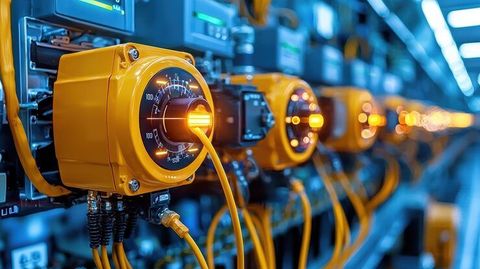
Industrial sensors are devices that detect physical conditions and convert them into information that machines, control systems, or people can interpret. In manufacturing environments, they can measure temperature, pressure, position, speed, vibration, flow, force, proximity, humidity, light, and other process variables.
Context
The use of sensors in manufacturing developed alongside industrial automation. Earlier production systems often depended heavily on mechanical switches, gauges, and direct human observation. As electronic controls and programmable systems became more common, sensors provided a way for machines to continuously gather information from production equipment and processes.
Today, industrial sensors are an important part of automated manufacturing systems. They connect physical operations with programmable logic controllers, industrial computers, robots, supervisory systems, and data platforms. This connection allows production equipment to respond to changing conditions instead of relying only on fixed mechanical settings.
Modern sensor technology is also becoming more connected. Smart sensors can perform functions such as signal processing, identification, self-testing, communication, and data handling. Research from the National Institute of Standards and Technology has highlighted sensing, signal conversion, data processing, metadata, time synchronization, and network communication as capabilities associated with smart sensors used in industrial Internet of Things environments.
How industrial sensors work
The basic process is relatively simple. A sensor detects a physical condition, converts that condition into an electrical or digital signal, and passes the information to another system for interpretation.
For example, a temperature sensor may detect a change in equipment temperature. The resulting signal can be sent to a controller, which compares the measurement with predefined operating conditions and may adjust another part of the manufacturing process.
Different industrial sensors are designed for different physical variables and operating environments.
| Sensor type | Common measurement or detection | Typical manufacturing use |
|---|---|---|
| Temperature sensor | Heat or temperature | Process and equipment monitoring |
| Pressure sensor | Fluid or gas pressure | Hydraulic and pneumatic systems |
| Proximity sensor | Presence or position | Object detection and machine automation |
| Photoelectric sensor | Light interruption or reflection | Product detection and counting |
| Flow sensor | Liquid or gas movement | Process flow monitoring |
| Vibration sensor | Mechanical vibration | Equipment condition monitoring |
| Position sensor | Linear or rotary position | Machine movement control |
| Humidity sensor | Moisture in air | Environmental monitoring |
| Force sensor | Applied force or load | Assembly and material handling |
Importance
Industrial sensors matter because manufacturing processes contain many conditions that cannot be monitored reliably through visual observation alone. A production line may contain moving components, enclosed machinery, heated materials, pressurized systems, liquids, gases, and rapidly changing process variables.
Sensors allow these conditions to be measured continuously or at defined intervals. The resulting information can support detection, monitoring, control, quality assessment, equipment diagnostics, and process analysis.
Detection and process control
Detection sensors can identify whether an object is present, whether a component has reached a particular position, or whether a production event has occurred. Proximity sensors and photoelectric sensors are common examples.
Control applications use sensor information to adjust equipment behavior. A controller may receive measurements from temperature, pressure, flow, or position sensors and use those inputs to determine whether a machine should continue operating, change a setting, or enter another operating state.
This creates a basic feedback loop:
A sensor measures a physical condition.
A controller receives the measurement.
Software or control logic evaluates the information.
An actuator or machine component responds.
Another sensor can measure the resulting condition.
This type of feedback is central to automated production.
Equipment monitoring
Sensors can also provide information about machine condition. Vibration sensors, temperature sensors, current sensors, and pressure sensors can capture changes that may indicate abnormal operating conditions.
Manufacturing research increasingly examines how sensing, diagnostics, and data analysis can support equipment monitoring. NIST describes advanced monitoring and prognostics as areas intended to help manufacturers understand equipment and process performance and identify changes that may require attention.
Sensor information does not automatically identify the cause of a problem. A change in vibration, for example, can have several possible causes. Additional measurements, equipment knowledge, and appropriate analysis may be required to understand the situation.
Quality monitoring
Industrial sensors can also support product and process quality. Cameras, laser sensors, force sensors, temperature sensors, and dimensional measurement systems can inspect products or monitor production conditions.
In some manufacturing environments, measurements can be collected during production rather than only after a product has completed a process. This approach can provide earlier information about process variation.
The value of such measurements depends on sensor placement, calibration, environmental conditions, data quality, and the characteristics being measured.
Recent Updates
From 2024 through 2026, industrial sensing has increasingly developed alongside smart manufacturing, artificial intelligence, edge computing, digital twins, and Industrial Internet of Things technologies. NIST's research on advanced manufacturing identifies process sensing and monitoring, equipment control, and automation among important areas of current manufacturing development.
Smarter connected sensors
A significant trend is the movement from sensors that only produce a basic signal toward devices that can process and communicate information. Smart sensors may perform signal conditioning, local processing, diagnostics, time synchronization, and network communication before information reaches a larger manufacturing system.
This can reduce the amount of raw information that needs to travel through a network and can allow some decisions or alerts to be generated closer to the machine.
Sensors and artificial intelligence
Artificial intelligence and machine learning are increasingly being investigated for manufacturing data analysis. A 2026 NIST roadmap identifies advanced sensing and perception, industrial data analytics, digital twins, robotics, and AI-enabled manufacturing as important areas of development. It also notes challenges involving complex industrial data, heterogeneous sensing and control systems, and trustworthy operation.
The important point is that AI does not replace the need for reliable measurement. An analytical system can only work with the information supplied to it, so sensor selection, calibration, data quality, and measurement context remain important.
Digital twins and sensor data
Digital twins are another area connected with industrial sensors. A digital twin represents aspects of a physical system using data, models, and software. Sensors can provide current information from machines and processes that helps keep such representations aligned with physical operations.
NIST research published in 2024 examined standards for manufacturing digital twins and described smart sensors, IIoT, cloud computing, machine learning, and AI as technologies contributing to manufacturing digitalization.
Wireless and edge connectivity
Wireless communication and edge computing are also becoming more relevant to factory sensing. Instead of sending every measurement to a distant system, some data can be processed near the equipment.
However, industrial environments can create challenges involving electromagnetic interference, communication reliability, latency, network coexistence, and system integration. NIST identifies these issues as important considerations for wireless factory automation.
Laws or Policies
Industrial sensors are generally affected by several layers of requirements rather than by one universal sensor-specific law. The applicable rules can depend on the manufacturing sector, equipment type, operating environment, electrical characteristics, workplace requirements, and location.
Technical standards are commonly used to define measurement, communication, interoperability, electrical, environmental, and cybersecurity requirements. Standards do not necessarily have the same legal status in every jurisdiction, so their role depends on how local regulations and contracts reference them.
Cybersecurity has become increasingly relevant because connected industrial sensors can become part of larger industrial automation and control systems. The IEC 62443 series addresses cybersecurity for industrial automation and control systems, including requirements and guidance related to secure development and system protection.
Recent IEC publications have also addressed the application of the IEC 62443 framework to Industrial Internet of Things environments. This reflects the growing connection between sensing devices, networks, controllers, and digital manufacturing platforms.
Manufacturers may therefore need to consider several factors when integrating industrial sensors:
Applicable electrical and equipment requirements
Environmental operating conditions
Measurement and calibration procedures
Machine and process safety requirements
Industrial communication protocols
Cybersecurity controls
Data protection and network-management practices
Documentation and maintenance requirements
The exact legal obligations depend on the jurisdiction and application. Technical standards should therefore be considered alongside applicable local regulations rather than treated as a universal substitute for them.
Tools and Resources
Several technical resources can help people understand, select, test, and integrate industrial sensors.
Sensor specifications and datasheets
A sensor datasheet normally contains information such as measurement range, accuracy characteristics, response time, electrical requirements, environmental limits, connection details, and communication interfaces. These specifications help engineers determine whether a device fits a particular application.
Calibration and measurement references
Calibration records and measurement references are important where measurement accuracy affects a manufacturing process. A calibration process compares an instrument against a reference under defined conditions and documents the resulting information.
Industrial communication resources
Industrial networks can use protocols such as Modbus, OPC UA, EtherNet/IP, PROFINET, and other communication technologies. Understanding the communication method is important when sensors need to exchange information with programmable controllers, industrial computers, or manufacturing software.
Smart manufacturing research
NIST maintains resources covering smart manufacturing, measurement science, sensing, monitoring, interoperability, digital twins, and industrial data. These resources can help readers understand how sensors fit into larger manufacturing systems.
Sensor selection checklist
A basic selection checklist can include:
Physical variable being measured
Required measurement range
Environmental conditions
Required response time
Mounting arrangement
Electrical requirements
Communication interface
Calibration requirements
Maintenance requirements
Compatibility with the existing control system
Selecting a sensor is therefore not simply a matter of choosing a measurement type. The sensor needs to function within the physical, electrical, environmental, and digital conditions of the manufacturing system.
FAQs
What are industrial sensors used for in manufacturing?
Industrial sensors are used to detect and measure conditions such as temperature, pressure, position, vibration, flow, force, speed, humidity, and object presence. Their measurements can support machine control, process monitoring, quality inspection, and equipment diagnostics.
How do industrial sensors improve manufacturing monitoring?
Industrial sensors provide continuous or periodic measurements from equipment and processes. These measurements can help control systems detect changes, identify abnormal conditions, monitor production variables, and analyze equipment behavior.
What is the difference between a sensor and a smart sensor?
A conventional sensor may primarily detect a physical variable and produce a corresponding signal. A smart sensor can include additional capabilities such as signal processing, local data handling, communication, identification, diagnostics, and other digital functions.
How are industrial sensors connected to automation systems?
Industrial sensors can connect to controllers and automation systems through electrical signals, fieldbus networks, Ethernet-based protocols, wireless communication, or other interfaces. The appropriate connection depends on the sensor, controller, network architecture, and application.
Are industrial sensors part of Industry 4.0?
Yes. Sensors are an important component of Industry 4.0 because they provide physical data that can be used by connected automation, IIoT platforms, analytics systems, digital twins, and other smart manufacturing technologies. Their role becomes more significant when measurement data can be integrated across machines and processes.