Commercial Refrigerator Guide: Refrigerator Types, Features and Selection Factors
A commercial refrigerator is a refrigeration unit designed for environments where food, beverages, ingredients, or other temperature-sensitive materials need to be stored regularly. Unlike household refrigerators, commercial units are generally designed for frequent door openings, heavier daily use, larger storage volumes, and demanding kitchen or retail environments.
Context
Commercial refrigeration developed alongside the growth of professional food preparation and organized food distribution. As kitchens became larger and food handling became more structured, refrigeration equipment needed to provide controlled temperatures while allowing workers to access stored items efficiently.
Today, commercial refrigerators are available in many configurations. The main differences include cabinet size, door design, temperature range, storage arrangement, cooling system, energy consumption, and installation method.
How commercial refrigerators work
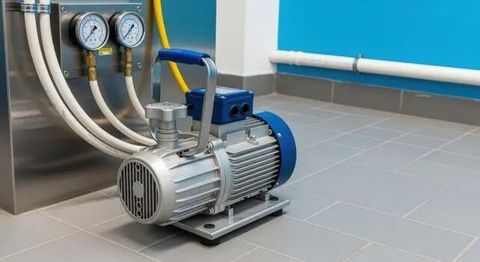
A commercial refrigerator removes heat from an enclosed space and transfers it outside the cabinet. The refrigeration cycle normally involves a compressor, condenser, expansion device, and evaporator. A refrigerant circulates through these components while changing pressure and temperature.
The compressor moves refrigerant through the system, while the condenser releases heat. The expansion device reduces refrigerant pressure, and the evaporator absorbs heat from inside the refrigerator. Fans, insulation, thermostats, controls, and door seals also contribute to temperature management.
Different refrigerator designs use these principles in different ways. A compact under-counter unit, for example, has different space requirements from a large walk-in cooler.
Importance
Commercial refrigeration plays an important role in food handling because many perishable products need controlled temperatures to maintain their intended storage conditions. Temperature fluctuations can affect food quality and may create food-safety concerns when products are stored incorrectly.
The choice of refrigerator can also affect how efficiently a kitchen or storage area operates. A unit with unsuitable dimensions may waste valuable floor space, while insufficient internal capacity can make storage difficult. Excess capacity can also increase energy use and occupy space that could have another purpose.
Why refrigerator type matters
The refrigerator type should correspond with the way items are stored and accessed. A busy preparation area may need quick access to ingredients, while a retail environment may require transparent doors so customers can see products.
Common applications include:
- Restaurant kitchens requiring organized ingredient storage
- Cafés needing space for beverages and prepared ingredients
- Retail environments displaying chilled products
- Catering operations handling large quantities of food
- Institutional kitchens requiring structured cold storage
- Bars and beverage areas requiring compact refrigerated storage
Main commercial refrigerator types
| Refrigerator type | Typical use | Main characteristic |
|---|---|---|
| Reach-in refrigerator | Kitchens and food preparation | Upright cabinet with direct access |
| Undercounter refrigerator | Compact work areas | Fits beneath counters |
| Pass-through refrigerator | Large kitchens | Access from two sides |
| Roll-in refrigerator | High-volume storage | Designed for wheeled racks |
| Walk-in cooler | Large-scale storage | Room-sized refrigerated area |
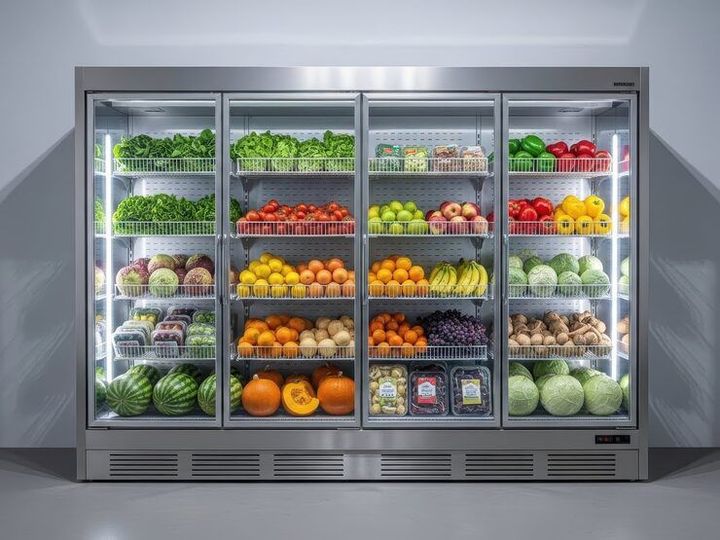
| Display refrigerator | Retail and presentation | Transparent doors or panels |
| Prep refrigerator | Food preparation | Refrigerated storage integrated with work space |
| Bar refrigerator | Beverage storage | Compact design for drinks |
The correct type depends on available space, storage volume, workflow, product requirements, and expected frequency of access.
Important features
Features should be evaluated according to their practical purpose rather than simply by the number of functions included. Adjustable shelving can make different container sizes easier to organize, while digital temperature displays can make temperature monitoring more convenient.
Door configuration also matters. Solid doors generally provide an enclosed storage environment, while glass doors improve visibility. Self-closing doors can reduce the amount of time a cabinet remains open during busy periods.
Other features may include automatic defrost systems, LED interior lighting, adjustable temperature controls, casters, removable shelving, alarms, and digital monitoring systems. Not every feature is appropriate for every environment.
Recent Updates
Commercial refrigeration has been influenced by several developments during 2024–2026, particularly in energy efficiency, refrigerants, monitoring technology, and refrigeration system design.
Energy efficiency has received continued attention because commercial refrigeration equipment can operate for long periods. ENERGY STAR states that certified commercial refrigerators and freezers meeting its current criteria are, on average, 20% more energy efficient than standard models within its program scope. The program evaluates daily energy consumption according to factors such as cabinet volume, door type, configuration, and equipment category.
Refrigerant developments
Refrigerant selection has become an important consideration because some refrigerants have a high global warming potential. Lower-GWP alternatives used in some commercial refrigeration equipment include R-290, R-600a, R-450A, R-513A, and carbon dioxide, depending on equipment design and applicable regulations.
Refrigerant choice involves more than environmental impact. Equipment compatibility, safety requirements, operating conditions, installation requirements, and applicable regulations also need to be considered.
Modular refrigeration systems
Another development has been the exploration of modular refrigeration systems. ENERGY STAR recognized modular packaged commercial refrigeration systems through its 2024 Emerging Technology Award program. The systems use compact, self-contained cooling equipment and can use low-GWP refrigerants.
Digital monitoring is also becoming more common. Temperature sensors, electronic controls, alarms, and connected monitoring systems can help operators identify temperature changes or equipment problems earlier. The usefulness of these features depends on the operating environment and how the information is monitored.
Energy performance considerations
Energy consumption depends on several factors rather than refrigerator size alone. Cabinet insulation, compressor efficiency, fan motors, door design, ambient temperature, usage frequency, and temperature settings can all influence energy performance.
ENERGY STAR's commercial refrigeration criteria use standardized testing methods to compare daily energy consumption among eligible equipment categories.
Laws or Policies
Commercial refrigeration is influenced by several types of regulations and technical standards. The exact requirements vary by jurisdiction, equipment category, refrigerant, installation environment, and intended use.
Food-safety regulations can establish temperature-control requirements for businesses handling perishable foods. Electrical and mechanical safety standards can address cabinet construction, electrical components, refrigerant systems, and installation practices.
Refrigerant regulations
Environmental regulations in many regions have increasingly focused on reducing refrigerants with high global warming potential. Regulatory programs can restrict certain refrigerants, establish transition periods, or specify acceptable alternatives for particular refrigeration applications.
For example, the U.S. Environmental Protection Agency provides information on transitions toward lower-GWP refrigerants in commercial refrigeration and identifies several alternative refrigerants for relevant applications.
Energy standards and testing
Energy-efficiency programs can also establish testing methods and performance requirements. ENERGY STAR's commercial refrigeration criteria reference standardized federal testing procedures and additional safety and food-equipment standards, including ANSI/NSF 7 and UL requirements within its certification framework.
Because regulations differ between regions, equipment should be evaluated against the rules that apply to its intended installation location. Manufacturer documentation and relevant regulatory authorities are appropriate sources for specific compliance information.
Tools and Resources
Several resources can help when evaluating commercial refrigeration equipment. Product specification sheets can provide cabinet dimensions, internal volume, temperature ranges, electrical requirements, refrigerant information, and reported energy consumption.
Energy-label databases can also help compare equipment using standardized information. ENERGY STAR provides a product database for certified commercial refrigerators and freezers, including information about equipment type, volume, refrigerant, and reported daily energy consumption.
A simple selection worksheet can make comparisons easier. Useful fields include:
- Refrigerator type
- External dimensions
- Internal volume
- Temperature range
- Door configuration
- Energy consumption
- Refrigerant type
- Electrical requirements
- Shelf configuration
- Installation clearance
- Temperature monitoring
- Cleaning and maintenance requirements
Manufacturer manuals are also important because they contain information about installation clearances, temperature settings, electrical connections, cleaning procedures, and operating limitations.
For larger refrigeration systems, professional refrigeration technicians and qualified electrical personnel may be required for installation, refrigerant handling, or specialized maintenance. Refrigerant systems should not be opened or modified without appropriate technical knowledge and authorization.
FAQs
What is a commercial refrigerator?
A commercial refrigerator is refrigeration equipment designed for professional environments such as kitchens, food stores, cafés, restaurants, and institutional facilities. It is generally designed for frequent access and continuous operation.
What are the main commercial refrigerator types?
Common commercial refrigerator types include reach-in, undercounter, pass-through, roll-in, walk-in, display, prep, and beverage refrigerators. Each type is designed around different storage and workflow requirements.
What features should be considered when selecting a commercial refrigerator?
Important selection factors include capacity, dimensions, temperature range, door configuration, energy consumption, refrigerant type, shelving, insulation, installation requirements, and temperature monitoring features.
Are low-GWP refrigerants used in commercial refrigerators?
Yes. Some commercial refrigeration equipment uses lower-GWP refrigerants such as R-290, R-600a, R-450A, R-513A, and carbon dioxide. Availability and permitted applications depend on equipment design and applicable regulations.
How can commercial refrigerator energy use be compared?
Energy consumption can be compared using standardized product information such as reported daily energy consumption and applicable efficiency certifications. Equipment specifications should be considered alongside cabinet size, operating conditions, and intended use.
Conclusion
Commercial refrigerators are available in several designs to accommodate different storage, workflow, and space requirements. Important selection factors include refrigerator type, capacity, temperature control, door configuration, energy performance, refrigerant, and installation requirements. Recent developments have increased attention toward energy efficiency, lower-GWP refrigerants, modular refrigeration systems, and digital monitoring. Applicable food-safety, environmental, electrical, and equipment standards should also be considered when evaluating commercial refrigeration equipment.