Welding Machines Guide: Machine Types, Welding Methods, Components and Applications
Welding machines are equipment used to join two or more pieces of material by applying heat, pressure, or a combination of both. Welding is widely associated with metals, although certain welding processes can also join thermoplastics and other specialized materials. The resulting joint can become part of a larger structure, component, pipeline, vehicle, machine, or fabricated product.
Context
Welding machines are equipment used to join two or more pieces of material by applying heat, pressure, or a combination of both. Welding is widely associated with metals, although certain welding processes can also join thermoplastics and other specialized materials. The resulting joint can become part of a larger structure, component, pipeline, vehicle, machine, or fabricated product.
The development of modern welding followed the growth of metalworking and industrial manufacturing. Early joining methods relied heavily on forging, riveting, and mechanical fastening. As electrical technology developed, processes using electric arcs and resistance heating became increasingly practical for manufacturing and construction.
Today, welding machines range from compact equipment used for repair and fabrication to computer-controlled systems integrated into automated production lines. The machine selected depends on the welding method, material, thickness, joint design, production requirements, and working environment.
How welding works
Most welding processes create a controlled heat source that causes the materials at the joint to become molten or sufficiently softened. In some processes, pressure is also applied to form the connection.
A welding system may use an electrode, welding wire, shielding gas, electrical current, mechanical pressure, or a combination of these elements. The process must be controlled so that the joint receives appropriate heat without unnecessarily affecting surrounding material.
Common welding machine types
Welding machines are commonly categorized according to their welding process and power source. Common categories include:
- Arc welding machines, which create an electrical arc between an electrode and the workpiece.
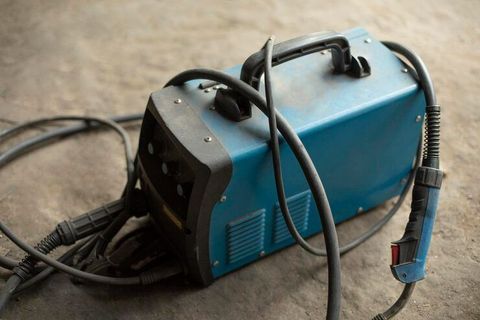
- MIG welding machines, which continuously feed a consumable wire electrode while shielding the weld area with gas.
- TIG welding machines, which use a non-consumable tungsten electrode and generally require a separate filler material when additional material is needed.
- Stick welding machines, which use coated consumable electrodes and are also known as shielded metal arc welding equipment.
- Resistance welding machines, which generate heat through electrical resistance while pressure is applied to the materials.
- Plasma welding machines, which use a concentrated plasma arc for specialized joining applications.
Each machine type has different operating characteristics, making process selection an important part of welding work.
Importance
Welding plays an important role in manufacturing, construction, transportation, energy infrastructure, maintenance, and fabrication. It can create permanent joints between components that need to withstand mechanical loads, pressure, vibration, temperature changes, or environmental exposure.
The subject is relevant to both industrial operators and general users because welded components are present in many everyday products and structures. Metal frames, vehicles, industrial equipment, storage structures, pipes, machinery components, and fabricated assemblies may contain numerous welded joints.
Why machine selection matters
Different welding processes produce different heat patterns, penetration characteristics, joint appearances, and operating requirements. Choosing an unsuitable process can affect productivity, material distortion, joint quality, and the amount of post-welding work required.
Important factors include:
- Material type and composition
- Material thickness
- Joint configuration
- Required penetration
- Welding position
- Production volume
- Available power supply
- Shielding requirements
- Operator skill
- Workplace conditions
A process used for thin sheet metal may not be appropriate for heavy structural components. Similarly, a machine designed for manual fabrication may not have the controls or configuration required for an automated production cell.
Welding methods compared
| Welding method | Main heat or joining principle | Common materials | Typical applications |
|---|---|---|---|
| MIG/GMAW | Arc with continuous wire | Steel, stainless steel, aluminium | Fabrication, manufacturing |
| TIG/GTAW | Tungsten arc | Stainless steel, aluminium, specialty metals | Precision fabrication |
| Stick/SMAW | Coated electrode arc | Steel and various alloys | Construction, repair |
| Resistance welding | Electrical resistance and pressure | Sheet metals | Vehicle and sheet-metal production |
| Plasma welding | Concentrated plasma arc | Various metals | Specialized fabrication |
| Submerged arc welding | Arc beneath granular flux | Carbon and alloy steels | Large welded structures |
The table provides a general comparison; actual process suitability depends on the material, joint design, equipment configuration, applicable welding procedure, and working conditions.
Recent Updates
Welding technology has increasingly incorporated automation, digital controls, sensors, data collection, and robotic equipment. Modern welding systems may monitor electrical parameters and provide digital controls for adjusting current, voltage, wire feed, travel characteristics, or other process variables.
Robotic welding is another continuing development in industrial production. Robots can repeatedly perform programmed welding movements and are commonly integrated with fixtures, positioners, wire-feeding equipment, sensors, and production-control systems.
Digital welding equipment
Digital controls have changed how many welding machines are configured and monitored. Instead of relying entirely on manually adjusted controls, some equipment can use programmable settings and electronic displays.
Depending on the equipment, digital systems may provide functions such as:
- Preset welding parameters
- Electronic current and voltage adjustment
- Data recording
- Fault notifications
- Process monitoring
- Remote equipment communication
- Integration with production systems
These capabilities are particularly relevant where repeatability and process documentation are important.
Automation and robotics
Automated welding systems can combine robots with positioners, fixtures, sensors, and welding power sources. Some systems use machine vision or other sensing technologies to identify joint locations or compensate for variations in components.
Automation does not remove the need for process engineering and inspection. Welding procedures, component preparation, fixture accuracy, programming, equipment condition, and inspection remain important factors.
Energy and process efficiency
Recent equipment development also includes attention to electrical efficiency, inverter-based power sources, improved control systems, and reduced material waste. Inverter technology has allowed manufacturers to produce welding power sources with sophisticated electronic control and, in many configurations, reduced physical size compared with older transformer-based designs.
The specific energy performance of a welding machine depends on its design, operating conditions, duty cycle, process, and electrical supply.
Laws or Policies
Welding activities are influenced by workplace safety regulations, equipment requirements, electrical standards, material standards, and welding procedure specifications. The exact rules vary according to jurisdiction, industry, workplace conditions, and the type of structure being fabricated.
Common regulatory areas include protection from welding fumes, ultraviolet radiation, heat, electrical hazards, fire, compressed gases, and flying particles. Workplace requirements may address ventilation, protective equipment, equipment grounding, confined spaces, fire prevention, and operator training.
International standards are also widely used in welding. Organizations such as the International Organization for Standardization and the American Welding Society publish standards covering welding procedures, qualifications, inspection, terminology, and equipment-related subjects.
For structural and pressure-related applications, additional requirements may apply. Welding procedures and personnel qualifications can be subject to specific standards or codes depending on the structure and intended use.
Manufacturers and workplaces may therefore need to consider several layers of requirements rather than relying on a single welding-machine specification. Applicable national regulations and industry standards should be checked for the particular application.
Tools and Resources
Several tools help users understand welding processes, prepare work, and evaluate welding parameters.
Welding procedure information
Welding procedure specifications, commonly called WPS documents, describe the parameters and conditions under which a particular welding operation is performed. Depending on the applicable standard, they may include information about the base material, filler material, welding process, joint design, electrical parameters, preheating, and other conditions.
Welding calculators
Welding calculators can assist with basic technical estimates involving variables such as:
- Welding current
- Voltage
- Travel speed
- Heat input
- Wire feed rate
- Material thickness
- Welding time
These calculations are useful for understanding relationships between welding parameters, but they do not replace a qualified welding procedure or applicable technical requirements.
Welding equipment manuals
Machine manuals provide information about electrical requirements, controls, duty cycle, electrode or wire compatibility, connection arrangements, operating limits, maintenance procedures, and safety precautions.
The duty cycle is particularly important when comparing equipment. It describes how long a machine can operate within a specified period at a stated output before thermal limits require a reduction or pause.
Standards and technical references
Organizations such as the International Organization for Standardization and the American Welding Society maintain technical publications and standards related to welding. Manufacturer documentation, training materials, welding procedure references, and occupational safety guidance can also provide useful background information.
FAQs
What are the main types of welding machines?
Common welding machine types include MIG, TIG, stick, resistance, and plasma welding equipment. Each uses a different method for generating heat or applying pressure and has different requirements for materials, joint designs, and operating conditions.
How does a MIG welding machine work?
A MIG welding machine continuously feeds a wire electrode toward the joint while an electric arc generates heat. Shielding gas is normally used to protect the molten weld area from atmospheric contamination.
What is the difference between TIG and MIG welding machines?
TIG welding machines use a non-consumable tungsten electrode and generally provide greater control over the welding arc. MIG machines use continuously fed consumable wire, making them suited to applications where continuous wire feeding is useful.
What components are found in a welding machine?
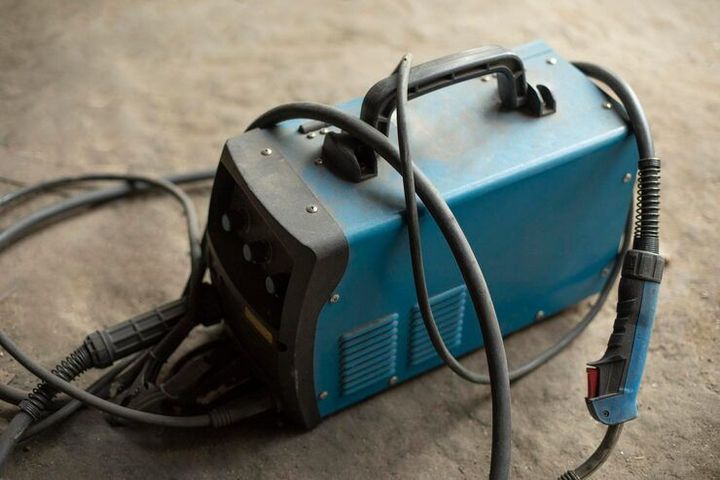
Depending on the design, a welding system may include a power source, control circuitry, electrode holder or welding torch, cables, work clamp, wire feeder, shielding-gas equipment, cooling components, and control interfaces. Automated systems can also include robots, positioners, sensors, and fixtures.
Where are welding machines used?
Welding machines are used in metal fabrication, machinery manufacturing, construction, transportation equipment, pipelines, structural assemblies, maintenance, and many other industrial applications. The specific process depends on the material, component design, required joint characteristics, and production environment.
Conclusion
Welding machines use different combinations of electrical energy, heat, pressure, electrodes, filler materials, and shielding methods to create permanent joints. MIG, TIG, stick, resistance, plasma, and other processes serve different material and production requirements. Recent developments have expanded the use of digital controls, robotics, sensors, and automated process monitoring. Welding activities are also shaped by workplace safety requirements, technical standards, welding procedures, and equipment specifications.