Pearl Jewellery Explored: Pearl Types, Necklace and Earring Designs and Care Practices
Pearl jewellery has been part of adornment traditions for centuries, with pearls valued for their natural luster, rounded forms, and wide range of colors. Unlike minerals that form through geological processes, pearls develop within certain mollusks when layers of nacre accumulate around an irritant or an intentionally introduced nucleus.
Context
Pearl jewellery has been part of adornment traditions for centuries, with pearls valued for their natural luster, rounded forms, and wide range of colors. Unlike minerals that form through geological processes, pearls develop within certain mollusks when layers of nacre accumulate around an irritant or an intentionally introduced nucleus. Natural pearls form without human intervention, while cultured pearls develop through a managed cultivation process. Most pearls encountered in modern jewellery are cultured.
The term pearl jewellery covers many designs, including pearl necklaces, earrings, bracelets, rings, pendants, and mixed-gemstone pieces. The appearance of a pearl depends on factors such as its type, size, shape, color, luster, surface characteristics, nacre, and matching when several pearls are used together.
Pearls are commonly grouped into freshwater and saltwater varieties. The major cultured categories include freshwater, Akoya, Tahitian, and South Sea pearls, each associated with different mollusks and growing environments.
Understanding pearl types
Freshwater pearls can occur in many shapes and colors and are commonly cultivated in freshwater environments. Akoya pearls are saltwater pearls often associated with round shapes and white or cream colors. Tahitian pearls are known for dark bodycolors and can display green, gray, purple, blue, or pink overtones, while South Sea pearls are generally larger and occur in white, silver, and golden shades.
Natural and cultured pearls should also be distinguished. Natural pearls develop without deliberate human intervention, whereas cultured pearls begin through human involvement but continue to form through the mollusk's natural secretion of nacre.
Importance
Understanding pearl jewellery matters because pearls differ considerably even when they appear similar at first glance. Knowing the differences between pearl types, shapes, colors, and surface characteristics makes it easier to understand why individual pieces have different appearances and classifications.
Pearls are also relatively delicate compared with many commonly used jewellery materials. GIA places pearl at 2.5 on the Mohs hardness scale, meaning it can be scratched or abraded relatively easily. Heat, acids, cosmetics, perfume, hairspray, and some other chemicals can also damage pearls.
Pearl necklaces and earrings
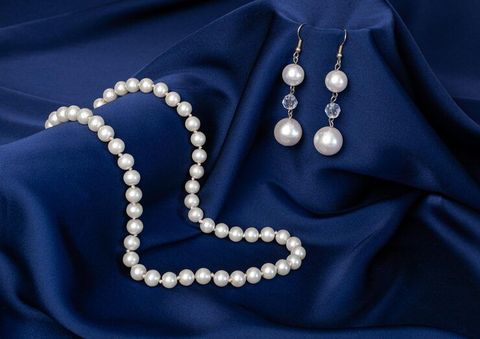
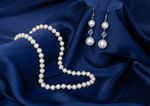
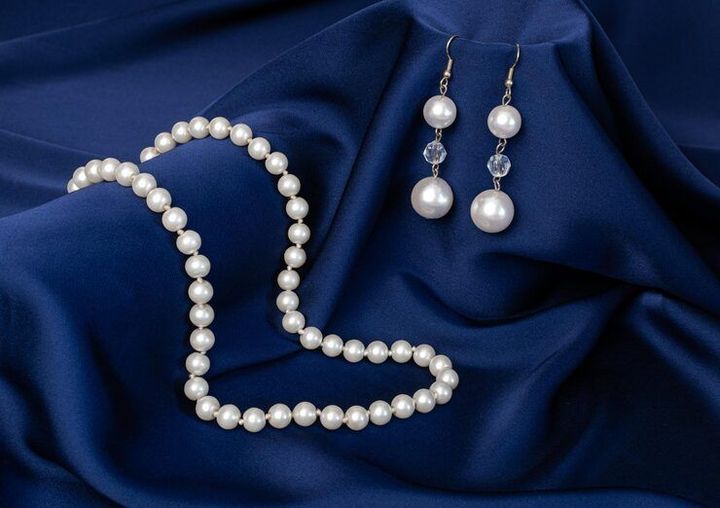
Pearl necklaces are among the most recognizable forms of pearl jewellery. They can contain similarly sized pearls arranged in a uniform strand or deliberately use graduated sizes, mixed shapes, or multiple colors.
Pearl earrings can take several forms:
- Stud earrings can feature a single pearl mounted close to the earlobe.
- Drop earrings suspend one or more pearls below the ear.
- Hoop designs may incorporate pearls along part or all of the hoop.
- Cluster designs combine several smaller pearls or other gemstones.
- Mismatched designs can use different pearl shapes or colors as an intentional design feature.
The setting and supporting materials also affect how a pearl appears. Metal color, surrounding gemstones, pearl size, and the distance between individual pearls can change the overall visual effect.
Pearl characteristics
Several characteristics are useful when examining pearl jewellery. Luster describes the quality and sharpness of reflections from the pearl's surface. Surface characteristics refer to visible marks or irregularities, while shape can range from round and near-round forms to oval, button, drop, baroque, and other irregular forms.
| Pearl characteristic | What it describes |
|---|---|
| Type | Freshwater, Akoya, Tahitian, or South Sea |
| Origin environment | Freshwater or saltwater |
| Shape | Round, near-round, oval, drop, baroque, and other forms |
| Color | Main bodycolor visible on the pearl |
| Overtone | Secondary color appearing over the bodycolor |
| Luster | Sharpness and intensity of surface reflection |
| Surface | Visible spots, marks, pits, or other characteristics |
| Nacre | Layered material that forms the pearl's surface |
| Matching | Similarity among pearls used in the same jewellery piece |
GIA uses seven factors—size, shape, color, luster, surface, nacre, and matching—to describe cultured pearl quality.
Recent Updates
Pearl jewellery continues to develop through changes in cultivation methods, design preferences, and the availability of different pearl shapes and colors. Recent pearl information from gemological organizations shows increasing variety in freshwater cultured pearls, including larger sizes, more symmetrical shapes, and a wider range of appearances.
Another continuing development is greater access to information about pearl identity and characteristics. Identification and classification reports can distinguish natural from cultured pearls, identify whether a pearl formed in freshwater or saltwater when determinable, and document characteristics and detectable treatments.
Contemporary pearl designs
Current jewellery design includes both traditional and less formal approaches to pearls. Classic single-strand necklaces remain recognizable, while designers also use baroque pearls, mixed colors, layered necklaces, pendants, and combinations with other gemstones.
Pearl earrings similarly range from simple single-pearl designs to sculptural arrangements. The increasing variety of pearl shapes means that jewellery does not have to rely exclusively on perfectly round pearls.
Treatment and identification
Some pearls may be dyed, coated, impregnated, or otherwise treated. Treatments can affect appearance and may change how a pearl should be handled. GIA notes that strongly colored pearls should not automatically be assumed to have naturally occurring bodycolors, because treatments such as dyeing can produce or modify color.
Laws or Policies
Pearl jewellery is affected by consumer-protection, advertising, product-description, labeling, and trade regulations. Exact requirements vary according to the jurisdiction where jewellery is manufactured, marketed, imported, or sold.
Rules generally seek to ensure that descriptions of jewellery accurately represent relevant characteristics. For example, the U.S. Federal Trade Commission's Jewelry Guides address representations concerning natural and cultured pearls, pearl imitations, treatments, quality, size, origin, and other characteristics.
Terminology is therefore important. A cultured pearl should not be represented as a natural pearl, and an imitation pearl should not be described in a way that could make its identity unclear. Treatment information can also be relevant when it materially affects how a pearl is represented.
Documentation and identification
Independent gemological reports can provide additional information about pearl identity and characteristics. Depending on the report type, information may include whether a pearl is natural or cultured, its formation environment, detectable treatments, and classification characteristics.
Because regulations differ between jurisdictions, businesses and consumers should refer to the applicable local rules when legal compliance or formal jewellery labeling is involved.
Tools and Resources
Several resources can help people understand pearl jewellery without relying only on visual appearance.
Gemological references
Gemological organizations provide educational material covering pearl formation, types, treatments, durability, identification, and care. GIA's pearl resources explain distinctions between freshwater, Akoya, Tahitian, and South Sea cultured pearls and describe factors used in pearl classification.
Pearl identification reports
A laboratory report can be useful when the identity or characteristics of a pearl need independent documentation. Depending on the report, it may address natural or cultured identity, freshwater or saltwater formation, detectable treatments, and other characteristics.
Jewellery care records
A simple jewellery record can include the pearl type, date of purchase, known treatments, necklace restringing history, and any available documentation. This information can help maintain a consistent care history.
Basic care materials
Pearl care generally requires simple handling rather than abrasive cleaning equipment. A soft, clean cloth can be used to wipe pearls after wearing. GIA advises against ultrasonic and steam cleaning and recommends avoiding harsh chemicals and excessive heat.
Pearl necklaces also require attention to their string. Over time, stringing material can stretch, weaken, or become discolored, and periodic restringing may be appropriate depending on the condition and use of the necklace.
FAQs
What are the main types of pearl jewellery?
Common pearl jewellery includes necklaces, earrings, bracelets, rings, and pendants. These designs can use freshwater, Akoya, Tahitian, South Sea, natural, or other cultured pearls depending on the piece.
What is the difference between freshwater and saltwater pearls?
Freshwater pearls develop in freshwater mollusks, while saltwater pearls develop in marine mollusks. Akoya, Tahitian, and South Sea pearls are major categories of saltwater cultured pearls, while freshwater pearls have their own broad range of shapes, sizes, and colors.
How should a pearl necklace be cared for?
A pearl necklace should be protected from perfume, hairspray, cosmetics, harsh chemicals, excessive heat, and rough surfaces. Wiping the pearls with a soft cloth after wearing and storing them separately from harder jewellery can help reduce scratching and chemical exposure.
Are pearl earrings difficult to maintain?
Pearl earrings require similar care to other pearl jewellery. They should be kept away from cosmetics and chemicals, wiped gently after use, and stored where they will not rub against harder gemstones or metal edges.
How can natural and cultured pearls be distinguished?
Natural pearls form without human intervention, while cultured pearls begin through human involvement in the cultivation process. Professional gemological testing can be used when reliable identification is required.
Conclusion
Pearl jewellery includes a wide range of designs and pearl varieties, from classic necklaces and earrings to contemporary pieces using unusual shapes and colors. Freshwater, Akoya, Tahitian, and South Sea pearls differ in their formation environments and typical characteristics. Understanding luster, surface, shape, color, nacre, and matching provides useful context when examining pearl jewellery. Proper care is particularly important because pearls are relatively soft and can be affected by chemicals, heat, abrasion, and unsuitable cleaning methods.