Diamond Jewellery Guide: Ring, Necklace and Earring Designs, Quality and Care Guidelines
Diamond jewellery combines diamonds with precious metals to create items such as rings, necklaces, earrings, bracelets, and pendants. Diamonds have been used as decorative gemstones for centuries, while modern jewellery making has introduced many cutting techniques, metal choices, setting styles, and design forms.
A diamond is a crystalline form of carbon formed naturally under high pressure and temperature deep within the Earth. Laboratory-grown diamonds have the same crystal structure and chemical composition as natural diamonds, although their origins are different. Diamond jewellery may therefore contain natural diamonds, laboratory-grown diamonds, or diamond-like imitations, depending on how the piece is described.
Understanding diamond jewellery involves more than looking at appearance. The characteristics of the diamond, the metal, the setting, the craftsmanship, and the intended use can all affect how a piece looks and how it should be maintained.
Understanding the main diamond jewellery designs
Diamond rings are commonly associated with engagement, wedding, anniversary, and everyday jewellery designs. Common ring styles include solitaire, halo, three-stone, cluster, and pavé settings. The setting determines how the diamond is positioned and how much of it is visible.
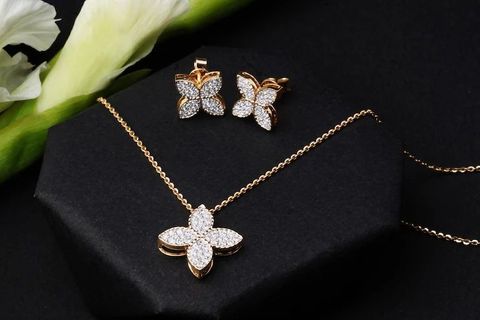
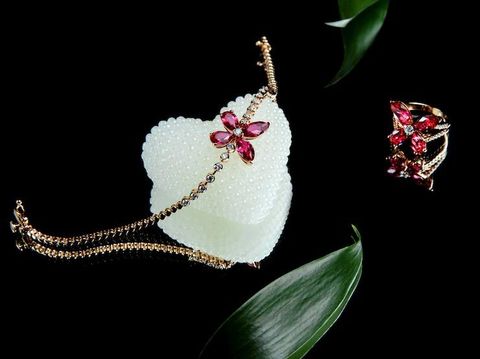
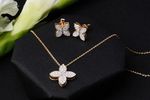
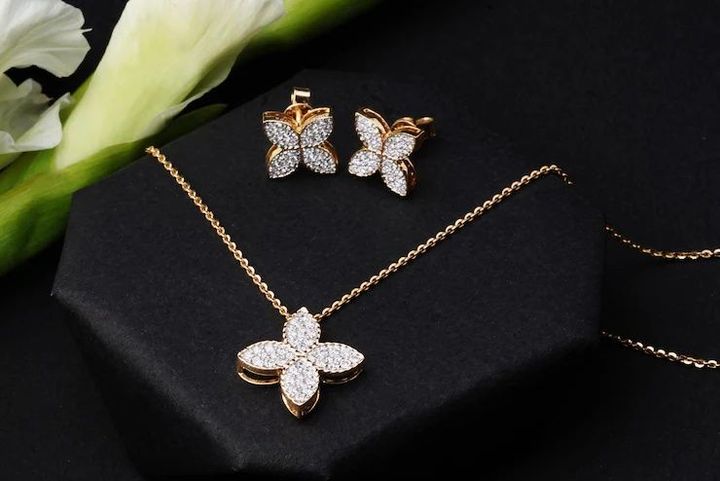
Diamond necklaces can use a single central stone, several stones arranged along a chain, or a pendant design. Popular forms include solitaire pendants, halo pendants, diamond station necklaces, and designs combining diamonds with other gemstones.
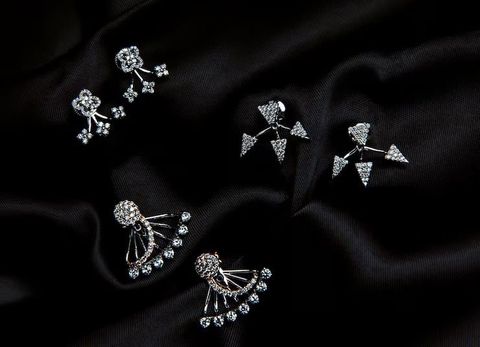
Diamond earrings are available in several forms, including studs, hoops, drop earrings, and chandelier-style designs. Studs generally place one or more diamonds close to the earlobe, while drop and chandelier designs allow greater movement.
The 4Cs of diamond quality
The commonly used framework for describing diamond quality is the 4Cs: cut, color, clarity, and carat weight. GIA describes these four characteristics as the primary factors used to evaluate a finished diamond.
Cut describes the proportions, arrangement, and finish of a diamond's facets. Color describes the degree of color in a diamond, while clarity refers to internal and external characteristics. Carat weight measures the diamond's weight rather than its physical dimensions.
| Diamond factor | What it describes | Why it matters |
|---|---|---|
| Cut | Facet proportions and arrangement | Influences how light interacts with the stone |
| Color | Degree of body color | Helps describe the diamond's appearance |
| Clarity | Internal inclusions and surface blemishes | Provides information about characteristics within the stone |
| Carat weight | Diamond weight | Indicates the measured weight of the diamond |
Importance
Diamond jewellery can represent personal style, cultural traditions, family occasions, or significant events. Because these pieces can remain in use for many years, understanding their construction and care can help prevent avoidable damage and confusion about their characteristics.
Quality is also important because diamonds with similar sizes can have different characteristics. A diamond's appearance cannot always be understood from carat weight alone. Cut, color, clarity, shape, fluorescence, treatments, and mounting can all contribute to the overall appearance.
Choosing a suitable design
The intended use is an important consideration when comparing diamond jewellery designs. A ring worn regularly may experience more contact with surfaces than an occasional pendant, while earrings may be exposed to cosmetics, hair products, and moisture.
Design considerations can include:
- Ring profile and setting height
- Necklace length and pendant structure
- Earring backing and fastening mechanism
- Diamond shape and orientation
- Metal type and purity
- Number and arrangement of diamonds
- Ease of cleaning and inspection
The setting also has a practical role. Prong settings expose more of a diamond, while bezel settings surround the stone with metal. Pavé settings use multiple small stones set closely together, creating a continuous appearance across part of the jewellery.
Natural, laboratory-grown and imitation diamonds
Natural and laboratory-grown diamonds have essentially the same chemical and physical properties, but they have different origins. Imitation materials, such as cubic zirconia or certain other simulants, are different materials that can resemble diamonds visually.
Clear disclosure is therefore important when describing diamond jewellery. The U.S. Federal Trade Commission's Jewelry Guides state that laboratory-created diamonds should be clearly described as laboratory-created or laboratory-grown rather than being represented as mined diamonds.
Recent Updates
The diamond jewellery sector has continued to change as laboratory-grown diamond technology has developed. Research published by GIA has documented increases in the quantity, size, and quality of laboratory-grown diamonds and greater attention to identifying their origin and treatments.
This development has made diamond identification and disclosure increasingly relevant. Gemological laboratories use specialized instruments and testing methods to distinguish natural diamonds from laboratory-grown materials and to identify certain treatments.
Digital grading information
Another continuing trend is the use of digital diamond reports and online report verification. GIA provides digital reports for certain diamonds and allows report information to be checked through its online database.
Digital documentation can make information about a diamond easier to access and store. However, a digital record does not replace the importance of understanding what the report actually covers, including whether it describes a natural diamond, laboratory-grown diamond, treatments, and the applicable grading characteristics.
Changing jewellery design preferences
Contemporary diamond jewellery includes both traditional and minimalist designs. Simple solitaire rings, geometric earrings, layered necklaces, mixed-metal pieces, and combinations of diamonds with colored gemstones continue to appear across jewellery collections.
At the same time, vintage-inspired designs remain relevant, particularly styles influenced by Art Deco, Victorian, and other historical periods. These trends show that diamond jewellery can range from simple everyday pieces to detailed ceremonial designs.
Laws or Policies
Jewellery regulations differ between countries and may cover gemstone descriptions, precious-metal purity, hallmarking, product labeling, weights and measurements, advertising claims, and disclosure of laboratory-grown or treated materials.
A common regulatory principle is that descriptions should accurately represent what a jewellery item contains. Material information about a diamond's identity, treatment, origin where relevant, and metal content may need to be disclosed depending on local law.
In the United States, the Federal Trade Commission's Jewelry Guides address truthful descriptions of diamonds, gemstones, laboratory-created materials, precious metals, treatments, weight, quality, and other characteristics.
Precious-metal hallmarking is another important regulatory area in many countries. Hallmarks can indicate the fineness or purity of a metal and may be accompanied by other legally required marks. India's Bureau of Indian Standards, for example, describes hallmarking as the official recording of precious-metal content and currently includes gold and silver within its hallmarking framework.
Because regulations vary by jurisdiction, the applicable national authority should be consulted when legal compliance, import requirements, hallmarking, or commercial jewellery descriptions are involved.
Tools and Resources
Several resources can help readers understand diamond jewellery quality and maintain accurate records.
Diamond grading reports
A diamond grading report can document characteristics such as shape, color, clarity, carat weight, proportions, finish, and treatments, depending on the report type. GIA provides several report formats for natural diamonds and separate documentation for laboratory-grown diamonds.
A report number can also provide a way to verify information through the issuing laboratory's online database.
Diamond measurement and conversion tools
Carat weight should not be confused with size measurements. Carat is a unit of weight, while millimetres are used to describe physical dimensions. Diamond measurement charts and calculators can help explain the relationship between these two types of information.
Such tools are particularly useful when comparing different diamond shapes because two stones with the same carat weight can have different face-up dimensions.
Jewellery care resources
Basic care records can include the date of purchase, metal type, diamond characteristics, report number, cleaning history, and photographs of the item. Keeping these details together can make future identification and documentation easier.
GIA notes that diamonds are hard but not indestructible. Impact can chip a diamond or loosen it from its setting, and diamonds can also scratch one another when stored together without protection.
Cleaning and storage guidelines
Routine care generally begins with keeping jewellery away from substances that can leave residue or damage particular metals and gemstones. A soft, lint-free cloth and appropriate cleaning methods can help remove surface deposits.
For jewellery containing treated diamonds or other gemstones, cleaning methods should be selected carefully. GIA notes that certain treatments, including fracture filling, can be affected by steam, acids, or ultrasonic cleaning.
For storage, individual fabric-lined compartments, jewellery boxes, or soft pouches can reduce contact between separate pieces. Necklaces can also be stored in ways that reduce chain tangling.
FAQs
What are the main types of diamond jewellery?
The main categories include diamond rings, diamond necklaces, diamond earrings, bracelets, and pendants. Within each category, designs vary according to diamond shape, setting, metal, number of stones, and overall construction.
How are diamond jewellery quality factors evaluated?
Diamond quality is commonly discussed using the 4Cs: cut, color, clarity, and carat weight. These characteristics describe different aspects of the individual diamond and should not be treated as interchangeable measurements.
How should diamond rings, necklaces and earrings be cleaned?
Cleaning depends on the diamond, metal, setting, and any treatments present. Gentle cleaning methods are commonly used for many pieces, while treated stones may require additional precautions. GIA specifically notes that certain treatments can be damaged by particular cleaning processes.
Are laboratory-grown diamonds real diamonds?
Laboratory-grown diamonds have essentially the same chemical composition and crystal structure as natural diamonds, but they are produced through technological processes rather than geological formation. They should be clearly identified as laboratory-grown or laboratory-created when described to consumers.
What should a diamond jewellery report contain?
The information depends on the type of report. A diamond grading report may identify characteristics such as shape, color, clarity, carat weight, proportions, finish, and treatments. Some reports also include a plotted clarity diagram or other identification information.
Conclusion
Diamond jewellery includes a wide range of rings, necklaces, earrings, and other designs using different diamond shapes, settings, and metals. Understanding the 4Cs, diamond origin, treatments, setting construction, and metal characteristics provides useful context for evaluating jewellery. Recent developments in laboratory-grown diamonds and digital grading information have increased the importance of clear identification and documentation. Proper storage, suitable cleaning methods, and regular inspection can help maintain the condition of diamond jewellery over time.