Massage Chairs A Complete Guide to Types, Modes, Mechanisms & Features
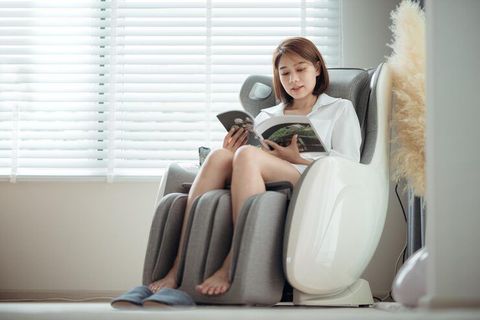
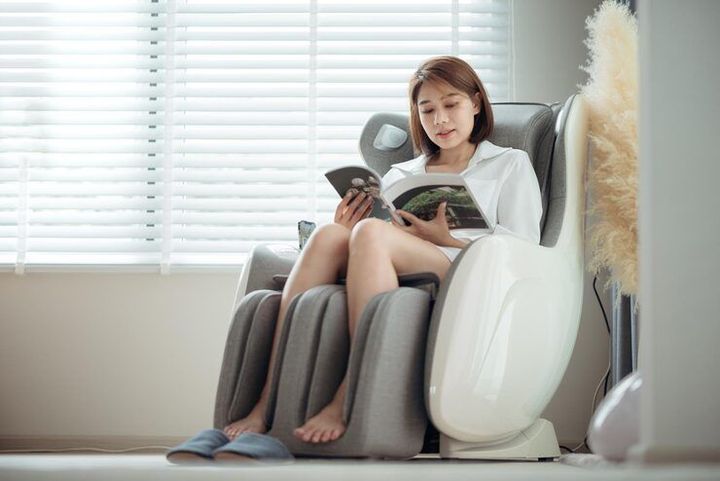
Massage chairs are motorized seating systems designed to reproduce selected massage movements through mechanical rollers, airbags, vibration systems, heating elements, and adjustable positioning. Unlike a conventional chair, a massage chair contains internal mechanisms that move against or around parts of the body while the user remains seated.
Context
The concept developed from mechanical massage equipment and traditional massage techniques. Early mechanical systems were relatively simple, while modern massage chairs combine motors, sensors, programmable controls, and body-position adjustments to create different massage patterns.
Today, massage chairs are available in several designs, from compact models that focus on the back and legs to full-body systems with foot wells, arm compartments, reclining mechanisms, and moving roller assemblies. The terminology used by manufacturers can vary, so understanding the underlying mechanisms is more useful than relying only on feature names.
A massage chair is primarily a wellness and relaxation device. Research on massage-chair use has examined areas such as perceived stress, muscle stiffness, pain, mental fatigue, and quality of life, although the evidence varies by condition and study design. A 2023 scoping review identified potential benefits but also noted reported complications, showing why massage-chair use should not be treated as a substitute for medical evaluation.
How massage chairs create movement
Most automated massage chairs use one or more motor-driven mechanisms. Rollers move along predetermined tracks while airbags inflate and deflate around areas such as the shoulders, arms, hips, calves, and feet.
The main mechanisms can include:
- Roller systems for mechanical pressure and movement along the back
- Airbag systems for compression around the legs, arms, shoulders, or hips
- Vibration systems for localized movement
- Heating elements for controlled warmth
- Reclining mechanisms for changing the user's body position
- Foot and calf mechanisms for compression, rolling, or kneading
The combination of these mechanisms determines the type of massage experience a chair can produce.
Importance
Massage chairs matter because they combine furniture and automated mechanical movement in a single device. They can be used in homes, wellness environments, workplaces, and other settings where people seek a seated relaxation experience.
The main challenge is understanding what a particular chair actually does. Terms such as 2D, 3D, 4D, zero gravity, body scanning, and AI may describe different aspects of the machine, and these terms are not always used in exactly the same way across manufacturers.
Understanding common massage chair types
Massage chairs can be grouped according to their coverage, mechanism, and intended use.
| Type | Main mechanism or design | Typical coverage |
|---|---|---|
| Compact massage chair | Basic rollers, vibration, or airbags | Back and selected areas |
| Full-body massage chair | Rollers, airbags, and foot mechanisms | Back, arms, hips, legs, and feet |
| 2D roller chair | Rollers move mainly vertically and horizontally | Primarily back |
| 3D roller chair | Adds adjustable roller depth | Back and sometimes extended areas |
| 4D-style chair | Adds variable roller speed and movement patterns | Primarily back with broader programming |
| Zero-gravity chair | Reclining and body-position adjustment | Whole-body positioning |
| Air-massage chair | Multiple air chambers | Arms, shoulders, hips, legs, or feet |
These categories can overlap. For example, a full-body chair may also use 3D rollers, zero-gravity positioning, heat, and air compression.
2D, 3D, and 4D mechanisms
A 2D massage mechanism generally moves rollers along two primary directions, such as upward and downward along the back and from side to side. The roller depth is relatively limited compared with systems that add another movement axis.
A 3D mechanism adds movement toward and away from the body. This allows the roller depth to be adjusted, changing how firmly the rollers contact the back.
The term 4D is commonly used for systems that add greater variation in roller speed, timing, or movement patterns. However, there is no universal technical definition requiring every manufacturer to use the term identically. For that reason, the actual movement range and control options are more informative than the label alone.
Air compression and body positioning
Airbags are inflatable chambers placed around specific body areas. When activated, they inflate and release in sequences, creating a compression sensation rather than the rolling movement produced by mechanical rollers.
Zero-gravity positioning uses a reclining mechanism that changes the angle between the upper body and legs. The objective is to alter body positioning and distribute body weight across the chair. The phrase refers to a seating position concept rather than an absence of gravity.
Recent Updates
Massage-chair technology has continued moving toward greater programmability, body-position sensing, and automated adjustment. Recent models increasingly combine mechanical rollers with pressure sensors, body scanning, smartphone controls, voice interfaces, and programmable routines.
Another development is greater use of sensor-assisted positioning. Some systems attempt to identify shoulder height, body shape, or other reference points before starting a routine. This can allow the roller path or airbag sequence to be adjusted to the individual user's position.
AI-related terminology has also become more visible in the category. Some products use the term for software that interprets sensor information or adjusts programs. However, an AI label does not by itself establish a particular level of accuracy or personalization.
Greater attention to safety standards
Safety requirements have also developed. IEC 60335-2-32:2024 addresses safety requirements for electric massage appliances used for household and similar purposes, including massage chairs, massage beds, massage pads, and related equipment.
European implementation of the standard has also progressed, with EN IEC 60335-2-32:2026 listed as applicable to electric massage appliances.
In the United States, UL 1647 covers motor-operated massage and exercise machines, including vibrating and massaging chairs. Its current sixth edition was revised in 2026.
These developments illustrate a broader trend toward treating mechanical movement, electrical components, heating systems, and user interaction as connected safety considerations.
What has not changed
Despite technological developments, the basic principles remain straightforward. A massage chair still relies on mechanical movement, air compression, vibration, heat, or combinations of these systems.
More functions do not automatically mean that a chair will be appropriate for every person. The effect of a massage depends on the mechanism, intensity, duration, body position, and individual circumstances.
Laws or Policies
Massage chairs are generally regulated according to their intended use and the rules that apply to electrical appliances, consumer products, or medical devices in the relevant jurisdiction. A chair marketed as a general wellness appliance may be subject to different requirements from a product making specific medical claims.
International standards provide technical frameworks for electrical and mechanical safety. IEC 60335-2-32:2024 specifically addresses electric massage appliances and includes massage chairs within its scope.
Regulatory requirements can involve electrical safety, insulation, mechanical hazards, heating components, materials, labeling, instructions, and testing. The exact legal requirements depend on the jurisdiction where a product is manufactured, imported, distributed, or used.
Consumers should also distinguish between a safety standard and a health claim. Compliance with an electrical or mechanical safety standard does not establish that a massage chair can diagnose, prevent, or treat a medical condition.
General safety considerations
Massage chairs involve moving mechanical parts and, in some cases, heat and electrical components. Users should follow the manufacturer's operating instructions and pay attention to warnings concerning body position, duration, and specific health circumstances.
Extra caution may be appropriate for people with certain medical conditions, recent injuries, implanted medical devices, pregnancy-related concerns, or unexplained pain. Published literature on massage has documented occasional adverse events, although serious events appear to be uncommon.
Tools and Resources
Several resources can help readers understand massage-chair specifications and safety information.
Product manuals and specification sheets
A manufacturer's manual is useful for identifying the chair's operating limits, massage programs, adjustment ranges, electrical requirements, cleaning instructions, and warnings. Technical specifications can also clarify dimensions, reclining range, roller mechanism, and available control systems.
Safety standards databases
The International Electrotechnical Commission provides information about IEC 60335-2-32 and its requirements for electric massage appliances. This can help readers understand the technical framework used for household massage-appliance safety.
UL Standards & Engagement provides information about UL 1647 and its scope for motor-operated massage and exercise machines.
Feature comparison tables
A simple comparison table can make technical specifications easier to understand. Useful fields include:
- Roller type and movement range
- Massage areas
- Number and location of airbags
- Reclining positions
- Heat functions
- Foot and calf mechanisms
- Program selection
- Intensity controls
- Body-scan functions
- Chair dimensions
- User weight and height limitations
- Electrical requirements
Such information provides a clearer basis for comparing designs than feature names alone.
FAQs
What are the main types of massage chairs?
Common types include compact chairs, full-body massage chairs, 2D roller chairs, 3D roller chairs, 4D-style systems, air-compression chairs, and zero-gravity designs. These categories can overlap because one chair may combine several mechanisms.
What is the difference between 2D, 3D, and 4D massage chairs?
A 2D system generally moves rollers across two main directions. A 3D system adds adjustable movement toward and away from the body, while 4D terminology usually refers to additional variation in roller speed or movement timing. Definitions can differ between manufacturers.
How do massage chair mechanisms work?
Massage chair mechanisms use motors to move rollers, pumps to inflate airbags, heating elements to produce warmth, and reclining motors to change the chair's position. Software coordinates these components according to the selected program.
Are massage chairs safe for everyone?
No single massage-chair design is appropriate for every person. People with certain medical conditions, injuries, pregnancy-related concerns, or other health considerations may need individualized guidance before using mechanical massage equipment. Published research has documented occasional adverse events associated with massage, although serious events are uncommon.
What features are commonly found in modern massage chairs?
Common features include adjustable roller depth, multiple massage programs, air compression, heat, foot rollers, calf compression, reclining, body scanning, memory settings, and smartphone or voice controls. Availability and implementation vary between models.
Conclusion
Massage chairs combine mechanical rollers, air compression, vibration, heat, and reclining mechanisms to create automated massage routines. Understanding the difference between 2D, 3D, and 4D mechanisms helps explain how roller movement and intensity can vary between designs. Recent developments have introduced more sensors, programmable controls, connected features, and greater attention to appliance safety standards. Massage chairs are wellness devices, and their functions should be understood separately from medical diagnosis or treatment.