Ganpati Decoration A Complete Guide to Themes, Decorative Materials & Easy Tips
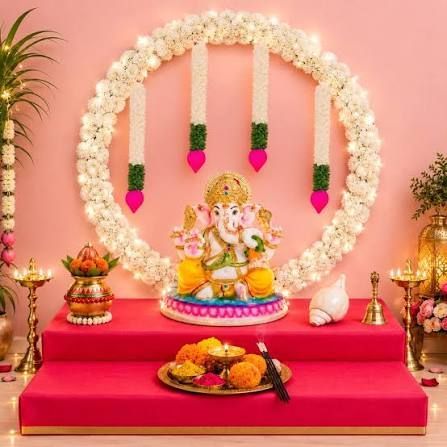
Ganpati decoration is an important part of preparing a home, office, community space, or temporary pandal for Ganesh Chaturthi. It combines traditional elements such as flowers, leaves, fabric, lamps, and rangoli with modern ideas such as paper craft, reusable panels, natural textures, and simple lighting. A thoughtful decoration theme can create a pleasant setting around the Ganpati idol without requiring complicated arrangements.
Ganpati decoration can range from a small platform arrangement to an elaborate backdrop covering an entire wall. The basic purpose remains the same: to create a respectful and visually organized space for the festival. Understanding different themes and materials makes it easier to plan a decoration that suits the surroundings.
Understanding Ganpati Decoration
Where the tradition comes from
Ganesh Chaturthi is associated with the worship of Lord Ganesha and is celebrated through prayers, cultural activities, decorations, and community gatherings. Decorative elements have traditionally included flowers, leaves, fabric, lamps, natural materials, and handmade crafts.
Over time, Ganpati decoration has developed into a creative activity involving both traditional and contemporary design ideas. Families and communities often create a dedicated area where the idol is placed, with the backdrop and surrounding elements arranged according to a particular theme.
The decoration does not need to be elaborate to be meaningful. A carefully arranged platform with a suitable backdrop, lighting, and a few traditional elements can create a complete festive setting.
Planning the decoration space
The first step is to understand the available space. A small home platform requires a different arrangement from a large community hall or outdoor pandal.
Before selecting decorative materials, consider:
- Width and height of the backdrop area
- Size of the Ganpati idol
- Distance between the idol and surrounding decorations
- Availability of electrical connections
- Ventilation and movement around the setup
- Placement of lamps and lighting
- Space needed for prayers and visitors
A simple sketch can help determine where the idol, backdrop, lights, flowers, and other elements will be positioned.
Popular Ganpati Decoration Themes
A theme provides a visual direction for the entire arrangement. Instead of combining unrelated decorative elements, a theme helps maintain consistency in colours, materials, shapes, and patterns.
Traditional floral theme
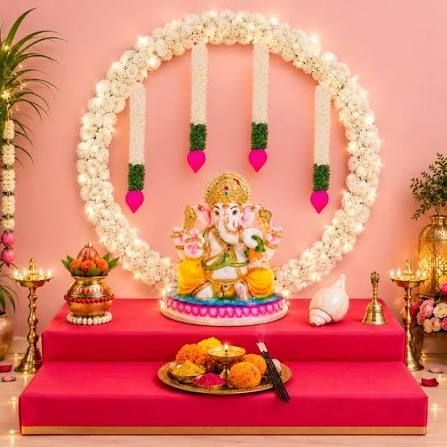
Flowers remain one of the most familiar choices for Ganpati decoration. Marigold, rose, jasmine, lotus-inspired arrangements, and other seasonal flowers can be used around the backdrop or platform.
Flowers can be arranged as garlands, borders, hanging strings, or small clusters. Green leaves can be added to create contrast and provide a natural appearance.
Nature-inspired theme
A nature theme can use materials and patterns inspired by forests, gardens, leaves, trees, or natural textures. Green fabric, paper leaves, bamboo elements, dried foliage, and earthy shades can contribute to the concept.
This theme can work particularly well when the decoration needs a calm appearance. It can also be adapted to smaller spaces by using only a few natural elements around the idol.
Temple-inspired theme
A temple-inspired Ganpati decoration can use arches, pillars, bells, lamps, traditional motifs, and symmetrical patterns. Cardboard, foam board, fabric, wood-like panels, and paper craft can be used to create a temporary architectural backdrop.
The design should leave enough visual space around the idol so that the decorative structure does not dominate the central focus.
Paper craft theme
Paper is a versatile material for creating flowers, fans, leaves, geometric patterns, hanging decorations, and layered backdrops. Different paper shapes can be combined to create depth without adding significant weight to the structure.
Paper decorations should be positioned away from open flames and heat-producing electrical equipment.
Minimalist theme
A minimalist decoration uses fewer elements and relies on careful placement. A plain fabric backdrop, a small floral arrangement, warm lighting, and a simple rangoli can create a balanced setting.
This approach can be particularly suitable for apartments, compact rooms, office platforms, or locations where movement around the idol is limited.
Decorative Materials for Ganpati Decoration
Selecting appropriate materials is an important part of planning. Different materials create different textures and require different levels of preparation.
| Material | Common use | Main characteristic |
|---|---|---|
| Flowers | Garlands, borders, arrangements | Natural and traditional appearance |
| Fabric | Backdrops and drapes | Flexible and easy to arrange |
| Paper | Flowers, fans, wall patterns | Lightweight and versatile |
| Cardboard | Arches and backdrop structures | Suitable for temporary shapes |
| Bamboo | Frames and natural designs | Useful for structural decoration |
| Leaves | Borders and natural themes | Adds organic texture |
| Clay | Small decorative elements | Suitable for handmade designs |
| Wood | Frames and panels | Provides a solid visual structure |
| String lights | Background illumination | Adds decorative lighting |
| LED lamps | Focus and ambient lighting | Provides controlled illumination |
Fabric and backdrop materials
Fabric is commonly used because it can cover a large area while allowing different folds and shapes. Cotton, silk-like decorative fabric, jute, and other textiles can create different visual effects.
The backdrop colour should complement the Ganpati idol rather than making the entire area visually crowded. Two or three coordinated colours are often easier to manage than many unrelated shades.
Natural materials
Leaves, flowers, bamboo, coconut elements, dried foliage, and other natural materials can create a traditional or nature-inspired atmosphere. Their condition should be checked throughout the festival because fresh materials can wilt and dried materials can become fragile.
Natural materials should also be kept away from electrical connections, lamps, and other heat sources.
Easy Tips for Ganpati Decoration
Match the decoration with the idol
The idol should remain the visual centre of the arrangement. Large decorative objects placed directly behind or beside the idol can make the setting appear crowded.
A useful approach is to keep the central background relatively clear and place detailed decorations around the outer areas.
Use a consistent colour palette
Colour coordination can make a decoration appear more organized. For example, a combination of yellow and green can create a natural appearance, while white and gold-like tones can create a more formal setting.
The colour scheme can be repeated through the backdrop, flowers, lighting, rangoli, and smaller decorative elements.
Create layers in the backdrop
A flat wall does not always need complicated construction. Different layers of fabric, paper flowers, leaves, arches, or panels can create depth.
The heavier structural elements should be securely supported, while lightweight decorative pieces can be attached to the outer layers.
Plan lighting carefully
Lighting can change how the entire decoration appears. Small lights can be placed around the backdrop, while a separate light source can illuminate the idol.
Electrical wires should be organized so that they do not create obstacles around the platform. Heat-producing lamps should be kept away from paper, fabric, dried leaves, and other combustible materials.
Keep the platform practical
Decoration should not interfere with daily movement, cleaning, prayers, or the safe handling of the idol. A visually attractive arrangement can still become inconvenient if decorations occupy too much floor space.
For small homes and offices, using the wall area vertically can preserve useful floor space.
Recent Trends in Ganpati Decoration
Ganpati decoration has continued to change as people experiment with new materials and design concepts. From 2024 through 2026, several general trends have become more noticeable.
Handmade and reusable decorations
There is increasing interest in handmade decoration because paper, cardboard, fabric, clay, and natural materials can be shaped into many designs. Reusable components can also be stored and adapted for later celebrations.
This approach can reduce the need to create an entirely new structural backdrop each year.
Nature-focused designs
Greenery, flowers, bamboo textures, earthy colours, and botanical patterns continue to appear in festival decoration. Nature-inspired themes can combine traditional visual elements with a simpler contemporary layout.
Compact decoration
Smaller homes and office spaces have encouraged compact Ganpati decoration ideas. Wall-mounted backgrounds, vertical paper designs, small floral arrangements, and platform-focused themes can provide a complete setting without occupying a large area.
Technology-assisted planning
Digital design tools can help people create rough layouts before assembling the decoration. Simple drawing applications, measurement tools, colour palettes, and design templates can help visualize the arrangement.
Technology is mainly useful during the planning stage; the physical decoration still depends on appropriate materials, construction, and safe placement.
Laws and Safety Considerations
Ganpati decoration is influenced by local rules concerning public gatherings, temporary structures, electrical installations, fire safety, noise, waste management, and environmental protection. Requirements can vary depending on whether the decoration is installed inside a private residence, an office, a housing society, or a public location.
Electrical safety
Decorative lights should be installed using suitable electrical equipment and connections. Damaged wires, overloaded sockets, exposed connections, and poorly positioned extension cables can create hazards.
For larger installations, electrical work should be handled according to applicable local safety requirements.
Fire safety
Paper, fabric, dried flowers, cardboard, and leaves can catch fire when exposed to sufficient heat or flames. Open flames should therefore be positioned carefully and kept away from combustible decoration.
Temporary structures should also leave appropriate access routes rather than blocking doors, stairways, or emergency exits.
Environmental considerations
Festival decorations can generate waste from flowers, plastic materials, thermocol-like materials, paper, packaging, and other components. Local authorities or housing communities may have rules concerning waste collection and disposal.
Where appropriate, reusable, recyclable, or biodegradable materials can help reduce the amount of discarded decoration.
Tools and Resources for Ganpati Decoration
Several simple tools can make planning and assembly easier.
Measuring tools
A measuring tape or digital measurement application can help determine the available wall and platform dimensions. Measurements are particularly useful when preparing a backdrop in advance.
Design and colour tools
Digital drawing applications, colour palette generators, and simple layout templates can help visualize combinations before materials are prepared.
Craft tools
Common craft tools include scissors, rulers, pencils, paper cutters, adhesive materials, thread, clips, and supporting frames. The appropriate tool depends on the material being used.
Decoration planning checklist
A basic checklist can include:
- Ganpati idol placement
- Backdrop dimensions
- Theme and colour palette
- Flowers and natural elements
- Fabric or paper requirements
- Lighting arrangement
- Electrical connections
- Platform decoration
- Rangoli placement
- Safety clearance
- Waste collection plan
Planning these elements before assembly can reduce unnecessary changes during installation.
FAQs
What are simple Ganpati decoration ideas for home?
Simple Ganpati decoration ideas include a fabric backdrop, paper flowers, a small floral arrangement, rangoli, string lights, and natural leaves. The design can be adapted to the available platform and wall space.
Which materials are commonly used for Ganpati decoration?
Common Ganpati decoration materials include flowers, fabric, paper, cardboard, bamboo, leaves, clay, decorative panels, and lighting elements. Material selection depends on the theme, space, structure, and intended duration.
How can I decorate a small Ganpati platform?
A small platform can use a vertical backdrop, limited decorative colours, compact floral arrangements, and carefully positioned lighting. Keeping the floor area clear helps maintain space around the idol.
Which Ganpati decoration theme is suitable for a traditional look?
Traditional floral, temple-inspired, and nature-based themes can create a traditional appearance. Flowers, leaves, bells, lamps, arches, and traditional patterns can be combined according to the available space.
How can Ganpati decoration be made safer?
Electrical connections should be organized properly, combustible materials should be kept away from heat and flames, and emergency pathways should remain unobstructed. Larger temporary structures should follow applicable local safety requirements.
Conclusion
Ganpati decoration brings together traditional festival elements, creative themes, decorative materials, and practical planning. Floral, nature-inspired, temple-inspired, paper craft, and minimalist themes can each be adapted to different spaces and preferences. Material selection, colour coordination, lighting, structural support, and safety considerations all influence the final arrangement. Current decoration trends also show greater interest in handmade, reusable, nature-focused, and compact designs.