What Small Producers Can Learn From Automation in Indonesian Food Factories
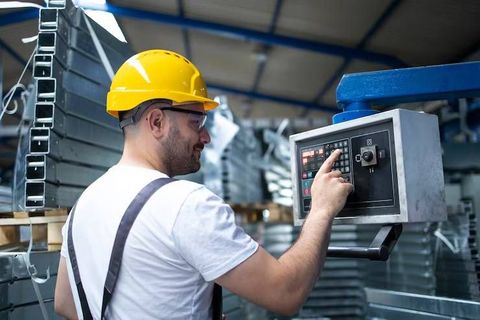
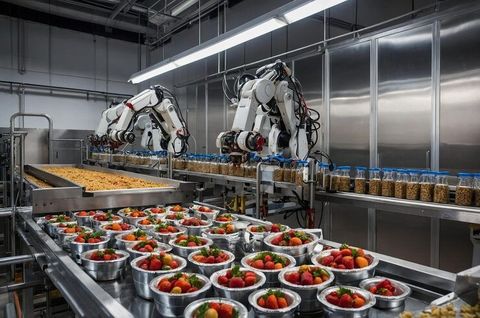
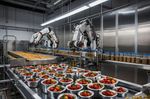
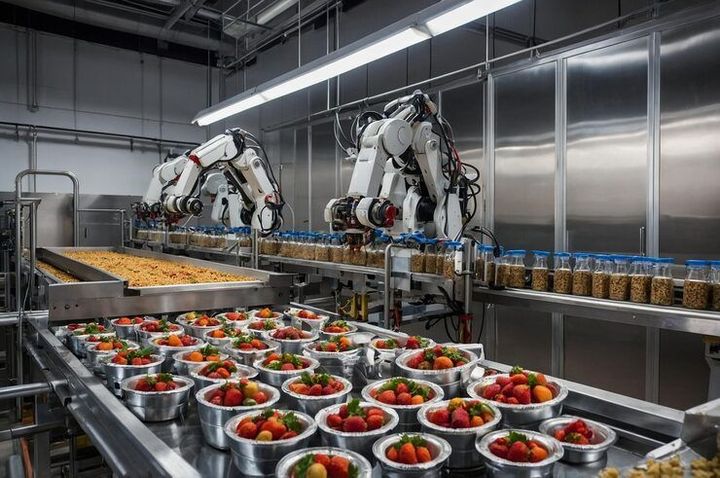
Automation in Indonesian food factories is part of a wider shift toward more consistent production, better process monitoring, and greater use of digital technologies. Large food-processing facilities may use automated filling, weighing, mixing, packaging, temperature monitoring, conveyor systems, sensors, and production data platforms.
Context
The main lesson is that automation can be viewed as a gradual production strategy rather than a single technology. A small food producer can examine which repetitive or difficult tasks create the most variation and then consider whether a simple mechanical, electronic, or digital tool could make that process more consistent.
Indonesia's food and beverage industry has been included as a priority sector within the country's Industry 4.0 roadmap. The Ministry of Industry has used the Indonesia Industry 4.0 Readiness Index, known as INDI 4.0, to assess areas such as management, people and culture, technology, and factory operations.
What factory automation means
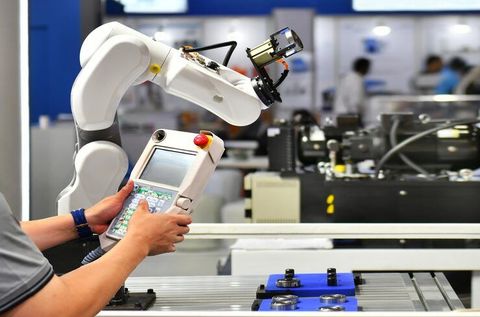
Food factory automation can range from basic equipment to connected production systems. A production line might use a sensor to detect product movement, a programmable controller to coordinate equipment, or a digital system to record production information.
For a small producer, the important concept is not the complexity of the technology. It is the relationship between a production problem and the tool used to address it.
Common areas where automation can be applied include:
Ingredient weighing and dosing
Mixing and processing
Temperature monitoring
Filling and portioning
Label application
Packaging
Conveyor movement
Production data recording
Equipment condition monitoring
The level of automation can therefore be increased gradually according to production requirements and operational capability.
Importance
Small food producers often work with limited production space, relatively small batches, and processes that depend heavily on manual activities. Manual work can remain appropriate for many tasks, but repeated weighing, filling, sealing, counting, or temperature checking can introduce variation when performed continuously.
Automation provides lessons about how to reduce unnecessary variation. Instead of attempting to automate every activity, producers can first identify the steps where consistency, timing, measurement, or repetitive handling presents the greatest operational challenge.
Consistency in production
One of the main lessons from automated food factories is the importance of repeatable processes. If ingredients are measured differently from one batch to another, the finished product can also vary.
Simple equipment can help create more consistent procedures. For example, a controlled weighing system can make ingredient measurement more repeatable, while a temperature sensor can provide continuous readings during a heating or cooling process.
Automation does not eliminate the need for human oversight. Operators still need to understand the process, check equipment condition, verify measurements, and respond when something appears unusual.
Reducing repetitive work
Repetitive activities can consume substantial attention during production. Tasks such as counting containers, filling packages, moving products between stages, or checking labels may be suitable for partial automation.
Small producers can learn from larger factories by separating production activities into individual steps and identifying which steps are repetitive enough to standardize.
| Production activity | Possible automation approach | Main purpose |
|---|---|---|
| Weighing | Digital scale or controlled dosing | Measurement consistency |
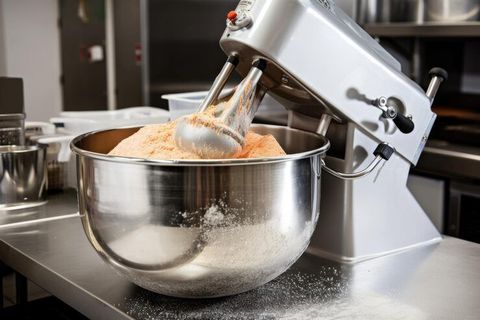
| Mixing | Timed mixer or controlled motor | Repeatable processing |
| Temperature checking | Digital sensor | Continuous monitoring |
| Filling | Semi-automatic filler | Consistent portions |
| Packaging | Sealing or wrapping equipment | Repeatable packaging |
| Counting | Electronic counter or sensor | Production tracking |
| Record keeping | Digital production log | Easier data review |
Making production measurable
Large factories frequently monitor production through measurable indicators. Small producers can apply the same principle without creating a complicated digital system.
Useful measurements may include batch quantity, production time, rejected units, material usage, equipment downtime, and packaging output. Recording these values can help reveal where production problems occur repeatedly.
The objective is not to collect every possible piece of information. A smaller set of useful measurements can provide a clearer picture of production performance.
Recent Updates
Automation and digital transformation have continued to receive attention in Indonesia's food and beverage manufacturing sector. The Ministry of Industry has identified food and beverage manufacturing as a priority area for Industry 4.0 transformation and has promoted the use of INDI 4.0 to understand industrial readiness.
Recent government data also shows continued tracking of Industry 4.0 readiness through INDI 4.0. The index considers five broad areas: management and organization, people and culture, products and related activities, technology, and factory operations. Its maturity scale ranges from an early stage to broader implementation of Industry 4.0 concepts.
Gradual automation
The current direction does not require every producer to establish a highly connected factory. A more practical pattern is the gradual introduction of digital measurement, semi-automatic machinery, production monitoring, and data recording.
For small producers, this creates an opportunity to learn from factory automation at the process level. A temperature sensor, programmable timer, digital weighing system, or semi-automatic packaging machine can address a specific production issue without requiring a fully integrated production line.
Data becoming part of production
Another developing trend is the use of production data to understand processes. Automated equipment can generate information about operating time, output quantities, temperatures, machine cycles, and interruptions.
Small producers can adopt the same principle through simple records. Even a structured spreadsheet can help compare batches, identify recurring delays, and determine whether changes in a production process are producing consistent results.
Food safety and production controls
Automation is also increasingly connected with food safety practices. Digital monitoring can help record temperatures or processing conditions, while controlled equipment can make certain procedures more repeatable.
However, automation does not itself establish food safety compliance. Production hygiene, ingredient handling, equipment cleaning, storage, labeling, documentation, and other controls remain important parts of food manufacturing.
Laws or Policies
Food production in Indonesia is shaped by food-safety, labeling, licensing, and manufacturing requirements. The exact requirements depend on the type of product, production scale, processing method, distribution arrangements, and other characteristics.
For household food industries, BPOM provides the SPP-IRT framework. Current BPOM information states that eligible household food production generally uses manual to semi-automatic equipment and must meet the applicable requirements under BPOM Regulation No. 4 of 2024. Products produced using automatic equipment may fall outside the SPP-IRT pathway and may require another regulatory route.
This distinction is important for small producers considering automation. Introducing automated equipment can affect not only production capacity but also which regulatory framework applies to a particular product.
Food safety requirements
BPOM information identifies areas such as food safety, quality, nutrition, labeling, and good food production practices as relevant requirements for processed food. Applicable rules can include requirements concerning microbial contamination, heavy metals, chemical contamination, food additives, nutritional information, and labeling.
For producers considering equipment changes, the practical lesson is to examine regulatory requirements before changing the production method. Equipment selection should be considered together with the product category, production process, hygiene controls, documentation, and applicable registration pathway.
Industry 4.0 policy direction
Indonesia's Industry 4.0 framework provides a broader policy context for automation. INDI 4.0 is used as a reference for assessing industrial readiness and includes technology and factory operations alongside organizational and workforce considerations.
This means automation is not simply about machinery. Training, process organization, data use, and production management are also part of digital transformation.
Tools and Resources
Small producers can learn from automation using relatively straightforward tools and structured methods.
Process mapping
A process map can show each stage from raw material preparation through processing, packaging, storage, and distribution. It can identify repeated activities, waiting periods, manual measurements, and points where errors may occur.
A simple table can include:
Production stage
Activity performed
Person or equipment responsible
Measurement required
Common variation
Record maintained
Possible automation approach
This creates a practical starting point for evaluating production improvements.
Digital production records
A spreadsheet can be used to record batch quantities, processing times, temperatures, packaging counts, rejected units, and equipment interruptions. Over several production cycles, the information can reveal patterns that are difficult to notice during daily operations.
Digital records can also make comparisons between batches easier when the same measurements are recorded consistently.
Device-validation and regulatory resources
Food producers can consult official Indonesian government resources for current regulatory information. BPOM's SPP-IRT platform provides information about household food registration requirements, applicable product categories, and related procedures.
BPOM's processed-food registration resources also provide information concerning food safety, quality, nutrition, labeling, and good production practices.
Automation assessment
Before introducing equipment, a producer can assess a process using four basic questions: Is the task repeated frequently? Does variation affect the output? Can the task be measured? Can a machine perform it under controlled conditions?
If the answer is positive for several questions, that stage may be worth examining for partial automation.
FAQs
What can small producers learn from automation in Indonesian food factories?
Small producers can learn how larger factories use repeatable processes, measurement, equipment controls, production records, and structured workflows. These principles can be adapted gradually rather than copied as a complete factory system.
How can automation help small food producers?
Automation can help standardize repetitive activities such as weighing, filling, temperature monitoring, counting, and packaging. Its usefulness depends on the specific production process and how well the equipment is integrated into existing procedures.
What types of automation are used in Indonesian food factories?
Food factories may use automated or semi-automatic systems for mixing, filling, packaging, conveying, temperature monitoring, weighing, inspection, and production data collection. The level of automation varies according to the product and production scale.
Can small producers use automatic equipment under SPP-IRT?
Not every product produced with automatic equipment qualifies for the SPP-IRT pathway. Current BPOM information states that certain products made using automatic equipment are outside the applicable SPP-IRT criteria, so the appropriate regulatory pathway should be checked before changing production equipment.
What is Industry 4.0 in food manufacturing?
Industry 4.0 refers to the use of connected technologies, automation, data, sensors, digital systems, and improved production management. In food manufacturing, these technologies can support monitoring, process control, production records, and equipment coordination.