Trading Platform Explained: Key Features, Trading Tools, Account Types and Platform Selection Guidelines
A trading platform is a digital environment that allows users to view financial-market information, analyze price movements, place orders, monitor positions, and review account activity. It brings several functions into one interface so that market information and trading activity can be managed from a computer or mobile device.
Trading platforms developed alongside the wider shift from manual market participation toward electronic trading. Earlier trading environments relied more heavily on telephone communication, physical trading floors, and separate information systems. Electronic platforms gradually combined market data, order management, charts, account records, and analytical tools.
Today, a trading platform can include many different functions. The exact features depend on the type of market supported, the account structure, the available instruments, and the platform's technical design.
How a trading platform works
A typical platform connects an account interface with market infrastructure. When a user enters an order, the platform processes the instruction and sends it through the relevant trading and execution infrastructure.
The platform may also display information such as:
- Current and historical prices
- Trading volume
- Order status
- Account balance
- Open positions
- Transaction history
- Charts and technical indicators
- Risk and margin information where applicable
The displayed information can change rapidly during active markets. Users therefore need to understand the difference between market information, an order instruction, and a completed transaction.
Common platform components
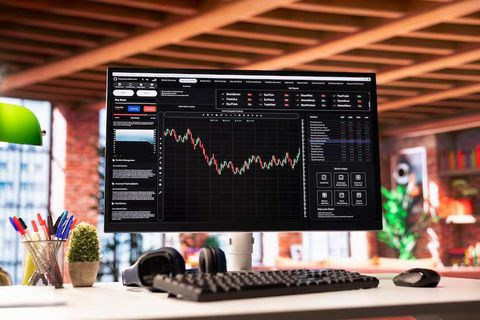
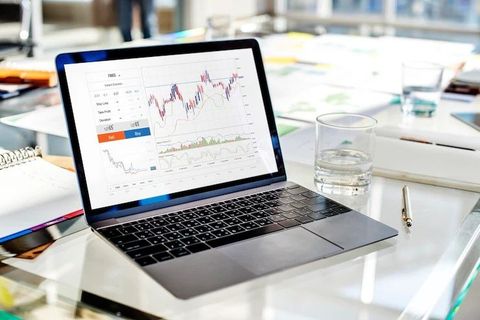
Although interfaces vary, most trading platforms contain several core areas. A market-watch section displays available instruments, while charting areas show price information across selected time periods.
An order panel is used to enter instructions. Account sections generally show balances, positions, transaction records, and other account information.
Importance
Trading platforms have become an important part of modern electronic market participation because they bring market information and transaction functions into a single digital environment. They are used by different types of participants, from individuals learning about markets to experienced market participants managing more complex strategies.
The main challenge is that a large number of platform features can make an interface difficult to understand. A platform with many charts, indicators, order types, alerts, and account controls may require more time to learn.
Why platform features matter
A platform should be understood in terms of what it allows a user to see and do, rather than simply how many features it contains. Different trading activities can require different combinations of tools.
For example, someone primarily monitoring long-term price movements may have different requirements from someone who studies short-term market data. Similarly, a participant using systematic strategies may require technical functions that are unnecessary for manual analysis.
Important factors to understand
Before using a trading platform, users generally need to understand:
- What financial instruments are available
- Which order types are supported
- How market information is displayed
- What account controls are available
- Whether historical data is provided
- How risk information is presented
- What security measures protect account access
- How transactions and account records are documented
Understanding these elements can reduce confusion when navigating a platform.
Recent Updates
Trading platforms have continued to evolve through automation, artificial intelligence, real-time data processing, and improved digital interfaces. Industry research published during 2025 and 2026 indicates that financial-market technology is becoming an increasingly important part of trading infrastructure, with AI, blockchain-related systems, and data integration receiving significant attention.
Artificial intelligence and automation
AI is increasingly being explored for research, data processing, pattern identification, workflow automation, and monitoring. Its role does not mean that market outcomes can be predicted reliably. AI-generated information can contain errors, and automated systems can behave differently under changing market conditions.
Research published by international securities regulators has also highlighted the need to consider AI-related risks involving investor protection, market integrity, model reliability, and operational controls.
Greater use of electronic trading
Electronic trading continues to expand across financial markets. A 2026 industry survey reported that respondents expected electronic channels to account for a larger proportion of overall trading activity in the following period. The same research identified developments in financial-market technology, liquidity, and regulatory changes as significant market-structure considerations.
Integrated data and analytics
Another development is the movement toward integrated workflows. Trading platforms and related systems increasingly connect market data, analytics, execution, risk controls, and post-transaction processes.
This can reduce the need to move information manually between separate systems, but it also makes cybersecurity, system reliability, data quality, and operational controls increasingly important.
Laws or Policies
Trading platforms operate within financial-market rules that vary according to jurisdiction, financial instrument, account structure, and the type of activity being conducted. These rules can address areas such as market integrity, investor protection, disclosure, recordkeeping, cybersecurity, order handling, and prevention of abusive trading practices.
Because requirements differ across jurisdictions, there is no single set of rules that applies to every trading platform. A platform may also need to comply with different requirements depending on the instruments and markets it supports.
Areas commonly covered by regulation
Regulatory frameworks may address:
- Identity and account verification
- Protection of client information
- Recordkeeping and transaction reporting
- Market-abuse prevention
- Risk disclosures
- Order handling
- System resilience
- Cybersecurity controls
- Algorithmic or automated trading
- Advertising and communications
International regulatory work has also increasingly focused on online investor safety. IOSCO's roadmap has identified risks associated with digital engagement practices, copy trading, conflicts of interest, and financial content distributed through social media.
Automated and algorithmic trading has received additional regulatory attention as platforms make more sophisticated tools accessible to a wider range of users. Requirements can include controls around testing, supervision, risk management, and system behavior, depending on the relevant framework.
Users should therefore distinguish between a platform's technical features and the rules governing the financial activity itself.
Tools and Resources
Trading platforms commonly include several analytical and account-management tools. Understanding their purpose is more important than simply counting how many are available.
Charts and market data
Charts present price information visually across different periods. Users may be able to adjust time intervals and display additional information such as trading volume.
Market-data panels can provide current or delayed information depending on the particular data arrangement. The distinction is important because delayed information may not represent current market conditions.
Technical indicators
Technical indicators use mathematical calculations based on market data. Examples include moving averages, momentum measurements, volatility measures, and volume-based indicators.
These tools describe historical or current market information. They do not independently establish what a future market movement will be.
Order tools
Common order categories include market orders, limit orders, and stop-related instructions. Each type has a different mechanism for specifying how an order should be handled.
| Tool or feature | General purpose |
|---|---|
| Price chart | Displays historical or current price information |
| Market watch | Organizes selected instruments and prices |
| Order panel | Provides controls for entering orders |
| Watchlist | Groups instruments for monitoring |
| Alerts | Notifies users when defined conditions occur |
| Transaction history | Records previous account activity |
| Risk controls | Displays or applies selected trading limits |
| Performance reports | Organizes historical account information |
Economic calendars and research tools
Some platforms include calendars showing scheduled economic or corporate events. Research tools may also organize financial statements, market statistics, historical information, or other data.
Such resources can help users understand market context, but information should be checked carefully because data can be incomplete, delayed, revised, or interpreted differently.
Practice environments
Some trading platforms provide simulated environments that reproduce aspects of trading without using an actual transaction account. These environments can help users become familiar with order interfaces, charts, watchlists, and account displays.
However, simulated activity may not reproduce every aspect of real market conditions, including liquidity, execution behavior, price changes, and emotional responses.
FAQs
What is a trading platform?
A trading platform is a digital system that provides access to market information, order-entry functions, account records, charts, and related trading tools. Its exact features depend on the markets and instruments it supports.
What features should a trading platform have?
Common features include market data, charts, watchlists, order controls, transaction history, account information, alerts, and security controls. The relevant features depend on the user's trading activity and level of experience.
What are the different trading account types?
Trading account structures can vary considerably. Common distinctions may include individual and organizational accounts, cash-based and margin-based arrangements, single-user and joint structures, and accounts designed for particular market instruments.
The specific terms, eligibility requirements, and account controls depend on the financial institution and applicable rules.
What trading tools are commonly available?
Common trading tools include charts, technical indicators, market-data screens, watchlists, alerts, economic calendars, order-management functions, and performance reports. Some platforms also include analytical and automated features.
How should a trading platform be evaluated?
A platform can be examined according to its supported markets, available tools, order types, data quality, account controls, security features, interface design, reliability, and documentation. Users should also understand the risks associated with the financial instruments they intend to trade.
Conclusion
A trading platform combines market information, analytical tools, order functions, and account management within a digital environment. Its features can range from basic charts and watchlists to automated workflows, advanced analytics, and integrated risk controls. Recent developments have increased the use of AI, electronic trading, data integration, and automated processes while also increasing attention to cybersecurity and system reliability. Understanding how these components work helps provide a clearer view of what a trading platform does and how its different functions relate to market participation.
Disclaimer: The information provided in this article is for informational purposes only. We do not make any claims or guarantees regarding the accuracy, reliability, or completeness of the information presented. The content is not intended as professional advice and should not be relied upon as such. Readers are encouraged to conduct their own research and consult with appropriate professionals before making any decisions based on the information provided in this article.