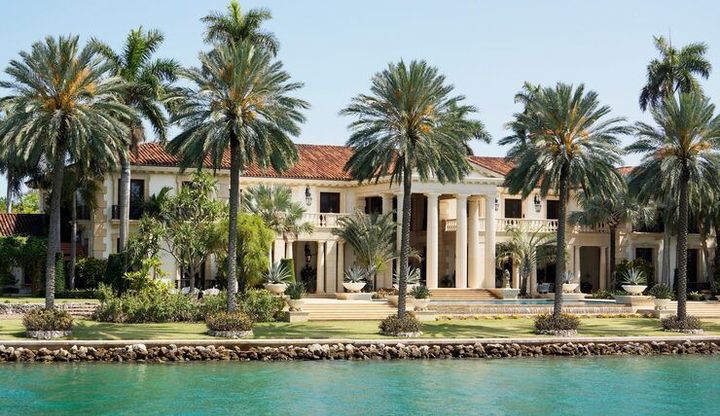
Dubai Villas Details: Villa Types, Location, Amenities and Living Considerations
Dubai villas are residential properties designed around greater private space, outdoor areas, and household living needs. They range from detached family villas and semi-detached homes to villas within planned residential communities, waterfront developments, and larger private estates. Understanding villa types, location characteristics, amenities, planning considerations, and ownership rules provides useful context for anyone researching residential living in Dubai.
The villa landscape has developed alongside Dubai's wider urban expansion. Residential districts have been planned with different combinations of housing, roads, parks, schools, retail areas, recreational spaces, and community facilities. As a result, Dubai villas can differ substantially in layout, surroundings, access, and residential character.
Context
What defines a Dubai villa?
A villa is generally a low-rise residential building intended for household living. Dubai's green-building regulations distinguish a private villa as a detached or semi-detached building intended for a single family, with an independent entrance and parking spaces and separate outdoor areas. Investment villas can form part of a group of detached, attached, or semi-detached villas with shared outdoor and recreational areas.
Villa layouts can include bedrooms, living and dining areas, kitchens, bathrooms, storage spaces, balconies, terraces, gardens, parking areas, and sometimes private swimming pools. The actual configuration depends on the development, plot, building design, and applicable planning requirements.
Main villa types
Dubai villas can be grouped according to their physical arrangement and residential setting.
- Detached villas generally occupy their own plots and have outdoor areas surrounding the building.
- Semi-detached villas share a structural boundary with another residence while retaining separate entrances and residential spaces.
- Townhouse-style villas are commonly arranged in connected rows and may provide a smaller private outdoor area.
- Community villas form part of planned residential developments with shared recreational or landscaped areas.
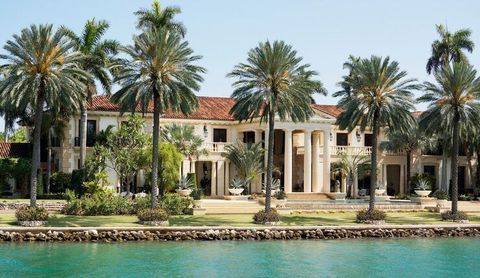
- Waterfront villas are located near coastlines, canals, or artificial waterfronts, with views and outdoor orientation varying by location.
- Large private villas generally have larger internal layouts and outdoor areas, although the actual size varies between developments.
These categories describe physical arrangements rather than a fixed classification system applicable to every residential development.
Common villa features
A villa may include several spaces that are less common in compact apartment layouts. Depending on the property, these can include private gardens, multiple parking spaces, terraces, staff rooms, storage areas, private pools, or larger kitchens.
| Villa characteristic | What it may involve |
|---|---|
| Building arrangement | Detached, semi-detached, or connected |
| Outdoor space | Garden, terrace, courtyard, or pool area |
| Parking | Private spaces within or near the plot |
| Interior layout | Multiple bedrooms and living areas |
| Community setting | Parks, recreational areas, and shared facilities |
| Location type | Inland, suburban, waterfront, or central district |
Importance
Why location matters
Location is an important part of understanding Dubai villas because residential districts differ in their road connections, surrounding development, access to schools and retail areas, and distance from employment or commercial centres.
Some communities are designed primarily around family-oriented residential living, while others combine villas with apartments, retail areas, recreational facilities, or commercial uses. The surrounding urban environment can therefore affect everyday travel patterns and the type of facilities available nearby.
Dubai's 2040 Structure Plan places emphasis on housing choice, community facilities, parks, integrated transport, environmental quality, and sustainable urban development. It also identifies transit-oriented development and integrated land-use planning as important elements of the city's longer-term urban structure.
Location characteristics to compare
When examining Dubai villa locations, several practical characteristics can be considered:
- Road access and typical travel routes
- Distance from schools and educational facilities
- Proximity to healthcare facilities
- Access to supermarkets and retail areas
- Availability of parks and recreational spaces
- Public transport connections
- Access to major employment districts
- Traffic conditions during regular travel periods
- Nearby construction and future development
- Availability of community facilities
The relevance of each factor depends on household requirements. A location that works well for one household may have different practical characteristics for another.
Amenities and community facilities
Amenities associated with Dubai villas vary considerably. Some developments include shared swimming pools, landscaped areas, playgrounds, sports facilities, walking paths, community centres, or security-controlled entrances.
Private villa amenities may include gardens, pools, terraces, outdoor kitchens, parking areas, and recreational spaces. However, these features are not universal, and their presence should be confirmed from the specific property's documentation rather than assumed from the general description of a community.
Recent Updates
Dubai's residential market has continued to expand during 2024–2026, with villa properties forming an important part of the wider residential landscape. Market research published by Knight Frank reported that villa prices increased more rapidly than apartment prices during 2024, while its 2025 review continued to record stronger villa price growth compared with apartments. These figures describe market-level activity and should not be interpreted as predictions for an individual property.
The market has also seen substantial residential transaction activity and continued development of new housing. Knight Frank reported that villas represented a smaller proportion of the forecast residential supply pipeline than apartments, while CBRE reported that Dubai's residential market continued to record growth through 2025 with significant future supply in the development pipeline.
Changing community patterns
Recent development has included expansion of planned residential communities rather than concentrating all villa housing in established districts. Newer communities can combine villas or townhouses with parks, retail areas, recreational facilities, and other neighbourhood infrastructure.
At the same time, established villa districts continue to have distinct residential characteristics. Market data has shown that villa rental and price movements can vary considerably between communities, demonstrating that Dubai's villa market is not uniform across all locations.
Sustainability and urban planning
Sustainability has also become an increasingly visible part of building and urban planning. Dubai's Al Sa'fat green-building system establishes standards and requirements relating to buildings, including private and investment villas.
The Dubai 2040 Structure Plan also includes policies relating to environmental quality, parks and recreation, energy-efficient systems, sustainable water management, and district cooling.
Laws or Policies
Property ownership
Dubai's property ownership framework distinguishes between designated areas and different forms of property rights. The official UAE Government portal states that foreign nationals, including non-resident foreigners and expatriate residents, can acquire freehold ownership in designated areas of Dubai, while usufruct and leasehold arrangements can also apply under the relevant framework. Title deeds are issued through the Dubai Land Department.
Ownership eligibility, property rights, registration procedures, and transaction requirements can depend on the specific property and applicable rules. Information should therefore be checked with the relevant Dubai authority when a legal or ownership decision is involved.
Planning and construction
Dubai's urban-planning framework regulates land use, development, building requirements, setbacks, floor areas, permitted uses, and other planning matters. Under Dubai's Urban Planning Law, development works generally require the applicable planning or master-plan permit and must comply with the conditions attached to that permit.
Planning rules can differ according to the land-use classification and development. Dubai's land-use regulations also establish criteria for private residential zones, including plot characteristics and building requirements.
For this reason, changes to a villa, additions, structural alterations, or new construction should be considered in relation to the applicable planning and building requirements rather than treated as purely private design decisions.
Green-building requirements
The Al Sa'fat system applies to buildings covered by its regulations and includes private and investment villas within its defined building categories. Its requirements address aspects of building design and environmental performance.
Regulatory requirements can change, so current information from Dubai Municipality, the Dubai Land Department, and other relevant authorities is more appropriate for decisions involving a specific property.
Tools and Resources
Property and planning information
The Dubai Land Department is an important source for information related to property registration, ownership records, and real estate regulation. The official UAE Government portal also provides general information about property ownership by expatriates.
Dubai Municipality and Dubai's urban-planning legislation provide information concerning land use, construction, planning permits, and building requirements. The Dubai 2040 platform provides information about the city's long-term urban structure and development objectives.
Comparison checklist
A simple comparison table can help organize information about different Dubai villas:
| Factor | Questions to consider |
|---|---|
| Villa type | Detached, semi-detached, townhouse, or another arrangement? |
| Location | What are the normal travel routes and nearby facilities? |
| Interior | How many bedrooms, bathrooms, living areas, and storage spaces? |
| Outdoor space | Is there a garden, terrace, courtyard, or pool? |
| Parking | How many dedicated spaces are provided? |
| Community | What shared facilities are available? |
| Planning | Are additions or modifications subject to specific requirements? |
| Ownership | What property right applies to the particular location? |
| Building condition | What is the age and current condition of the structure? |
| Future surroundings | Are additional developments planned nearby? |
This type of checklist is useful for organizing factual information without assuming that one villa or location will suit every household.
FAQs
What types of Dubai villas are available?
Dubai villas include detached homes, semi-detached properties, townhouse-style homes, community villas, waterfront villas, and larger private residences. Their layouts and outdoor spaces vary according to the development.
Which Dubai villa locations have family-oriented communities?
Several residential districts contain villa and townhouse communities with combinations of parks, schools, retail areas, recreational facilities, and local roads. The facilities and travel connections differ between communities, so location characteristics should be considered individually.
What amenities are commonly found in Dubai villas?
Depending on the property, amenities can include private gardens, swimming pools, terraces, parking areas, storage spaces, landscaped surroundings, and community recreational facilities. Not every villa includes all of these features.
Can foreigners own Dubai villas?
Foreign ownership is permitted in designated freehold areas of Dubai, while other property rights can also apply depending on the location and property. The official UAE Government portal identifies Dubai's designated freehold framework for foreign ownership.
What should be considered when comparing Dubai villas?
Important considerations include villa type, location, internal layout, outdoor space, parking, nearby facilities, transportation, community characteristics, property rights, building condition, and applicable planning requirements.
Conclusion
Dubai villas encompass several residential formats, ranging from detached and semi-detached homes to properties within planned communities and waterfront developments. Location, layout, outdoor space, amenities, transportation, and surrounding facilities can create substantial differences between individual properties. Dubai's planning and property framework also influences land use, development, ownership rights, and building requirements. Current market research indicates continued residential development and varied performance across villa communities, making property-level information important when examining individual homes.