Ceramic Coating for Car Guide: Benefits, Coating Types, Application Steps and Long-Term Care Tips
Ceramic coating for car paint is a liquid protective treatment designed to form a thin, durable layer over a vehicle's exterior surface. Many modern formulations use silicon-based chemistry, particularly silica or silicon dioxide compounds, which can bond with or interact strongly with the vehicle's clear coat after application and curing. Unlike traditional waxes, ceramic coatings are designed to create a more persistent protective layer.
The idea of protecting painted surfaces with an additional layer is not new. Automotive paint systems already contain several layers, including primer, color coat, and clear coat. Ceramic coatings are an additional surface treatment applied after the vehicle has been manufactured, usually to a properly prepared painted surface.
A ceramic coating does not replace the vehicle's original paint system. Instead, it creates an additional layer that can change surface characteristics such as water behavior, chemical resistance, and resistance to some forms of environmental contamination. Its actual performance depends on the formulation, preparation, application technique, curing conditions, and subsequent care.
How ceramic coating works
Most automotive ceramic coatings contain silica-based or related chemical compounds that form a thin film after application. During curing, components in the coating react and cross-link, creating a relatively hard surface layer.
This layer can make water bead or sheet differently from an untreated surface. It can also make some contaminants easier to remove, although a ceramic coating does not make a vehicle permanently resistant to dirt, stains, scratches, or other physical damage.
Ceramic coating compared with other paint protection
Ceramic coating is one of several approaches to exterior paint protection. Wax, polymer sealants, paint protection film, and newer graphene-containing formulations have different materials, application methods, and performance characteristics.
| Protection type | General composition | Typical characteristic | Main limitation |
|---|---|---|---|
| Wax | Natural or synthetic waxes | Surface gloss and water repellency | Usually requires more frequent renewal |
| Polymer sealant | Synthetic polymers | Water and environmental protection | Performance varies by formulation |
| Ceramic coating | Silica or related ceramic chemistry | Hard surface and water repellency | Requires careful preparation |
| Graphene-containing coating | Graphene combined with coating chemistry | Hydrophobic and thermal properties | Formulations and evidence vary |
| Paint protection film | Thin polymer film | Physical barrier against impacts | Different application method and maintenance |
Recent research describes ceramic, graphene, hybrid, and self-healing formulations as active areas of automotive coating development.
Importance
Vehicle paint is exposed to sunlight, rain, dust, road contamination, bird droppings, tree residue, washing chemicals, and temperature changes. Over time, these factors can affect the appearance and condition of the exterior surface.
Ceramic coating for car applications is relevant because it changes the properties of the outer surface rather than simply adding temporary gloss. A properly cured coating can provide greater resistance to certain environmental and chemical influences than an untreated clear coat, although the degree of protection varies between products.
Main benefits
One commonly discussed benefit is water repellency. A hydrophobic coating can cause water to form droplets and move more readily across the surface. This can reduce the tendency of some water-based contamination to remain attached, but water spots can still develop when mineral-rich water dries on the vehicle.
Another benefit is resistance to certain chemical contaminants. Bird droppings, insects, road residue, and some acidic or alkaline contaminants can affect automotive paint when they remain on the surface for extended periods. A coating can provide an additional layer between these contaminants and the clear coat.
Ceramic coatings can also improve surface hardness compared with an uncoated surface. However, hardness should not be interpreted as complete scratch protection. Sharp objects, abrasive washing methods, road debris, and physical impacts can still damage a coated vehicle.
Factors affecting performance
The result of a ceramic coating depends on several variables:
- Paint condition before application
- Surface cleaning and decontamination
- Paint correction where appropriate
- Coating formulation
- Application thickness
- Temperature and humidity
- Curing conditions
- Washing technique after curing
- Exposure to sunlight, chemicals, dust, and road contaminants
Surface preparation is particularly important because contamination, oxidation, existing defects, or residues underneath the coating can affect adhesion and appearance. Recent research also identifies surface preparation as a major factor influencing the performance of secondary automotive coatings.
Limitations to understand
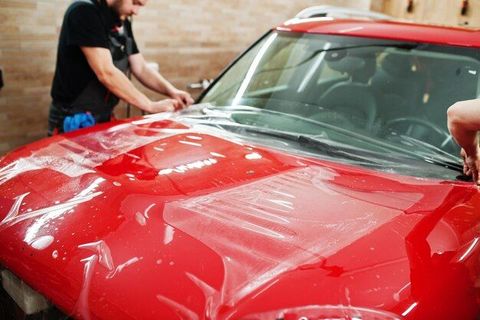
Ceramic coating is not equivalent to an impact-resistant film. It generally provides a thin surface layer rather than the physical thickness associated with paint protection film.
It also does not eliminate the need for routine washing. Dirt, mineral deposits, and environmental contamination can accumulate on coated vehicles. A coating may make some contaminants easier to remove, but it does not prevent contamination from reaching the vehicle.
Recent Updates
Automotive coating development has expanded beyond conventional silica-based ceramic chemistry. Research published during the current period examines graphene, hybrid formulations, self-healing coatings, multifunctional surfaces, and environmentally oriented coating chemistry. These developments indicate continued interest in combining surface protection with water management, durability, and other functions.
Graphene and hybrid formulations
Graphene-containing coatings have received increased attention as an alternative or complementary technology. Research reviews describe combinations of graphene derivatives with silica or polymeric binders, with reported properties including hydrophobicity, thermal stability, and chemical resistance. However, formulations differ substantially, so the presence of graphene alone does not establish a particular performance level.
Hybrid coatings are another developing category. These formulations combine different chemical components to achieve a balance of properties rather than relying on one material family. Research also discusses self-healing and other multifunctional coating concepts, although their practical automotive applications and long-term environmental implications continue to develop.
Greater attention to sustainability
Environmental considerations are also appearing more frequently in coating research. Current research directions include lower-VOC formulations, biodegradable materials, and coating systems designed to reduce environmental impact. These technologies remain an area of ongoing development rather than a uniform characteristic of all ceramic coatings.
Laws or Policies
Ceramic coating for car applications can be affected by chemical, environmental, workplace, labeling, waste-disposal, and vehicle-refinishing regulations. There is no single worldwide rule governing every automotive ceramic coating because requirements depend on the formulation, location, application method, and intended use.
Chemical and VOC requirements
Some coating formulations contain volatile organic compounds, commonly referred to as VOCs. Certain jurisdictions regulate VOC content in automotive refinishing products and related coating materials because VOC emissions can contribute to air pollution.
For example, regulatory frameworks in different regions establish concentration limits or operating requirements for particular automotive refinishing products. European rules address VOC content in certain paints, varnishes, and vehicle-refinishing products, while other jurisdictions have separate requirements for automotive coating operations.
These rules may be more relevant to commercial application facilities than to an individual applying a consumer product at home. Product labels, safety information, ventilation requirements, and disposal instructions should therefore be followed according to the applicable local rules.
Product labeling and handling
Coating products may contain solvents or reactive chemical components that require controlled handling. Depending on the jurisdiction, manufacturers may have obligations concerning chemical labeling, safety documentation, packaging, and environmental information.
The exact requirements vary, so regulatory compliance should be considered separately from the technical question of how a ceramic coating performs on vehicle paint.
Tools and Resources
Several practical resources can help with ceramic coating preparation, application, and maintenance.
Paint inspection tools
Good lighting is useful for identifying scratches, oxidation, swirl marks, water spots, and other surface defects before coating. A clean microfiber towel, suitable wash equipment, surface-decontamination products, and appropriate polishing equipment may also be used during preparation.
Application materials
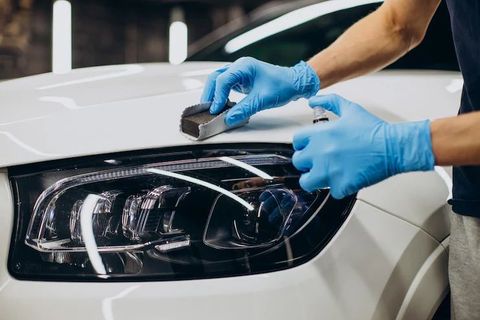
Common application materials include:
- Applicator blocks or coating applicators
- Clean microfiber towels
- Surface-preparation solutions
- Paint-cleaning products
- Suitable lighting
- Protective gloves
- Product-specific curing materials where specified
The exact materials depend on the coating formulation and its manufacturer's instructions.
Application steps
A typical ceramic coating application follows several stages, although the procedure varies between formulations.
Preparation: Wash the vehicle thoroughly and remove loose dirt and contamination. The surface should be completely clean before further preparation.
Decontamination: Remove bonded contamination that remains after washing. Depending on the vehicle's condition, this can include embedded particles or other surface deposits.
Paint correction: Existing scratches, oxidation, swirl marks, and other defects may need attention before coating. Once the coating cures, surface imperfections underneath it can remain visible.
Surface preparation: Remove polishing residues, oils, and other substances that could interfere with coating adhesion. The product instructions should specify the appropriate preparation method.
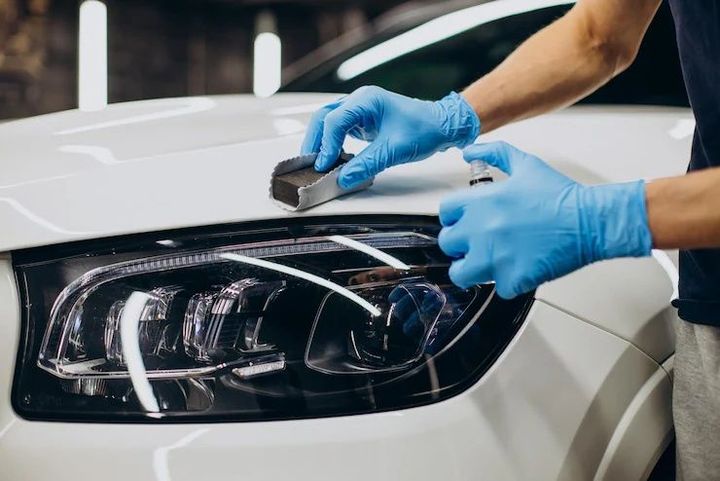
Application: Apply the coating to small sections using the specified applicator and technique. Many coatings require the user to observe a particular flashing or settling period before leveling the product.
Leveling and inspection: Remove excess material with clean microfiber towels according to the product instructions. Adequate lighting helps identify high spots or uneven areas.
Curing: Allow the coating to cure under the environmental conditions specified by the formulation. Exposure to water or contaminants during the early curing period may affect the finished layer.
Long-term care
After curing, maintenance generally involves gentle washing rather than abrasive cleaning. A coated vehicle can still develop mineral deposits, scratches, and contamination, particularly when exposed to difficult environmental conditions.
Routine care usually includes:
- Washing with appropriate automotive cleaning products
- Using clean microfiber materials
- Avoiding unnecessarily abrasive washing methods
- Removing bird droppings and similar contamination promptly
- Drying the vehicle carefully
- Checking the surface periodically for deposits or coating degradation
- Following the coating manufacturer's maintenance instructions
A coating's apparent water behavior may change over time because of surface contamination. Reduced water beading does not necessarily mean that the underlying coating has completely disappeared.
FAQs
What is ceramic coating for a car?
Ceramic coating for a car is a liquid surface treatment that cures into a thin protective layer over automotive paint. Many formulations use silica-based chemistry and are designed to provide water repellency and resistance to certain environmental and chemical influences.
How long does ceramic coating for a car last?
Durability varies considerably according to the formulation, preparation, application, environmental exposure, and maintenance routine. Product claims should therefore be considered alongside technical information rather than assuming one lifespan applies to every ceramic coating.
Does ceramic coating prevent scratches?
Ceramic coating can increase surface hardness and may provide some resistance to minor surface abrasion, but it does not make automotive paint scratch-proof. Significant abrasion, impacts, sharp objects, and improper washing can still damage the coating and the underlying paint.
What are the main ceramic coating application steps?
The general process involves washing, decontamination, paint correction when needed, surface preparation, controlled coating application, leveling, inspection, and curing. Exact procedures vary by formulation, so the product's technical instructions determine the appropriate application process.
Is ceramic coating better than wax?
Ceramic coatings and waxes use different materials and have different characteristics. Ceramic coatings are designed to form a more persistent protective layer, while wax generally provides a more temporary surface treatment. The appropriate choice depends on the vehicle, intended maintenance routine, application conditions, and desired surface properties.
Conclusion
Ceramic coating for car paint is a surface treatment that can provide water repellency, chemical resistance, and additional surface hardness when properly prepared and applied. Different formulations include conventional silica-based coatings as well as newer graphene and hybrid systems, with performance varying between products. Careful surface preparation, correct application, adequate curing, and appropriate washing practices all influence the condition of the coating over time. Automotive coating technology continues to develop toward multifunctional and more environmentally conscious formulations.